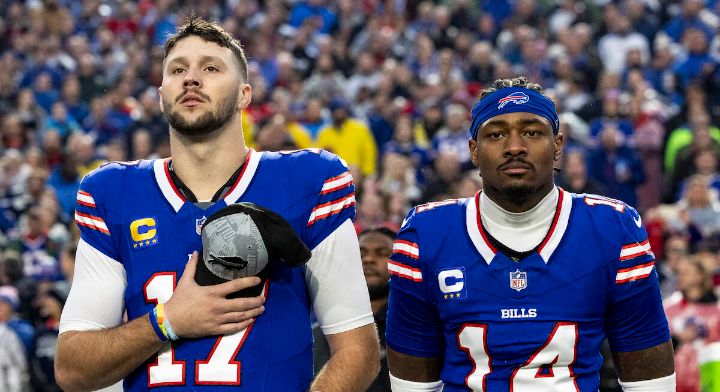
As the bright lights of the Super Bowl media circus shine down, athletes are often asked to reconcile their past with their present. For New England Patriots wide receiver Stefon Diggs, that past is inextricably linked to the Buffalo Bills and their superstar quarterback, Josh Allen. On the eve of the biggest game of his career, Diggs offered a candid, reflective, and somewhat wistful assessment of his four seasons in Western New York—a tenure that transformed both the franchise and his own career, yet ended in a cloud of acrimony and unmet expectations. His comments reveal the complex, often emotionally charged relationship between a star player, a passionate fanbase, and the relentless machinery of the NFL.
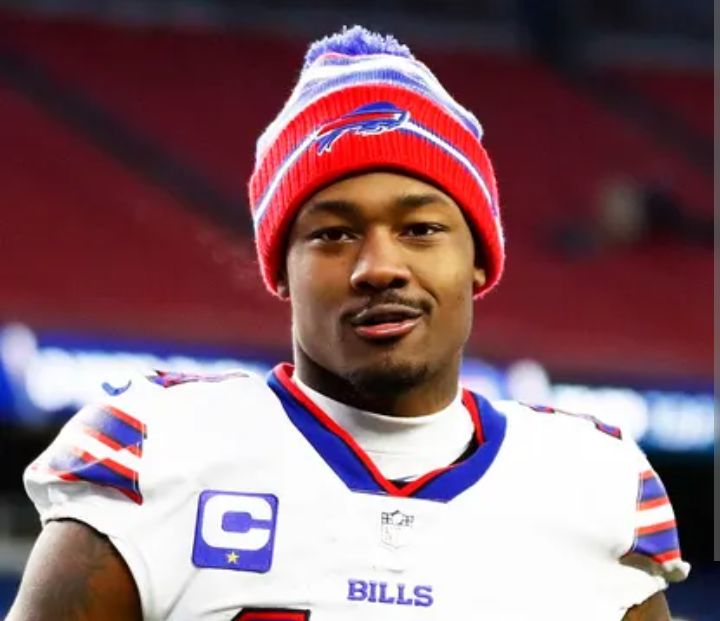
The Foundation of a Partnership
When Stefon Diggs arrived in Buffalo via trade in 2020, he was seen as the final, crucial piece of a burgeoning championship puzzle. The Bills had a prodigiously talented but raw quarterback in Josh Allen, whose arm strength and athleticism were undeniable, but whose accuracy and consistency needed a true number-one receiver to elevate his game. Diggs, coming from the Minnesota Vikings, was that archetype: a precise route-runner with elite hands and a competitive fire that burned visibly on every snap.
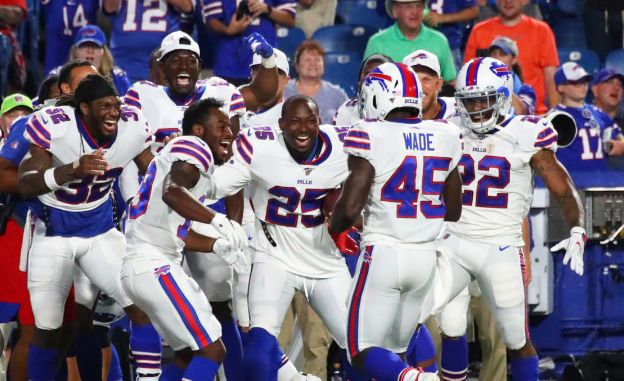
The partnership was immediately and spectacularly successful. In their first season together, Diggs led the NFL in receptions and receiving yards, while Allen made a quantum leap into the MVP conversation. The Bills’ offense, once predictable, became one of the league’s most explosive. The connection between quarterback and receiver was electric, built on trust and a shared, manic intensity. They didn’t just win games; they authored thrilling, come-from-behind victories that revitalized a long-suffering fanbase. For Bills Mafia, Diggs wasn’t just a player; he was a symbol of a new, confident era where the Super Bowl felt within reach. The “Diggs” jersey became ubiquitous across New York state, a testament to his instant and deep adoption into the community’s heart.
The Unraveling: Cracks in the Facade
However, the narrative began to shift subtly, then dramatically. Despite continued regular-season success and playoff appearances, the Bills could not break through to the Super Bowl. Each postseason loss, often in heartbreaking fashion, added pressure and scrutiny. Within this cauldron, reports began to surface of Diggs’ discontent. The reasons were multifaceted and, in the harsh light of hindsight, predictable.
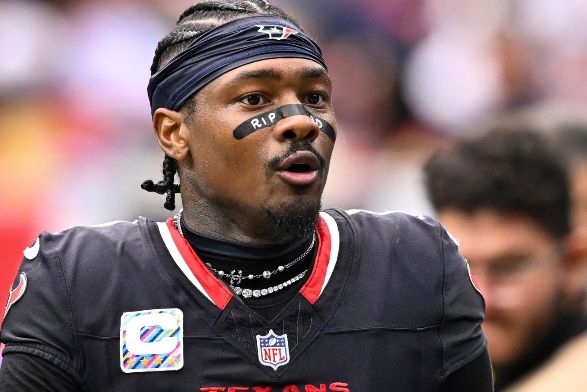
First, there was the natural friction of a high-stakes environment. Diggs is famously and unapologetically competitive—a trait that fuels his greatness but can also lead to visible frustration when outcomes fall short. Sideline moments where he appeared exasperated with play-calling or game flow were magnified, framed as evidence of a “diva” or a “locker room cancer,” labels that are often hastily applied to outspoken star receivers.
Second, and perhaps more fundamentally, was a perceived philosophical divergence. As the Bills’ offense evolved, opponents schemed to take Diggs away, sometimes forcing the ball to other playmakers. While Diggs remained statistically the team’s leading receiver, the feeling emerged—from both the player and observers—that he was not being maximized as the singular, game-breaking weapon he believed himself to be. In big moments, was the offense running through him, or merely including him? For a player of his caliber and self-belief, that distinction is everything.
Finally, the cold, hard calculus of the NFL salary cap intervened. Josh Allen’s massive contract extension kicked in, necessitating difficult financial decisions across the roster. A high-priced, aging receiver, even one as productive as Diggs, became a logical candidate for restructuring or moving on, to allocate resources elsewhere on the team. The marriage between player and team, once built on pure football synergy, now had to contend with the business realities of a hard-cap league.
The Parting and the Aftermath
The divorce, when it came in the form of a trade to the Houston Texans in 2024, was messy. It carried the sting of unmet potential. There was no storybook Super Bowl victory to cement the Allen-Diggs legacy. Instead, there was a sense of “what could have been,” tinged with mutual disappointment. For many Bills fans, the departure felt like a betrayal, a superstar choosing his own star over the collective mission. For Diggs, it likely felt like an organization choosing a path that didn’t fully revolve around his talents.
This history makes his comments at Super Bowl Opening Night so poignant. His message—“Keep hanging your hat on that quarterback. That quarterback is a Hall of Fame quarterback”—is both a generous compliment to Allen and a subtle, painful acknowledgment of a severed destiny. He is affirming the very foundation he helped build, while recognizing he will no longer be a part of what is built upon it. His wish to “hug it out” one day speaks to unresolved emotional threads, a desire for the narrative to be one of mutual respect rather than bitter separation.
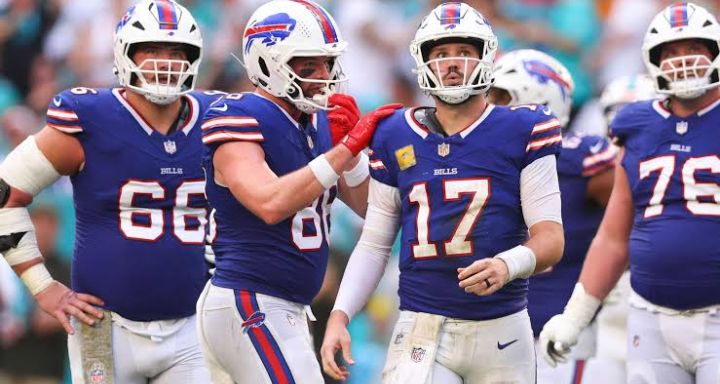
The fan reactions he referenced are a perfect microcosm of modern sports fandom. It is a spectrum from lingering love (“We still love you, Diggs. Things just didn’t work out”) to lasting resentment (“He’s always been a ‘me’ guy”). Some fans separate the player from the person, cherishing the memories of game-winning catches while critiquing his departure. Others cannot separate the two, viewing the exit as a character flaw that taints the entire legacy. This dichotomy is the price of stardom; the more you are embraced as a hero, the more profound the sense of betrayal can be when the relationship sours.
The Ultimate Irony: Super Bowl Stage as a Mirror
The greatest irony, of course, is the stage upon which Diggs delivered these reflections. He is preparing for the Super Bowl—the very pinnacle he and Allen chased together in Buffalo—but he is doing so in the colors of the New England Patriots, the Bills’ most historic and bitter AFC East rival. This twist is a Shakespearean layer of professional sports drama. He achieved the goal, but in a context that likely makes it bittersweet for all parties involved. For Bills fans, seeing Diggs reach the mountaintop elsewhere will be a complex pill to swallow, a reminder of the fine line between almost and greatness.
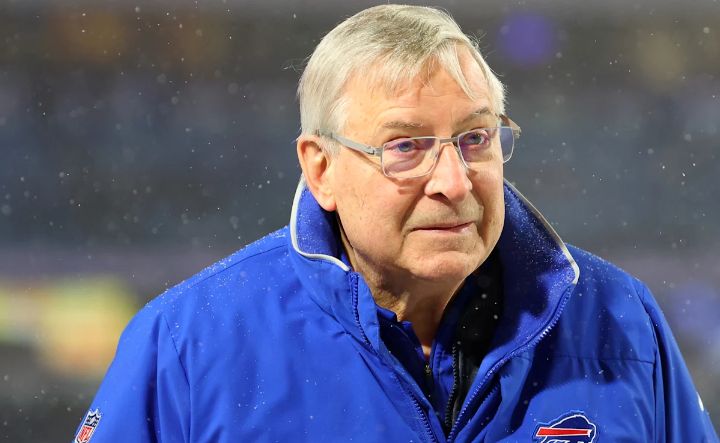
In the end, the story of Stefon Diggs in Buffalo is not a simple one of hero or villain. It is a nuanced tale of spectacular success and profound disappointment, of a partnership that reached incredible heights but could not withstand the pressures of time, expectation, and business. His honest message to Buffalo serves as an epilogue to that chapter. It acknowledges the love, respects the greatness of Josh Allen, and seeks, if not full reconciliation, then at least a measure of peace.
It reminds us that in the NFL, legacies are rarely clean. They are layered with spectacular touchdowns and sideline frustrations, with jersey sales and trade rumors, with the unconditional love of a fanbase and the complicated grief when a star moves on. Stefon Diggs will always be a part of Buffalo’s story, a key figure in the franchise’s resurgence. And Buffalo will always be a part of his, the place where he became a true superstar and learned how fraught that status can be. As he takes the field for the Super Bowl, both he and the Bills faithful will be carrying that shared, complicated history—a testament to a time when everything seemed possible, and the painful reality that not all possibilities come to pass.