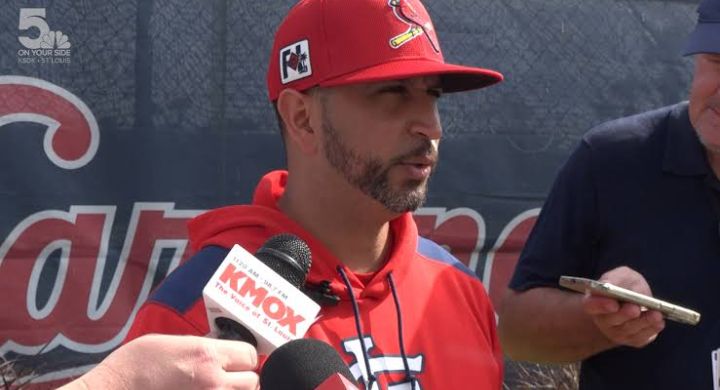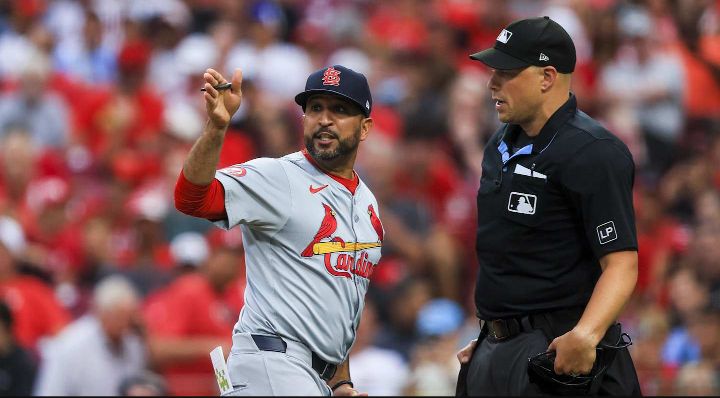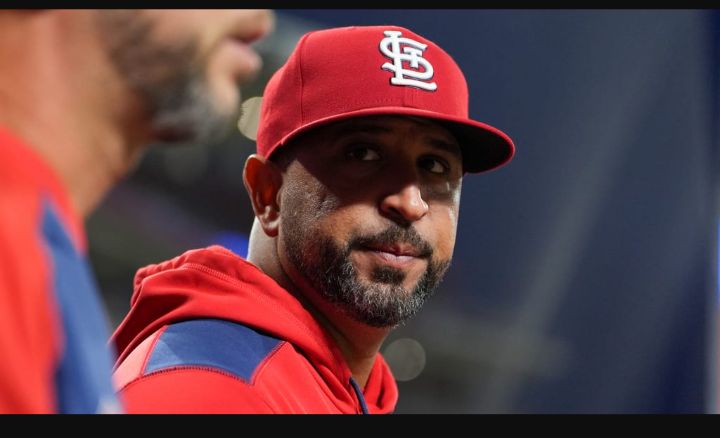
The long-anticipated restructuring of the St. Louis Cardinals’ roster reached a significant milestone with the trade of versatile infielder Brendan Donovan. In a move that completes their stated offseason objective of a strategic retooling, the Cardinals have executed a transaction focused squarely on the future, procuring high-ceiling talent from the Seattle Mariners’ prospect pipeline. The return, as reported by Adam Jude of the Seattle Times, is a compelling two-player package headlined by one of the most fascinating players in professional baseball: switch-pitcher Jurrangelo Cijntje. Joining him is Tai Peete, a talented outfielder and a former first-round selection from the 2023 draft.
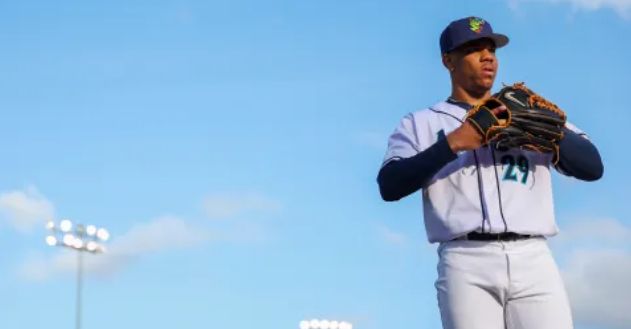
This trade is less about replacing Donovan’s immediate, contact-oriented value and more about investing in transformative potential. For the Cardinals, Cijntje represents the ultimate high-variance asset—a player whose development path is without a clear modern precedent. His uniqueness begins with his foundational skill: the ability to pitch competitively with both arms. Born in Curaçao, Cijntje is a natural right-hander who taught himself to throw left-handed as a child, refining both arms to a professional level. This ambidextrous prowess made him a standout at Mississippi State and a second-round pick in 2024, but his first full professional season in 2025 was a live experiment in how to harness such a rare talent.
The Mariners’ initial approach was one of equal opportunity. For much of the 2025 minor league season, Cijntje’s appearances were systematically alternated: one start as a right-handed pitcher, the next as a left-handed pitcher. This schedule was designed to build strength and consistency in both arms while gathering critical data on his performance from each side. However, as the season progressed, a clear divergence in effectiveness emerged, steering the Mariners toward a strategic pivot. The data was unambiguous: Cijntje was simply more dominant when pitching from the right side.
The disparity in his stuff is pronounced. As a right-hander, Cijntje’s fastball sits several ticks harder, regularly reaching higher velocity bands that make it a more formidable weapon. His breaking pitches—including a sharp slider and a power curveball—also possess tighter spin and more devastating bite from the right side. This translated directly into results. In 2025, opposing hitters managed a meager .198 batting average against the right-handed Cijntje, struggling to pick up the ball out of his distinctive delivery. When he toed the rubber as a lefty, that average ballooned to .289, indicating that while competent, his southpaw iteration lacked the same put-away quality.

By the season’s end, the Mariners had begun to streamline his workload, having him focus more consistently on right-handed pitching. Their stated plan for the upcoming spring was to formalize this shift: Cijntje would develop as a starting pitcher using only his right arm, while potentially leveraging his left-handed capability as a multi-inning relief weapon out of the bullpen on occasion. This hybrid model aimed to maximize his best asset while retaining a slice of the tactical flexibility his ambidexterity provides.
Now, that intriguing developmental puzzle lands on the desk of the Cardinals’ player development staff. The central question facing St. Louis is fundamental: Do they continue the Mariners’ trajectory toward right-handed specialization, or do they recommit to the novel path of a true switch-pitcher? The Cardinals have a history of valuing uniqueness and have the organizational patience for long-term projects. There is a compelling argument for preserving the switch-pitching experiment. Even if his left-handed arm is currently a “B-” offering compared to his right-handed “A-” stuff, the mere ability to force a lineup to adjust mid-game or to match up perfectly against any hitter is a strategic luxury no other pitcher can offer. It could redefine bullpen usage or create a uniquely unpredictable starting pitcher.
Conversely, the case for specialization is rooted in conventional player development wisdom. Focusing exclusively on his right arm could accelerate his refinement of a true plus-plus pitch arsenal, simplify his mechanics and training routine, and potentially fast-track his path to the majors as a more traditional, but still exceptionally gifted, pitching prospect. The risk of dividing his focus and hindering the development of his superior arm is a real concern the Mariners evidently began to weigh.
Beyond the philosophical debate, Cijntje’s acquisition is a testament to the Cardinals’ scouting and their willingness to dream on upside. In exchange for a known, controllable major league asset in Donovan, they have secured a player whose ceiling is as a revolutionary talent, but whose floor is also uncertain. It is the quintessential “lottery ticket” move, albeit one with a very high first-round price.
The second piece of the return, Tai Peete, provides a valuable counterbalance of stability and projectable skill. As a first-round pick just a few years ago, Peete brings the pedigree of a top-tier amateur talent. An athletic outfielder, he possesses a blend of tools that scouts dream on: raw power, above-average speed, and a strong defensive profile likely suited for a corner outfield spot. His development will be more linear than Cijntje’s, focused on refining his hit tool and translating batting practice power into in-game production. He represents the high-probability, quality depth that farm systems need, a potential future everyday player acquired as part of a broader deal.
In totality, this trade is a clear signal of the Cardinals’ direction. By moving Donovan, they have subtracted from their present-day major league roster to make a significant deposit into their future. The package of Cijntje and Peete offers both a shot at a transformative star and a solid bet on a future regular. The success of the deal will hinge almost entirely on player development. Can the Cardinals unlock the full, unprecedented potential of Jurrangelo Cijntje? Can they help Tai Peete maximize his considerable tools?

For the Mariners, the deal addresses an immediate need for a versatile, high-on-base player like Donovan to supplement a competitive core. For the Cardinals, it is an investment in dreams and data, in the chance to cultivate a player who could one day not just help them win games, but change how the pitching role is conceived. The story of this trade will be written over the next five years, on backfields and in minor league box scores, as the Cardinals begin the delicate work of shaping their fascinating new prize.