The acquisition of right-handed pitcher Freddy Peralta from the Milwaukee Brewers stands as one of the most significant moves of the New York Mets’ offseason. The trade instantly bolsters the team’s 2026 starting rotation with a proven, high-caliber arm coming off a career-best season. However, the transaction inherently carries with it a pressing question about sustainability: will Peralta be a one-year rental, or can he become a long-term cornerstone for the franchise? As speculation about a contract extension swirls in the New York media, Peralta himself has adopted a posture of deliberate patience, emphasizing acclimation over immediate negotiation.
Upon his arrival in New York, Peralta was inevitably asked about his future. The query is logical; the Mets surrendered assets to acquire him with only one year remaining on his current contract. The team’s leadership, under President of Baseball Operations David Stearns—who is intimately familiar with Peralta from their shared time in Milwaukee—surely has at least an internal gauge on the pitcher’s long-term fit. Yet, when confronted with the possibility of an immediate extension, Peralta offered a response grounded in prudence and process. “I just got here,” Peralta said via SNY Mets. “I think that I’ve got to… share time with my teammates, think about different ideas, learn about everybody, coaches, the organization in general, and then we can see.
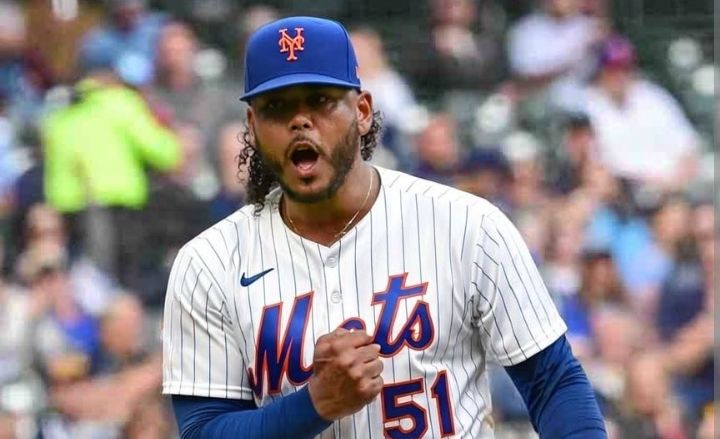
This statement is far from a dismissal of the Mets or their future. Instead, it reflects the measured approach of a veteran player at a potential career crossroads. At 29 years old, Peralta is positioned for what could be the most lucrative contract of his life, should he reach free agency after the 2026 season. Signing an extension now would require a compelling offer that accurately values his projected performance over the next several years, while also accounting for the risk of injury or regression. For a player changing leagues, cities, and organizational cultures for the first time in his major league career, taking a period of assessment is not just reasonable—it is savvy.
Peralta’s desire to “learn about everybody, coaches, the organization in general” speaks to factors beyond pure finances. A contract extension is a multi-year commitment to a workplace environment. For a pitcher, this includes trust in the coaching staff, the training and medical personnel, the organizational philosophy on pitcher usage and development, and the overall clubhouse culture. The Mets, under manager Carlos Mendoza and with a reshaped roster, are presenting a new environment. Peralta’s stated need to “share time with his teammates” and “think about different ideas” underscores that his decision will be holistic. He is not merely evaluating a dollar figure, but a professional home where he believes he can thrive and win for years to come.
Despite Peralta’s public caution, reports suggest the door to an extension is far from closed. According to Pat Ragazzo of Sports Illustrated, sources indicate that Peralta is, in fact, “open to signing a contract extension” with the Mets. This aligns with the natural logic of the situation. From the player’s perspective, security is paramount. Locking in a significant guarantee before throwing another pitch shields him from the volatility of a full season. A serious arm injury in 2026 could drastically alter his free-agent market. Therefore, if the Mets present a fair and competitive offer that acknowledges his elite current value, the incentive to sign is substantial.
From the Mets’ perspective, the calculus is complex. Peralta’s 2025 season with the Brewers was nothing short of superb: a 2.70 ERA, a 17-6 record, and 204 strikeouts. He established himself as a true front-line starter, a category of pitcher that commands a premium on the open market. An extension now would likely come at a lower average annual value than a potential bidding war in free agency, but it would require the Mets to commit a significant sum to a pitcher entering his thirties—the age when decline phases often begin for power arms. The report from The Athletic, cited by Ragazzo, that the Mets are “focused on 2026 with Peralta for now,” suggests a possible “wait-and-see” strategy from the front office. They can evaluate how he adapts to the National League East, the pressures of New York, and the rigor of a full season before engaging in serious, high-stakes negotiations.
This period of mutual evaluation occurs against a backdrop of heightened expectations for the Mets. After an 83-79 finish in 2025 that left them in second place in the NL East and outside the playoff picture, the organization has been aggressive this offseason. The acquisition of Peralta is a central piece of a strategy aimed at pushing the team back into immediate contention. The Mets are not just adding talent; they are signaling an intent to win now. For Peralta, this competitive context is crucial. His comments about learning the organization likely include gauging this commitment firsthand. Is the 2026 roster constructed for a deep playoff run? Does the organizational direction align with his own championship aspirations? The answers to these questions will weigh heavily in his decision.
Furthermore, the human element of this transition cannot be overlooked. After spending his entire professional career with the Brewers, moving to the massive market of New York represents a profound life change. The media scrutiny is more intense, the fan base is passionate and demanding, and the day-to-day experience is fundamentally different. Peralta’s cautious timeline allows him to navigate this personal and professional transition without the added pressure of ongoing contract talks. It grants him the mental space to focus solely on performance and integration, which, ironically, could improve his on-field results and thus strengthen his bargaining position later.
The ideal scenario for both parties may be a mid-season negotiation, should the early months go well. By the All-Star break, Peralta will have had several months to integrate into the clubhouse, work with pitching coach Jeremy Hefner, experience the New York environment, and demonstrate his performance in a Mets uniform. The team, in turn, will have a clearer picture of how he fits into their present and future plans. If the fit is as good on the field as it appears on paper, and if mutual comfort has been established, the foundation for a long-term agreement will be significantly stronger.
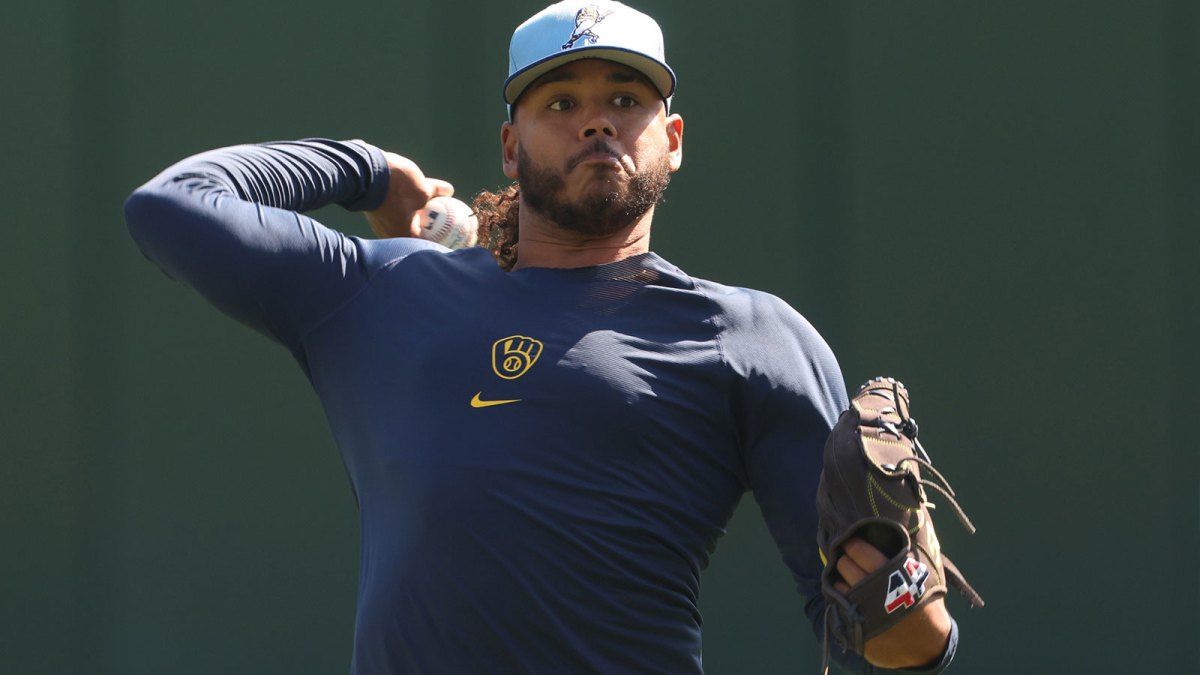
In essence, Freddy Peralta’s honest and measured response to extension questions reveals a mature athlete navigating a critical juncture. His priority is not leverage or posturing, but informed decision-making. He understands that the choice he makes will define the remainder of his prime years. The New York Mets, for their part, hold a valuable but temporary asset. Their challenge is to create an environment so positive, a vision so compelling, and a performance-based partnership so successful that Peralta’s natural openness to an extension transforms into a firm desire to stay.
The 2026 season, therefore, becomes more than just a campaign for playoff redemption. It is an extended audition for a long-term marriage. Every start Peralta makes, every interaction in the clubhouse, and every organizational decision will be part of a subtle, ongoing negotiation. The pitcher’s initial honesty—his need to see, learn, and feel before he commits—sets the stage for a fascinating storyline that will unfold every fifth day on the mound. The outcome will significantly shape the trajectory of the New York Mets’ pitching staff for the latter half of this decade.