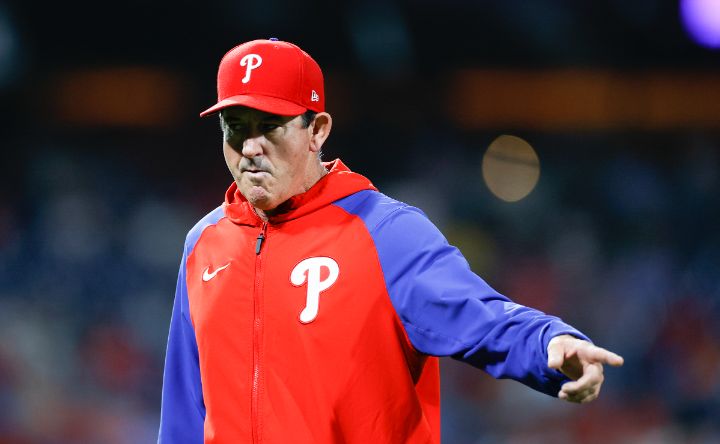
The recent shake-up involving the Philadelphia Phillies has sparked widespread discussion across Major League Baseball, especially after the organization decided to part ways with manager Rob Thomson. While managerial changes are not uncommon in baseball, the circumstances surrounding this decision—and the names immediately linked to the vacancy—have revealed deeper truths about how teams evaluate leadership and potential replacements.
Over the past couple of weeks leading up to the decision, the Phillies endured a difficult stretch, particularly against the Chicago Cubs. The Cubs dominated the season series between the two clubs, winning six out of seven matchups, including an emphatic four-game sweep at Wrigley Field. That performance not only highlighted Philadelphia’s struggles but also intensified scrutiny on Thomson’s leadership. In a results-driven environment like professional baseball, prolonged poor performances—especially against a single opponent—can quickly shift the narrative and lead to major organizational decisions.
Once the dismissal became official, attention immediately turned to who might step in to guide the team forward. One of the most notable developments was the revelation that Alex Cora had been approached for the role. Cora, who had recently parted ways with the Boston Red Sox, was seen as a strong candidate given his managerial experience and championship pedigree. However, despite the appeal of taking over a competitive roster like Philadelphia’s, Cora declined the opportunity, choosing instead to focus on personal matters and spend time with his family. His decision underscored the reality that even high-profile managerial openings do not always align with a candidate’s immediate priorities.
With Cora out of the picture, the Phillies turned to a more immediate solution by naming Don Mattingly as their interim manager. Mattingly brings a wealth of experience to the role, having previously managed multiple teams and earned respect across the league. His appointment provides stability in the short term, but it also signals that the organization may continue its search for a long-term leader behind the scenes.
Amid all the speculation, one name that surprisingly failed to generate serious traction was David Ross, the former Cubs manager. In the past, Ross was often viewed as a rising managerial talent, particularly during his tenure with Chicago. His leadership style and connection with players initially made him a compelling figure, and many believed he was on a trajectory toward sustained success in the dugout. However, the way his time with the Cubs ended appears to have significantly altered how he is perceived around the league.
When the Cubs decided to move on from Ross following the 2023 season, replacing him with Craig Counsell, the decision sent a strong message. Regardless of whether it was intended, the abrupt nature of the transition suggested that the organization did not view Ross as the right leader to take them to the next level. In professional sports, perception often becomes reality, and that perception may have lingered in the minds of decision-makers across the league.
As a result, Ross has not been a prominent candidate in recent managerial searches. Despite his previous reputation and experience, teams appear hesitant to entrust him with another opportunity, at least for now. The Phillies’ lack of interest in him further reinforces this idea. Instead of considering Ross, the organization prioritized other options, signaling a shift in how his candidacy is evaluated.
Interestingly, even in situations where Ross might seem like a natural fit, such as with teams that have existing connections to him, there has been little indication of serious interest. This suggests that his standing within the managerial market has cooled considerably over the past couple of years. While it is still possible that he could receive another chance in the future, the likelihood appears to be diminishing as time passes.
Meanwhile, attention has begun to shift toward other emerging candidates who may be better positioned to step into managerial roles. One such figure is Ryan Flaherty, who has been gaining recognition as a potential future manager. Serving as a bench coach, Flaherty has built a reputation for his strategic insight and ability to connect with players. Over the past two years, his name has surfaced in connection with several managerial openings, indicating that he is viewed as a rising talent within the coaching ranks.
Unlike Ross, whose candidacy has lost some of its momentum, Flaherty appears to be on an upward trajectory. It seems increasingly likely that he will eventually secure a managerial position when the right opportunity presents itself. His growing profile reflects the evolving nature of how teams assess leadership potential, with a greater emphasis on fresh perspectives and adaptability.
The Phillies’ decision-making process in the wake of Thomson’s departure offers a broader glimpse into the dynamics of managerial hiring in Major League Baseball. Teams are not only evaluating past performance but also considering future potential, organizational fit, and the ability to navigate the complexities of modern baseball. This multifaceted approach can lead to unexpected outcomes, such as the exclusion of previously well-regarded candidates like Ross.
Ultimately, the situation serves as a reminder that the landscape of professional sports is constantly changing. Reputations can rise and fall quickly, and opportunities are often influenced by factors beyond an individual’s control. For the Phillies, the focus now shifts to stabilizing the team under interim leadership while continuing the search for a permanent manager who can guide them back to success.
For Ross, the path forward may require patience and a willingness to rebuild his standing within the league. Whether he eventually returns to a managerial role remains to be seen, but for now, his absence from prominent discussions speaks volumes about how quickly perceptions can change in the world of baseball.