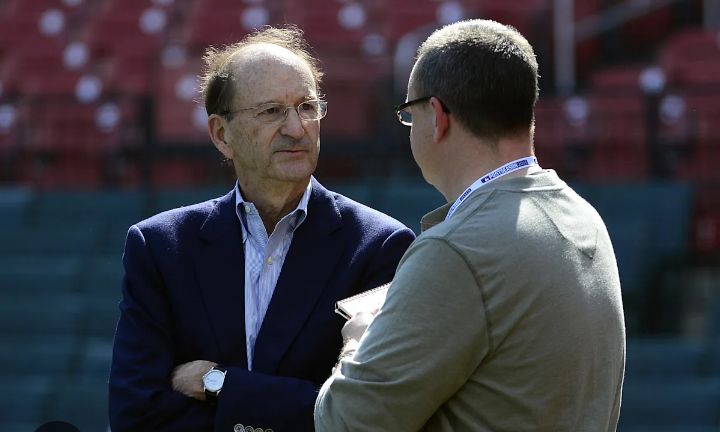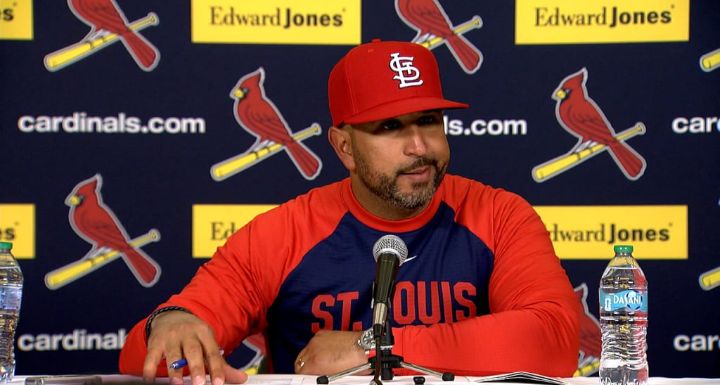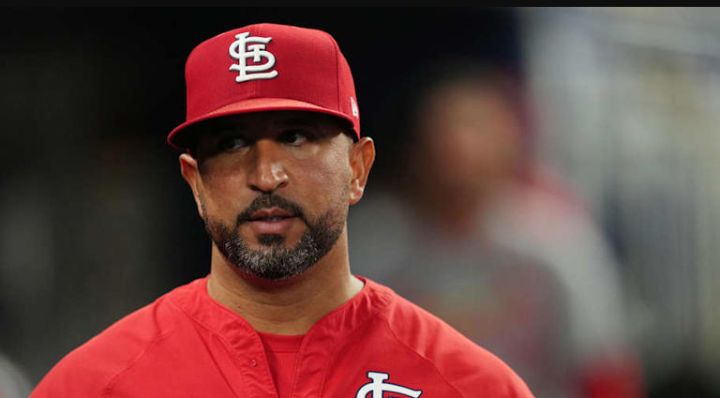
As the St. Louis Cardinals’ transformative offseason under President of Baseball Operations Chaim Bloom approaches its final act, the roster has undergone a significant metamorphosis. The trading of franchise cornerstones has signaled a clear, if painful, commitment to a rebuild, redirecting the organization’s trajectory toward a future built on sustainable, cost-controlled talent. Yet, as pitchers and catchers prepare to report for spring training, one prominent name remains on the roster, casting a long shadow over the club’s fresh start: Brendan Donovan. For the Cardinals’ strategic reset to feel complete and for the rebuild to gain maximum momentum, a final, decisive trade is imperative. The most logical and beneficial move would be to conclude this chapter of dealing by sending the versatile All-Star infielder to the Boston Red Sox.
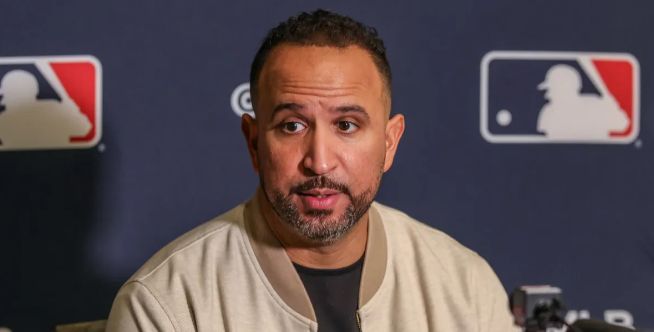
This conclusion is rooted in the practical patterns already established this winter. Bloom, who spent four years as the Red Sox’s chief baseball officer, has unsurprisingly leveraged his intimate knowledge of that organization’s assets. The early-offseason trades that sent veteran pitcher Sonny Gray and slugger Willson Contreras to Boston were not mere coincidences; they were calculated transactions by an executive who knows precisely which prospects in the Red Sox system align with his long-term vision for St. Louis. This existing pipeline of negotiation and mutual understanding creates a fertile ground for a more complex deal involving a younger, more valuable asset like Donovan. To ignore this established channel and the potential synergy it offers would be an operational misstep.
From the Boston Red Sox’s perspective, the acquisition of Brendan Donovan is not a luxury but a pressing necessity, making them an ideal and motivated trade partner. Their offseason has been marked by significant infield upheaval. The failure to re-sign star third baseman Alex Bregman, compounded by the earlier trade of longtime face-of-the-franchise Rafael Devers, has left a cavernous hole on the left side of their infield. While they possess elite prospect Marcelo Mayer, a natural shortstop, inserting him at third base to accommodate Donovan at second, or simply installing Donovan at the hot corner, provides immediate stability and offensive production. Donovan represents the rare blend of immediate Major League readiness and multi-year team control that contending teams covet. He is not a rental; he is a foundational piece who would solidify Boston’s lineup for their competitive window.
Donovan’s value is both tangible and multifaceted. Coming off his first All-Star selection in 2025, he has proven himself far more than a utilityman. His .287 batting average, combined with 10 home runs, 50 RBIs, and a career .282/.369/.421 slash line over four seasons, demonstrates a consistent, high-floor offensive profile. His elite plate discipline and ability to get on base are qualities that have become hallmarks of successful modern lineups. Defensively, his unparalleled versatility—Gold Glove-caliber play at second base, third base, and the outfield corners—is a manager’s dream, offering a contending team like Boston endless options to navigate a 162-game season and optimize matchups. In an era where roster flexibility is paramount, Donovan is a premium asset.
For the St. Louis Cardinals, the calculus is purely about the future. The tear-down phase, which has seen the departure of established stars, is fundamentally about accumulating young, high-ceiling talent, particularly pitching. The Cardinals’ rotation of the future is currently more of a conceptual framework than a concrete reality. While there are promising arms in the system, the organization lacks the surefire, top-of-the-rotation prospects that form the bedrock of perennial contenders. This is where Bloom’s insider knowledge becomes a critical strategic weapon. The Red Sox, having bolstered their rotation with the signing of Ranger Suárez, now possess a surplus of pitching depth in both their Major League roster and their minor league tiers.
Bloom’s intimate familiarity with Boston’s farm system—from its top-100 prospects to its lower-level sleepers—allows him to target with surgical precision. He would know which pitchers are on the cusp of breaking out, which have undervalued secondary pitches, and whose development arcs align with the Cardinals’ upcoming competitive timeline. A trade for Donovan would not be a mere exchange of a player for a package; it would be a targeted extraction of specific assets Bloom has long coveted. The goal would be to secure at least one, if not two, pitchers who project as future rotation staples, the kind of talent rarely available on the open market and too costly to acquire in most trade scenarios.
The mutual benefit of such a transaction creates a classic win-win scenario, the hallmark of the most successful trades. Boston addresses its most glaring roster hole with a proven, controllable, and versatile All-Star, instantly elevating their playoff prospects without sacrificing their long-term financial flexibility. They give from a position of strength (pitching depth) to address a position of acute weakness (infield). Meanwhile, St. Louis accelerates its rebuild by converting a valuable but ultimately expendable current asset into the very currency it needs most: premium pitching prospects. Donovan, while excellent, is a 28-year-old piece whose peak years may not align with the Cardinals’ next competitive cycle. Securing multiple high-potential arms whose careers are just beginning would represent a far greater value for an organization looking toward 2027 and beyond.
Skeptics may argue that frequent deals between the same two front offices could raise eyebrows about overly cozy dealings. However, in a results-oriented business, such criticism is immaterial. What matters is the objective improvement of the St. Louis Cardinals organization. Furthermore, while other teams will certainly inquire about Donovan—the San Francisco Giants, Seattle Mariners, and Toronto Blue Jays all make theoretical sense—Boston’s unique combination of need, resources, and Bloom’s insider intelligence positions them as the partner capable of offering the most compelling and targeted return.
In conclusion, as the final days before spring training dwindle, the St. Louis Cardinals stand at a strategic crossroads. They can enter camp with Brendan Donovan, a fine player whose presence, however, serves as a lingering reminder of the past and a suboptimal use of trade capital. Or, they can make the bold, forward-thinking move that their entire offseason has portended. By trading Brendan Donovan to the Boston Red Sox for a package centered on future pitching talent, Chaim Bloom would not simply be making another deal. He would be executing the definitive closing statement of the Cardinals’ rebuild launch—a move that converts present-day value into the foundational arms that will define the franchise’s next era. For a rebuild to truly begin, the past must be fully cleared away. Trading Donovan is the final, necessary step to turn the page.