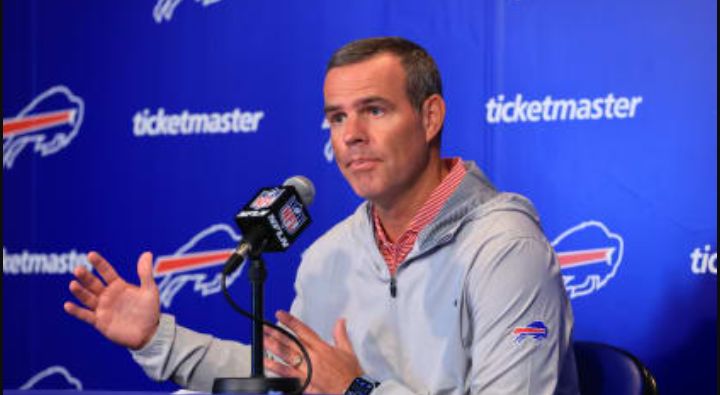
The Buffalo Bills enter the 2026 offseason at a pivotal juncture. The departure of long-time head coach Sean McDermott has ushered in a new chapter, spearheaded by the promotion of offensive coordinator Joe Brady to the top job. This internal elevation signals a desire for offensive continuity while acknowledging the need for a fresh voice. Brady’s subsequent filling of his old role with Pete Carmichael, formerly of the Denver Broncos, and the significant hires of Jim Leonhard as defensive coordinator and Jeff Rodgers as special teams coordinator, completes a comprehensive coaching staff overhaul. However, the work is far from finished. The true test of this new regime will be its ability to construct a roster capable of returning the Bills to the pinnacle of AFC contention. With the NFL’s free agency period looming, strategic acquisitions and retentions will be paramount, and analysts have already pinpointed Buffalo as a potential prime destination for several impactful players.
The foundation of the Bills’ success in recent years has been undeniably built upon the right arm and athletic brilliance of quarterback Josh Allen. Protecting that investment has been the offensive line, a unit that coalesced into a strength in 2025. The potential disruption of this cohesion presents the most immediate internal challenge for General Manager Brandon Beane. Two stalwarts of that line, guard David Edwards and center Connor McGovern, are scheduled to hit the open market. Their retention is not merely a matter of preference but arguably a necessity for the Brady-Allen partnership to flourish from day one.
David Edwards, who joined the Bills and solidified the interior, represents the type of dependable, high-level guard play that allows an offense to function optimally. In a league where interior pressure can derail even the most potent attacks, Edwards’ consistency in both pass protection and run blocking has been invaluable. For an offense that predicates itself on Allen’s ability to extend plays and attack all levels of the field, maintaining a clean pocket up the middle is non-negotiable. Analysts like CBS Sports’ Zachary Pereles correctly identify Edwards’ re-signing as a top priority, noting that while the Bills face cap constraints, allowing a proven contributor to walk could create a costly void. The interest from teams like the Cleveland Browns and Detroit Lions—both of whom prioritize trench strength—underscores Edwards’ market value. For Buffalo, meeting that price is an investment in Allen’s health and the offensive ecosystem as a whole.
Equally critical is the situation at center with Connor McGovern. The center-quarterback relationship is one of the most symbiotic in football, involving silent communications, snap timing, and defensive identification. McGovern has not only been a reliable snapper but has grown into a leader along the line, forming an intuitive connection with Allen. Replacing that chemistry and proficiency through free agency or the draft is a tall order and carries inherent risk. Disruption at center can have a cascading effect on the entire offensive operation. Therefore, securing McGovern to a new contract may be one of the most straightforward yet crucial decisions of the Bills’ offseason. It ensures stability at a neural hub position and allows the new offensive staff, under Carmichael’s direction, to build their scheme around a known, trusted entity. As with Edwards, outside interest is expected, but the Bills’ imperative to retain him is clear.
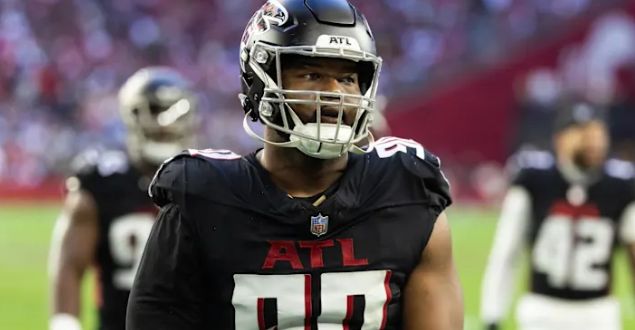
While securing their own talent is job one, the Bills must also look externally to address roster deficiencies, particularly on the defensive side of the ball. The 2025 season exposed vulnerabilities, especially against the run, an area that must be fortified for the team to make a deep postseason run. This brings into focus a potential external target: veteran defensive tackle David Onyemata. At 33, Onyemata is not a long-term building block, but his performance for the Atlanta Falcons in 2025 demonstrated he remains a highly effective force. Grading out as a top-ten interior defensive lineman, Onyemata offers a compelling blend of run-stuffing ability and interior pass rush disruption.
His potential fit in Buffalo under new defensive coordinator Jim Leonhard is intriguing. Leonhard, known for his versatile and aggressive schemes, values defensive linemen who can execute multiple roles. Onyemata’s profile—a 6-foot-4, 310-pound lineman with the versatility to play both the nose and the three-technique—makes him an ideal one- or two-year solution. He could serve as a stabilizing anchor alongside younger players like Ed Oliver, providing immediate reinforcement against the physical running attacks prevalent in the AFC. Furthermore, his experience and professionalism would be assets in a locker room transitioning under a new head coach. The Bills’ defensive front was plagued by injuries in 2025; adding a durable, proven veteran like Onyemata would provide crucial depth and insurance. While other contenders like the Kansas City Chiefs may see similar value, Buffalo’s acute need and Onyemata’s specific skill set create a logical match.
The broader context of the Bills’ offseason strategy cannot be ignored. The promotion of Joe Brady signifies an organizational commitment to maximizing Josh Allen’s prime years. Brady’s offensive philosophy, which likely emphasizes tempo, spacing, and leveraging Allen’s dual-threat capabilities, requires a strong offensive line as its bedrock. Therefore, the resources allocated to Edwards and McGovern are not expenses but foundational investments. Simultaneously, empowering a defensive mind like Jim Leonhard with a tool like Onyemata would signal a commitment to rebuilding a defense that can complement the offense’s firepower.
However, these moves do not occur in a financial vacuum. General Manager Brandon Beane is renowned for his cap management, often restructuring contracts to navigate tight situations. The Bills will almost certainly need to employ such creativity to retain their key offensive linemen while also making a competitive offer to a player like Onyemata. This may involve difficult decisions elsewhere on the roster, potential restructures, or even the release of other veterans. The balancing act between preserving a championship-caliber core and injecting new talent is the defining challenge of this offseason.
In conclusion, the Buffalo Bills stand at the intersection of continuity and change. The new coaching staff brings renewed energy and schematic ideas, but their success will be intrinsically linked to the roster they inherit and shape. The analytical linkage of the Bills to free agents David Edwards, Connor McGovern, and David Onyemata highlights the franchise’s most pressing needs: preserving offensive infrastructure and bolstering defensive fortitude. Securing Edwards and McGovern would be a powerful statement of intent to protect Josh Allen and ensure offensive fluidity. Adding a veteran presence like Onyemata would address a tangible weakness and provide leadership for a transitioning defense. As the NFL’s offseason calendar progresses from the Scouting Combine into the frenzy of free agency, the Bills’ actions in this critical window will reveal much about the priorities and potential of the Joe Brady era. One thing remains certain: in the ultra-competitive landscape of the AFC, standing pat is not an option. Strategic, aggressive, and intelligent roster management is the only path back to the summit.