The professional basketball landscape is continuously shaped by the dynamic forces of player movement, executive leadership, and strategic planning. As of late January 2026, significant developments are unfolding in both the National Basketball Association (NBA) and EuroLeague Basketball, reflecting the ongoing evolution of the sport at its highest levels. This analysis delves into the intricacies of a major potential NBA trade and a pivotal executive appointment in European basketball, providing context and examining the broader implications of these events.
Part I: The NBA Trade Machine – Detroit Pistons and Michael Porter Jr.
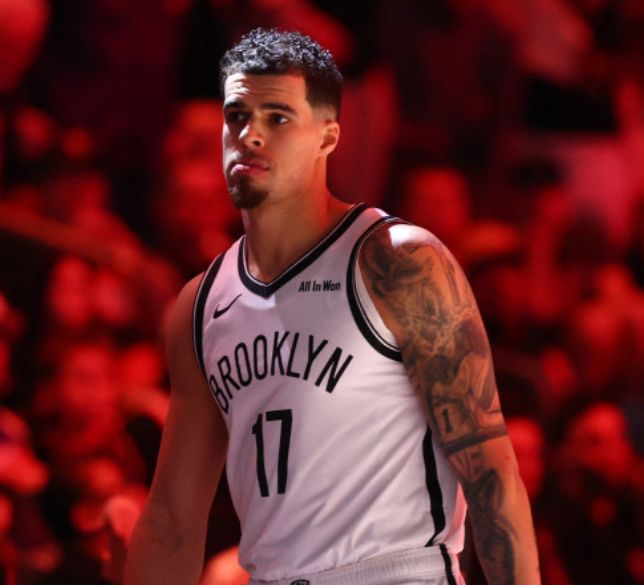
The NBA trade deadline is a period of intense speculation, strategic maneuvering, and franchise-altering decisions. One of the most prominent rumors circulating as the 2026 deadline approaches involves the Detroit Pistons and Brooklyn Nets star wing, Michael Porter Jr.
The Rumor and Proposed Framework
According to reports from league insiders, the Detroit Pistons have emerged as a serious suitor for Michael Porter Jr. The proposed trade framework suggests Detroit would offer a package built around the expiring contract of veteran forward Tobias Harris and young guard Jaden Ivey to match the substantial salary of Porter Jr. The critical point of negotiation revolves around draft compensation. The Nets’ initial asking price is reportedly two first-round picks, but there is indication they might settle for a package of one first-round pick coupled with a high-upside prospect like the 23-year-old Ivey.
Analyzing the Motivations: Why Detroit?
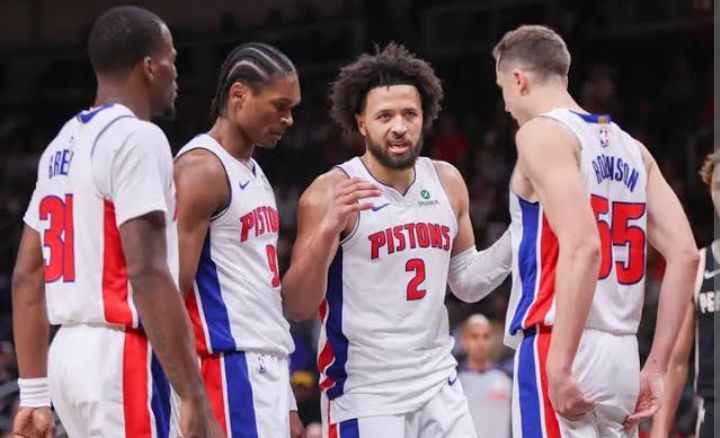
The Pistons’ interest in Porter Jr. is a fascinating case study in aggressive team building. Currently leading the Eastern Conference with an impressive 34-12 record, Detroit is clearly in a “win-now” mode. While Tobias Harris has been a key contributor, his contract is expiring, creating both financial flexibility and a risk of losing his production for nothing. Jaden Ivey represents significant future potential, but the Pistons may be at a stage where consolidating talent for a proven star is the priority.
Michael Porter Jr. represents the archetype of modern scoring wing. In his first season away from the Denver Nuggets, he has elevated his game to new heights, posting career-best averages of 25.6 points, 7.3 rebounds, and 3.2 assists per game. His efficient shooting splits—48.2% from the field and 39.8% from three-point range—underscore his elite offensive capability. For a Pistons team with championship aspirations, adding a dynamic, high-volume scorer of Porter Jr.’s caliber could be the final piece needed to compete for a title. He would provide a primary scoring option, stretch the floor, and add size to the wing, addressing multiple offensive needs simultaneously.
The Brooklyn Nets’ Perspective: A Strategic Recalibration
For the Brooklyn Nets, engaging in trade discussions for their star player signals a potential strategic shift. Trading Porter Jr., who is in the prime of his career and performing exceptionally, would likely be a move aimed at long-term restructuring. Acquiring an expiring contract like Harris’s provides immediate financial relief and future cap flexibility. The central prize for Brooklyn, however, would be the draft capital and a young talent like Jaden Ivey.
Ivey, a highly athletic and explosive guard, offers the Nets a cornerstone around which to build. Paired with a potential high first-round pick (or picks), this trade could accelerate a rebuild, giving Brooklyn controllable young assets to develop. It’s a classic case of a team trading present-day star power for future assets and flexibility, a common strategy for franchises looking to reset their competitive timeline.
Potential Impact and Risks
For Detroit, the risk is twofold. First, they would be sacrificing a promising young guard in Ivey and future draft assets for a single player. Second, integrating Porter Jr. into a new system, especially on a team with established chemistry from leading the conference, carries its own challenges. However, the potential reward—a championship-caliber starting lineup featuring Porter Jr.—might outweigh these concerns for the Pistons’ front office.
For Brooklyn, the risk involves fan reaction and the uncertainty of draft picks and player development. Trading a star often leads to short-term competitive decline. However, if Ivey develops into an All-Star and the draft picks yield strong players, the Nets could position themselves for sustained success in the latter half of the decade.
Part II: Executive Leadership – A New Era for EuroLeague Basketball
Concurrently, across the Atlantic, EuroLeague Basketball is undergoing a significant transition in its executive leadership with the appointment of a new Chief Executive Officer.
The Appointment: Chus Bueno Takes the Helm
Euroleague Basketball has officially named Jesus “Chus” Bueno as its new CEO, confirming earlier reports. Bueno, 56, was unanimously elected by the Euroleague Commercial Assets (ECA) Board of Directors, succeeding Paulius Motiejunas. This appointment is not merely a change in personnel but a statement of strategic intent from the league’s governing body.
A Profile in Basketball Expertise
Bueno’s resume is uniquely comprehensive, spanning the entire basketball ecosystem. His career began on the court as a professional player for FC Barcelona and several other Spanish clubs in the late 1980s and 1990s. This firsthand experience as an athlete provides an intrinsic understanding of the game’s core product. Upon retirement, he seamlessly transitioned into management, first with the Spanish Basketball Players Association (ABP) and then as Executive Director of the Spanish Basketball Federation (FEB). His tenure at the FEB coincided with the golden generation of Spanish basketball, which captured the 2006 FIBA World Championship and the 2009 EuroBasket.
Bueno then shifted to the commercial and global development side of the sport. He spent twelve years with the NBA, ultimately serving as Vice President for Europe, Africa, and the Middle East, and Managing Director of NBA Spain. This role equipped him with deep knowledge of international market expansion, brand building, and commercial partnerships. Following his NBA tenure, he managed Iberian operations for the global venue and hospitality giant, Legends. Most recently, he pioneered the basketball vertical at the streaming service DAZN, placing him at the forefront of digital media transformation and direct-to-consumer fan engagement.
Strategic Mandate and Challenges
Bueno’s mandate is explicitly broad and ambitious: to lead the league’s overall strategy with a focus on business growth, enhancing the game and fan experience, and expanding into new markets and audiences. His diverse background suggests the board is seeking a leader who can simultaneously navigate sports governance, commercial growth, and digital innovation.
The challenges he faces are multifaceted. EuroLeague must continue to strengthen its financial model for its member clubs, increase its media rights value in a fragmented digital landscape, and enhance its competitive appeal relative to domestic leagues and the ever-present allure of the NBA for top European talent. Bueno’s experience at DAZN and the NBA positions him to tackle the media and digital fan engagement puzzle directly. His background with the Spanish Federation and as a player gives him credibility in dealing with clubs, players, and the nuances of the European basketball culture.
Acknowledging the Predecessor
The ECA Board took care to thank outgoing CEO Paulius Motiejunas for his service, highlighting important milestones and continuous growth achieved under his leadership. This smooth transition of power suggests a desire for evolution rather than revolution, building upon existing foundations while injecting new strategic vision from Bueno’s unique hybrid of experiences.
Conclusion: Parallel Narratives of Ambition
These two stories, while distinct in their details—one concerning on-court talent in the NBA, the other off-court leadership in EuroLeague—are fundamentally connected by themes of ambition and strategic positioning.
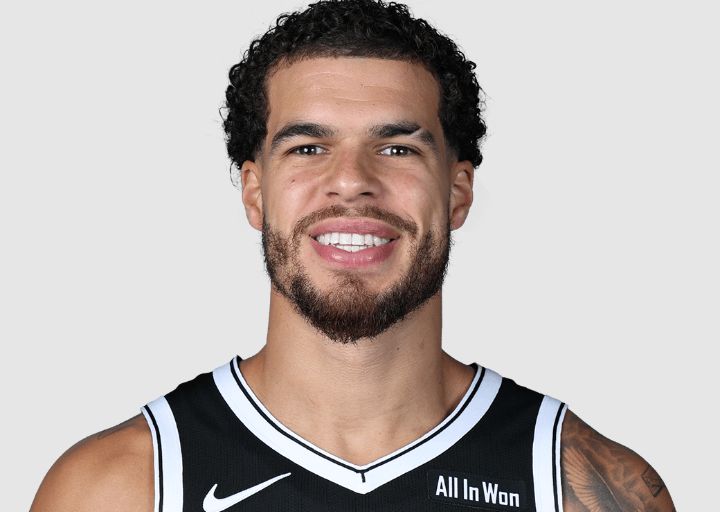
The Detroit Pistons’ pursuit of Michael Porter Jr. is an ambition for immediate championship glory, a willingness to leverage future assets for present-day supremacy. It reflects the high-stakes, talent-centric model of the NBA, where superstar acquisition is often the fastest route to the pinnacle of the sport.
Meanwhile, the EuroLeague’s hiring of Chus Bueno represents an ambition for institutional growth and modernization. It is a strategic investment in leadership that bridges the traditional foundations of European basketball with the demands of the global digital sports economy. Bueno’s task is to architect sustainable growth, ensuring the league’s position as the premier basketball competition in Europe for the next generation.
Together, these developments highlight the perpetual motion of professional basketball. Teams relentlessly seek the player transactions that will bring them a trophy, while leagues must strategically navigate business, media, and fan engagement to ensure their long-term health and relevance. As the 2026 season progresses, the outcomes of the Pistons’ trade deliberations and the early impact of Bueno’s EuroLeague leadership will be key indicators of the evolving power dynamics within the sport.