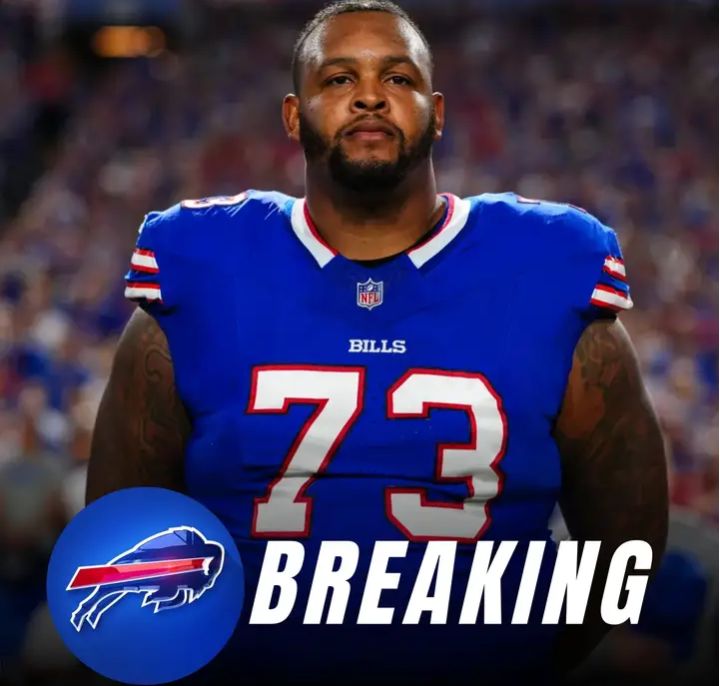
In a professional sports landscape often defined by cold calculations and bottom-line business decisions, a moment of genuine loyalty can resonate like a thunderclap. Dion Dawkins, the Buffalo Bills’ steadfast offensive lineman, recently provided such a moment, offering a powerful reminder that for some players, the value of home transcends the figures on a paycheck.
The situation that prompted this display of commitment was a familiar one in the modern NFL: a significant salary cap crunch. When reports emerged that the Bills were facing difficult financial pressures, the typical script seemed ready to be followed. Teams in such predicaments usually initiate tough conversations, restructuring contracts or, in more drastic cases, parting ways with valued players to regain fiscal flexibility. It’s the unglamorous, often painful, machinery that keeps the league operational.
However, Dawkins chose to rip up that script. Rather than waiting for a call from the front office or allowing his representatives to navigate the situation through standard channels, he took the initiative. Within an hour of the cap concerns becoming public, he made a personal call to the team. What he proposed was unexpected: a willingness to restructure his contract in a way that would provide the team with immediate financial relief, effectively offering to take a pay cut.
For a player of Dawkins’ stature—a two-time Pro Bowl selection with a high-profile contract—this was no small gesture. It was a move that transcended typical business negotiations. It was a clear signal that his priorities extended beyond maximizing his own earnings. In a league where players are often encouraged to secure every last dollar, Dawkins’ choice underscored a different set of values: a commitment to the group, a belief in the collective mission, and a deep-seated connection to his adopted home.
That concept of “home” is central to understanding why this moment carries so much weight. Since joining the Bills, Dawkins has evolved from a promising draft pick into a foundational pillar of the organization. He is not merely a starting left tackle; he is a vocal leader in the locker room, a vibrant personality in the community, and a player whose on-field tenacity mirrors the blue-collar identity that the city of Buffalo and its team have cultivated.
This bond wasn’t forged overnight. It has been the product of years spent in the trenches, sharing in the highs of playoff runs and the lows of heartbreaking defeats. It has been solidified through relationships with teammates who have become brothers and a fanbase known for its unwavering passion. For Dawkins, that history has created a sense of belonging that money alone cannot buy.
His response to the team’s financial challenge was therefore emblematic of that deeper connection. Instead of adopting a guarded, self-preserving stance, he displayed proactivity and selflessness. He signaled to the front office that he was a partner in navigating the team’s challenges, not just a line item on a budget sheet. But the impact of his actions rippled far beyond the executive suites.
To his teammates, Dawkins’ move was a powerful statement of solidarity. It reinforces the idea that the collective goals of the locker room outweigh individual financial gains. To the coaching staff, it demonstrated a player fully invested in the program they are building. And for the fans, who form the lifeblood of the organization, it was a tangible affirmation of what they have always hoped to believe: that the players they cheer for care about the city and the team as much as the city cares about them.
For the Bills organization, Dawkins’ gesture serves as a potent validation of the culture they have worked so diligently to establish. General Manager Brandon Beane and Head Coach Sean McDermott have consistently emphasized the importance of acquiring “process-driven” players—individuals who prioritize the team’s success above personal accolades. In a very real and financially significant way, Dawkins put that philosophy into action. His decision reinforces a culture of alignment, where players and the organization are united in their pursuit of a championship. This kind of unity creates stability, fosters trust, and strengthens the team’s identity—the intangible elements that often elevate good teams into great ones.
Of course, the practical financial details will still require careful negotiation. Dawkins’ willingness to adjust his contract is the starting point, not the final resolution. The structure of any new deal, its implications for future cap years, and the long-term planning for both the player and the team will all need to be addressed. Yet, the tone of the negotiation has been irrevocably set. The conversation has shifted from one of potential loss to one of collaborative problem-solving.
Across the NFL, such acts of loyalty do not go unnoticed. Players, agents, and front-office executives take note of how individuals handle moments of organizational strain. While Dawkins’ approach may not become the league-wide standard, it certainly establishes a benchmark for leadership and commitment. It highlights the profound impact a single player can have when they choose to prioritize something beyond their own contract.
For the fans, stories like this are the ones that transcend the sport. In an era where player movement is constant and loyalty can feel fleeting, seeing a star player voluntarily choose connection over compensation is deeply resonant. It reinforces the emotional core of sports—the idea that these teams and cities are intertwined in a relationship that goes beyond wins and losses. It provides a narrative of hope and authenticity that keeps fans deeply invested in the journey.
As the Bills’ offseason progresses, more challenges will undoubtedly arise. The salary cap will continue to demand difficult decisions, and the roster will continue to evolve. But thanks to the actions of Dion Dawkins, one truth remains unmistakably clear: the foundation in Buffalo is built on more than just talent and athleticism. It is cemented by a shared belief in something bigger than any single individual. And in the high-stakes world of the NFL, that kind of belief can be the most valuable asset of all.