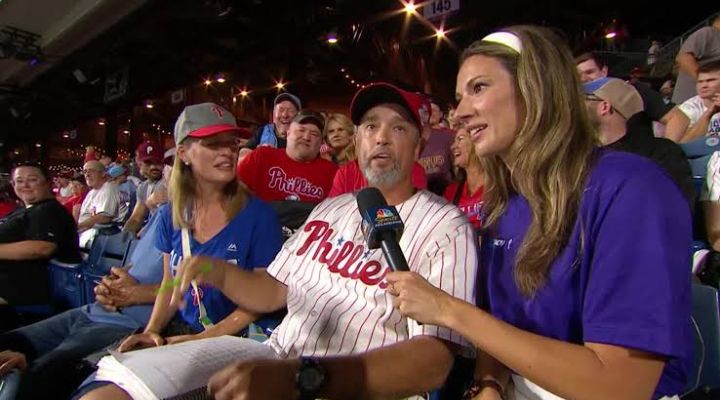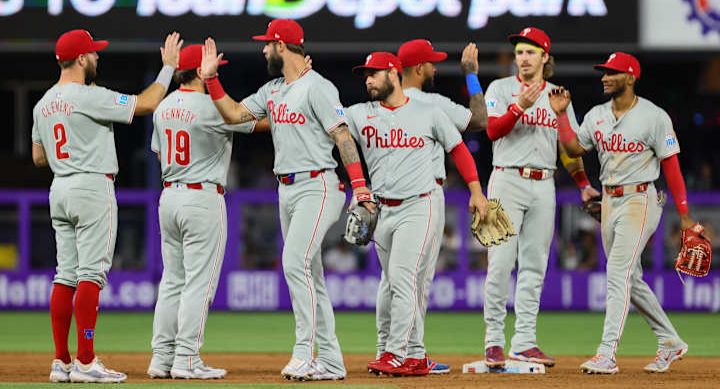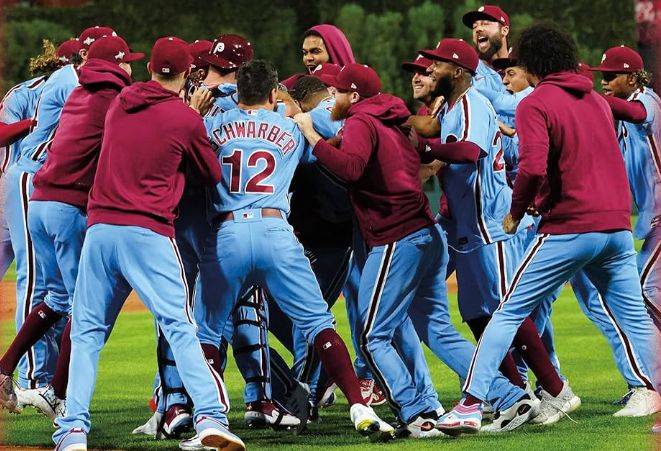
The City of Brotherly Love is feeling anything but affectionate this morning. If you live within a five-block radius of Citizens Bank Park, you didn’t need to check the box score to know how the game ended last night. You could hear it. The boos—guttural, cascading, and relentless—rained down from the stands like a summer thunderstorm, drowning out the crack of the bat and the final out of another ugly loss.
But this wasn’t just any loss. This was the straw that broke the camel’s back for a fanbase known for its loyalty, its intelligence, and its very short fuse for mediocrity. The target of their wrath? A star player—one making generational wealth—who has become a lightning rod for frustration in a clubhouse that was supposed to be marching toward a World Series.
Across social media, sports talk radio, and the smoky corners of dive bars in South Philly, the sentiment is unified: “A total disgrace.” And the demand is growing louder by the minute: Bench him. Now.
The Meltdown That Broke the City
To understand the fury, you have to understand the context. The Philadelphia Phillies entered this season with expectations that could crush a lesser organization. After falling just short in the NLCS last year, the front office doubled down, spending money like it was going out of style. The message was clear: It’s World Series or bust.
For the first few weeks of the season, the vibes were immaculate. The bats were hot, the bullpen was holding, and the Fightins looked like the juggernaut everyone predicted. But over the last ten days, a familiar rot has set in—and it centers squarely on one player.
Last night’s game was a microcosm of the season’s unraveling. With the bases loaded and two outs in the fifth, the Phillies were clinging to a one-run lead. A single there breaks the game open. Instead, the star at the plate—whose name we’ll get to—swung at a slider that bounced three feet in front of home plate. It wasn’t just a bad at-bat; it was an uncompetitive one. He looked lost, overmatched, and frankly, like he wanted to be anywhere else but in the batter’s box.
But it wasn’t just the strikeout. It was what happened an inning later.
A routine fly ball drifted toward right field. It wasn’t a difficult play. It’s the kind of play high schoolers make look easy. Yet, the same star—once lauded for his athleticism—broke late, took a lazy route, and watched the ball clank off the heel of his glove. The error opened the floodgates. Two runs scored. The lead was gone. The energy in the stadium shifted from hopeful to hostile.
When he walked back to the dugout, the cameras caught him smirking. That smirk lit the fuse.
The Anatomy of Anger
Philadelphia fans are often mischaracterized by the national media as harsh or unfair. But here’s the truth: Phillies fans are arguably the most knowledgeable in baseball. They know when a player is slumping. They know when a player is unlucky. And they know—with absolute certainty—when a player has quit on them.
That is the heart of the current fury. This isn’t about a simple slump. Slumps happen. This is about effort. Or rather, the lack thereof.
The statistical case for benching this player is damning. Over the last 30 days, he ranks near the bottom of the league in almost every measurable category: batting average, on-base percentage, and, most alarmingly, chase rate. Pitchers have figured him out. They aren’t throwing him strikes anymore because they know he’ll swing at a pitch that bounces to the backstop. The scouting report is out, and he refuses to adjust.
But it’s the advanced metrics—the ones that track hustle—that have fans seeing red. His sprint speed on ground balls has dropped to the lowest percentile of his career. He doesn’t run out routine grounders anymore. On defense, his “range factor” is plummeting. Plays that were routine two years ago are now adventures.
For a team that prides itself on “winning the day” and playing with the edge that manager Rob Thomson instills, this player has become an island of apathy in a sea of urgency.
The Clubhouse Divide
The most troubling aspect of this saga is the silence coming from the clubhouse. Usually, when a star is struggling, you hear the veterans rally around him. “He’s our guy,” they say. “He’ll figure it out.”
But lately? The quotes have been terse. The body language on the field tells a different story. After last night’s error, when the player walked back to the dugout, he sat alone at the end of the bench. No one went over to talk to him. No veteran put an arm around his shoulder. In a sport built on camaraderie and routine, that isolation is deafening.
If the clubhouse is already turning on him, the front office has a ticking time bomb on its hands.
Why Benching Him is the Only Move
There is an argument to be made—one that old-school baseball minds cling to—that you don’t bench a star making $25 million a year. You let him play through it. You hope he “figures it out” because his talent ceiling is too high to leave on the bench.
But that argument falls apart when that star is actively costing you games.
Baseball is a long season. April and May are for figuring things out. But when a player’s lack of effort is infecting the morale of the other 25 guys in the room, patience becomes a liability. The Phillies aren’t a rebuilding team. They are in a win-now window with a core of Bryce Harper, Trea Turner, and Zack Wheeler. Every game matters. Every at-bat matters. Right now, this player is acting as an anchor, dragging the entire ship down.
A benching isn’t just about punishment. It’s about accountability. It sends a message to the rest of the roster that no one is above the team. It tells the minor leaguers grinding in Lehigh Valley that effort will be rewarded. And frankly, it gives the player a chance to reset without the crushing weight of 45,000 booing fans on his shoulders every night.
The Ultimatum
As of this morning, the hashtags are trending. The sports radio call screens are lit up with demands. The fans aren’t just angry; they are organized. A group is planning a demonstration outside the stadium before tonight’s game, holding signs that echo the sentiment felt across the Delaware Valley.
The message to Dave Dombrowski and the front office is clear: The goodwill is gone. The patience is exhausted. If this player is in the starting lineup tonight, the fans aren’t just going to boo—they’re going to let the organization know that this level of disrespect for the game will not be tolerated.
Philadelphia is a blue-collar town. It’s a city of people who punch the clock, work hard, and demand the same from their sports heroes. When a player cashes a nine-figure check and then refuses to run out a ground ball, it isn’t just a baseball problem. It’s a violation of the city’s core values.
So, will the Phillies have the spine to do what needs to be done? Will they bench the star, swallow the pride, and send a message that the “Philadelphia Standard” is non-negotiable?
The fans have made their demand. Now, the front office has to decide if they have the guts to listen. One thing is for sure: If they don’t, the boos are only going to get louder. And in this town, the boos have a funny way of turning into apathy—and apathy is the one thing a contending team cannot survive.