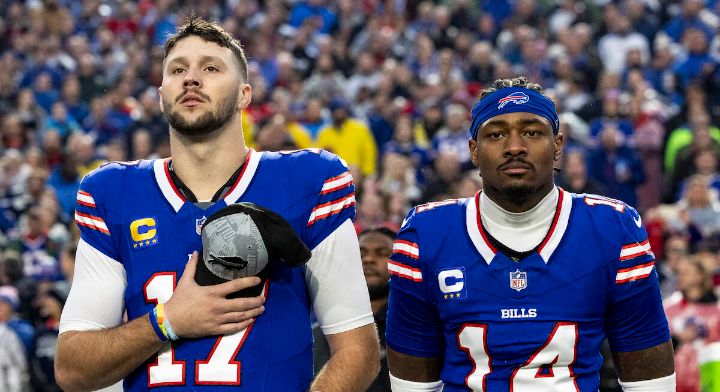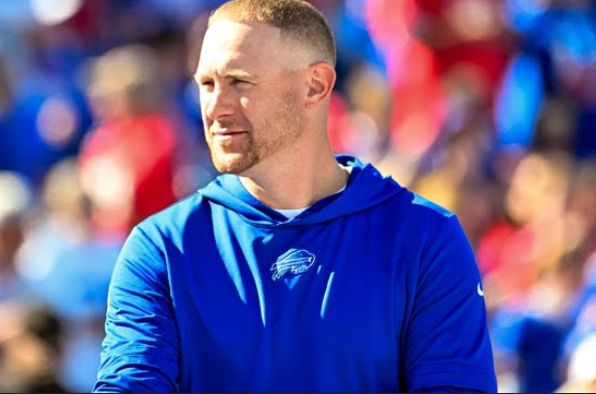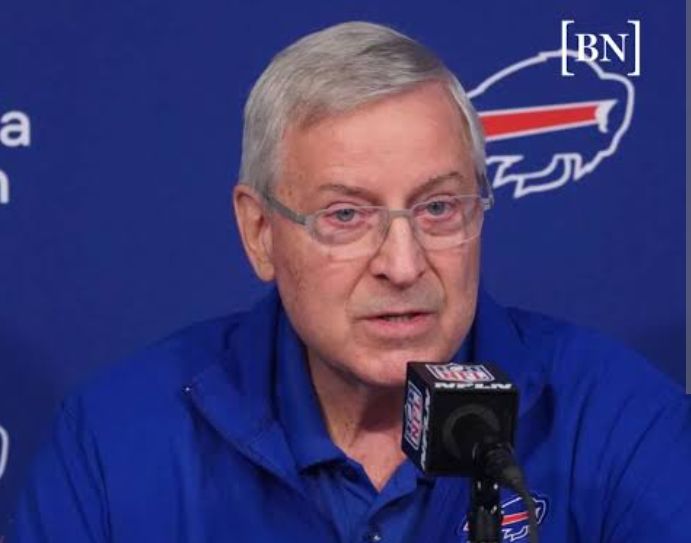
The Buffalo Bills have embarked on a significant new chapter, officially promoting offensive coordinator Joe Brady to the position of head coach. This decision, following the departure of longtime coach Sean McDermott, signals a deliberate pivot towards an offensive-centric future built around superstar quarterback Josh Allen. However, this transition creates a substantial void on the other side of the ball, leading to immediate speculation about the defensive leadership. According to reports, the organization is targeting a familiar face to fill that critical role: Jim Leonhard, the former Bills safety and current Denver Broncos defensive pass game coordinator. This potential pairing of a first-time head coach and a first-time NFL defensive coordinator presents a fascinating, high-stakes gamble for a franchise firmly in “win-now” mode.
The Brady Ascension: Continuity on Offense
Joe Brady’s rise within the Bills organization has been both rapid and merit-based. Joining the staff in 2022 as the quarterbacks coach, he was elevated to offensive coordinator mid-season in 2023. Under his guidance, the Bills’ offense, while already potent, appeared to find a more consistent and explosive rhythm. His successful stewardship of Josh Allen and the offensive unit made him a logical internal candidate to assume the top job. The promotion ensures offensive continuity, a crucial factor for Allen’s development and the unit’s overall performance. Players already familiar with his schemes, terminology, and expectations can avoid a disruptive learning curve, allowing the offense to potentially hit the ground running. Brady’s offensive mind is now tasked with overseeing the entire team, but his primary legacy in Buffalo will be judged on his ability to maximize the historic talent of his quarterback and finally translate regular-season prowess into a Super Bowl appearance.
The Defensive Void: Life After McDermott
The departure of Sean McDermott, however, cannot be understated. For nine seasons, McDermott was not just the head coach but the defensive architect and the embodiment of the team’s “process.” Even with nominal defensive coordinators serving under him, the defensive identity—built on discipline, communication, and versatility—was unmistakably his. His exit creates more than just a vacancy at defensive coordinator; it necessitates a fundamental philosophical shift for the entire defensive unit. Many veteran players on the Bills’ defense have spent their entire careers, or significant portions thereof, within McDermott’s system. Adapting to a new scheme, new terminology, and new leadership principles represents a substantial challenge. The new defensive coordinator will not only need to install an effective system but also win the trust and buy-in of a veteran group that has experienced both great success and painful playoff disappointments under the previous regime.
The Leonhard Connection: From Player to Potential Play-Caller
This is where the reported interest in Jim Leonhard becomes so compelling. Leonhard is no stranger to Buffalo, having played four seasons (2005-2008) as an undersized but fiercely intelligent and productive safety for the Bills. His 10-year NFL career was a testament to football IQ and preparation overcoming physical limitations. This cerebral approach to the game seamlessly translated into coaching. After retiring, he quickly ascended the collegiate ranks, most notably at the University of Wisconsin where he served as defensive coordinator from 2017 to 2022, crafting some of the nation’s most formidable defenses. His units were known for their complexity, disguise, and ability to generate pressure and turnovers.
After a stint as a senior analyst at Illinois, Leonhard made the jump back to the NFL in 2024 with the Denver Broncos. As the defensive pass game coordinator, he played a pivotal role in the Broncos’ dramatic defensive turnaround into one of the league’s elite groups. His work in developing coverages and a cohesive secondary strategy was widely praised. Now, with the Broncos’ season concluded, Leonhard is available, and the Bills appear to be a natural fit. The connection is multilayered: his history with the franchise, his proven success at crafting sophisticated defenses at Wisconsin, and his recent NFL experience in Denver under head coach Sean Payton. Hiring Leonhard would be a move that resonates with fans due to his past as a player and appeals analytically due to his proven schematic acumen.
The Calculated Risk: Dual Inexperience at the Helm
The most pressing question surrounding this potential partnership is one of experience, or rather, the lack thereof in these specific roles. Joe Brady has never been a head coach at any level. Jim Leonhard has never held the title of defensive coordinator in the NFL. While both are undoubtedly bright football minds, the leap to these positions carries immense responsibility and pressure, especially for a team with Super Bowl aspirations.
A first-time head coach must manage game management, clock operations, challenge flags, staff dynamics, media obligations, and the overarching morale of a 53-man roster—all while maintaining his offensive duties. Simultaneously, a first-time NFL defensive coordinator must install a system, call plays in real-time against the league’s best offensive minds, make rapid adjustments, and manage the egos and expectations of veteran players. The “growing pains” often associated with such transitions are not merely theoretical; they manifest in late-game errors, communication breakdowns, and potentially costly losses in a league where the margin for error is infinitesimal.
The Bills, with Josh Allen playing at an MVP level, are not in a traditional rebuilding phase. Their window for championship contention is widely perceived to be wide open, but also inherently finite, tied to Allen’s physical prime. The decision to move on from the experienced McDermott was ostensibly made to get over the final hurdle. Therefore, entrusting the leadership to two men in inaugural roles is a bold, potentially brilliant, or risky gamble. The front office, presumably, is betting on high ceilings, innovative thinking, and a fresh energy that might be needed to break established patterns.
The Path Forward: Integration and Adaptation
If the Bills do hire Leonhard, the success of the 2026 season will hinge on several key factors. First is the synergy between Brady and Leonhard. The head coach must grant his defensive coordinator the autonomy to build and run his unit, while ensuring both sides of the ball operate with a complementary philosophy (e.g., an aggressive offense paired with a risk-taking defense, or a ball-control offense paired with a bend-don’t-break defense). Their working relationship will be under a microscope.
Second, Leonhard’s ability to connect with and teach the existing defensive personnel is paramount. Can he adapt his scheme to highlight the strengths of players like edge rusher Greg Rousseau, cornerback Christian Benford, or linebacker Terrel Bernard? Or will he seek a significant roster turnover to fit his specific vision? His history suggests a flexible, intelligent coach capable of tailoring his system, but the NFL presents a weekly gauntlet of tactical challenges.
Finally, the patience and support of the organization and fanbase will be tested. Early-season struggles are a distinct possibility as the defense learns a new language and the head coach grows into his expansive role. The question is whether the explosive offense, led by Allen, can cover for any defensive instability during this acclimation period. The ultimate metric, however, will be postseason performance. The Brady-Leonhard era will be judged not on September wins, but on whether it can win in January and February.
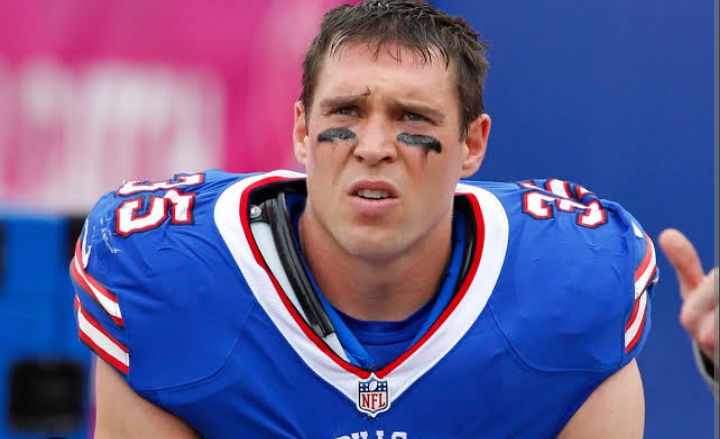
The Buffalo Bills stand at a crossroads defined by both opportunity and risk. By promoting Joe Brady, they have doubled down on their offensive identity and the generational talent of Josh Allen. By targeting Jim Leonhard, they seek to inject the defense with a new, intellectually rigorous identity led by a coach who understands the franchise’s culture. This combination represents a clean break from the McDermott era and a full embrace of a new vision.
The potential rewards are a more dynamic, unified team that finally captures the Lombardi Trophy that has eluded them. The risks involve the pitfalls of inexperience and the possible squandering of Allen’s peak years. The 2026 season will be a compelling case study in modern NFL team-building: a test of whether innovation and fresh leadership can accelerate a championship timeline, or whether the inherent value of experience, especially in high-leverage positions, remains an indispensable ingredient for success. All eyes will be on Buffalo to see if this bold gambit pays off.