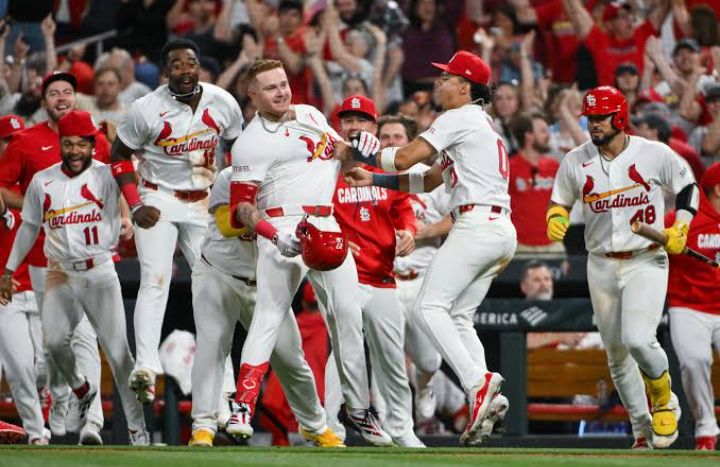
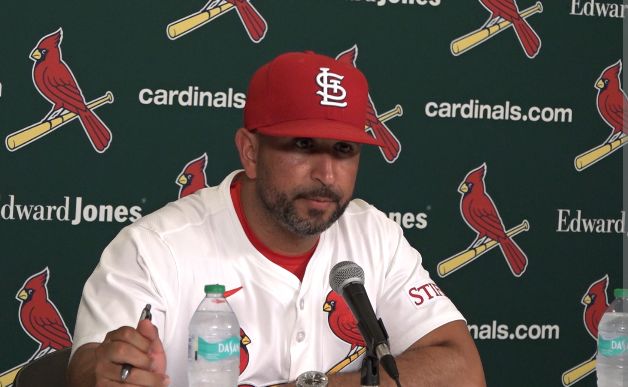
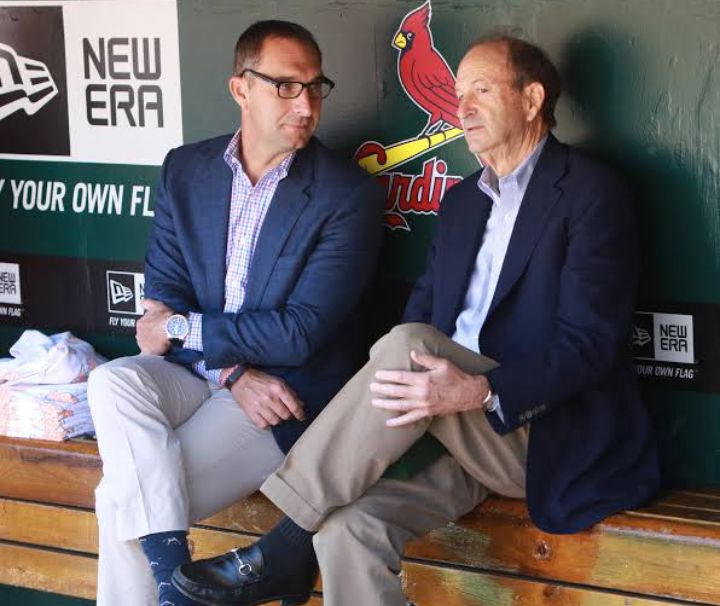
The winter of 2024 was a period of profound uncertainty for Nolan Arenado and the St. Louis Cardinals. Having arrived in St. Louis three years prior with the expectation of perennial contention, Arenado found himself in the heart of a disappointing decline. The 2024 season ended not with a playoff berth, but with a whimper, prompting the Cardinals’ front office, then led by President of Baseball Operations John Mozeliak, to openly acknowledge the need for a significant retooling. For Arenado, a veteran with a deep-seated desire to win, the writing was on the wall. His contract included a full no-trade clause, giving him ultimate control over his destiny, and both parties understood a separation was likely the best path forward.
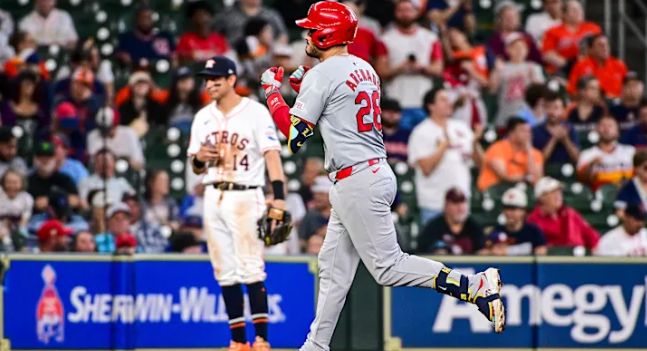
One of the destinations on Arenado’s approved list was the Houston Astros. On the surface, it was a logical fit. The Astros represented the model of sustained American League excellence Arenado craved: a perennial playoff team with a winning culture, a potent lineup, and a recent history of World Series success. For the Cardinals, Houston possessed a deep farm system capable of delivering the young, controllable talent necessary to kickstart a rebuild. By mid-December 2024, Mozeliak and Astros General Manager Dana Brown had hammered out the framework of a deal that satisfied both franchises. The trade was, in the eyes of the front offices, essentially complete. All that remained was for Arenado to waive his no-trade clause.
Then, unexpectedly, he said no.
The decision sent shockwaves through the baseball world and sparked a torrent of speculation and criticism. Arenado was labeled as indecisive, difficult, or having misled the Astros. The narrative painted him as the sole obstacle to a done deal. However, in a detailed interview in January 2026, Arenado finally provided the full context behind his rejection, revealing a story not of capriciousness, but of calculated caution triggered by the Astros’ own confounding roster maneuvers.
“I have the utmost respect for Houston,” Arenado emphasized, setting the tone for his explanation. “They’re a great organization. But you know, they traded Kyle Tucker. [Alex] Bregman wasn’t going back. There were a lot of things that I was just a little hesitant about at the time.”
This simple statement cuts to the core of the issue. In the days immediately surrounding the finalized trade agreement, the Astros executed a move that fundamentally altered their competitive landscape: they traded away homegrown superstar and cornerstone outfielder Kyle Tucker. Simultaneously, it had become an open secret within baseball that longtime third baseman Alex Bregman, a linchpin of their lineup and clubhouse, would be departing in free agency. For Arenado, who was being asked to uproot his family and commit his remaining prime years to a new city, these were not minor details; they were seismic red flags.
From Arenado’s perspective, he was potentially jumping from one sinking ship to another. He had just lived through the painful dissolution of a contender in St. Louis, watching as the core around him aged and the team failed to adequately replenish talent. The Cardinals’ promise had eroded. Now, Houston, in the very window they were asking him to help anchor, appeared to be subtracting two of its most critical offensive pieces—both in their prime—without clear, immediate replacements. Trading Tucker, in particular, signaled a shift in philosophy. It was not the action of a team aggressively “going for it,” but rather one perhaps engaging in a partial reload or facing financial constraints. For a player of Arenado’s caliber, whose entire value is tied to winning and contributing to championship efforts, the Astros’ direction suddenly looked murky.
Arenado’s decision was a pragmatic assessment of risk. His no-trade clause was not merely a perk; it was an insurance policy, a tool designed precisely for this scenario: to avoid landing in a situation that did not align with his career goals. The Astros, by their own actions, had inadvertently devalued their sales pitch. The appeal of joining an Astros team with Tucker, Bregman, Jose Altuve, and Yordan Alvarez was immense. The appeal of joining an Astros team that had just jettisoned Tucker and lost Bregman, with Alvarez carrying significant injury concerns, was decidedly less so. Arenado saw the blueprint of the Cardinals’ decline—the gradual loss of star talent without equivalent reinforcement—and feared he was about to witness Act II in Houston.
His hesitation was vindicated by subsequent events. The 2025 Astros, sans Tucker and Bregman, scuffled to an 87-win season and missed the playoffs, ending their streak of American League Championship Series appearances. The offensive production dipped, and the team lacked the dynamism of previous years. Meanwhile, the Astros, spurned by Arenado, quickly pivoted to acquire first baseman Christian Walker from the Arizona Diamondbacks, a solid player but not of Arenado’s transformative caliber. The swift move also effectively closed the door on any potential revival of the Arenado talks, a fact that reportedly left members of the Astros’ front office frustrated with how the saga unfolded.
The aftermath of the vetoed trade set in motion a new chapter for all involved. The Cardinals, having missed their primary opportunity to move Arenado, entered the 2025 season with him on the roster, but the rebuild was inevitable. They struggled, and by the next trade deadline, Arenado was on the move again, this time to the Arizona Diamondbacks, who were emerging as aggressive contenders in the National League. The Cardinals fully embraced their youth movement, trading other veterans and turning the page on an era. The Astros continued their remodel, attempting to bridge the gap between their veteran core and a new wave of talent.
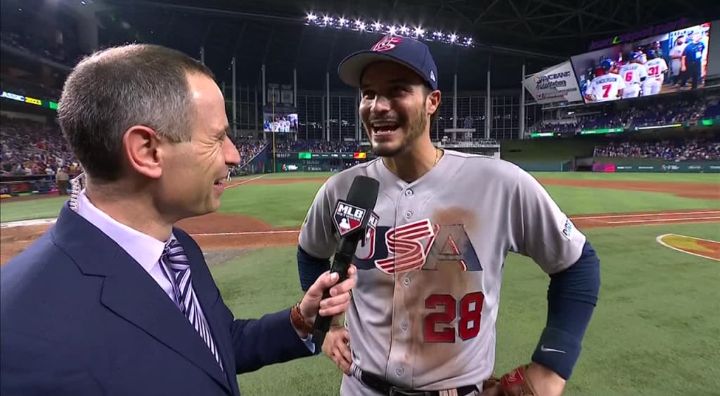
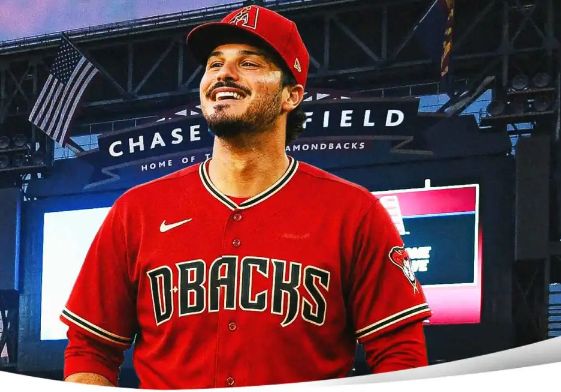
Arenado’s reasoning illuminates the complex human and professional calculus behind major sports transactions. It was not a rejection of Houston as a city or an organization, but a specific rejection of the team’s uncertain trajectory at that precise moment. He exercised the control he had earned through his performance and his contract to make a choice he believed was best for his family and his legacy. In doing so, he highlighted the delicate dance of team-building, where a front office’s simultaneous moves can send conflicting messages. The Astros, perhaps viewing the Tucker trade as a separate baseball decision necessary for the franchise’s long-term health, failed to see how it catastrophically undermined their short-term pitch to a premier win-now player.
The entire episode serves as a case study in athlete agency and the importance of contextual timing. A trade that is perfect on paper in a vacuum can collapse when real-world variables—like the concurrent trading of an MVP candidate—are introduced. Nolan Arenado’s “cold feet” were, in reality, a player diligently doing his due diligence. He looked past the historic logo and the recent championships and examined the immediate roster construction. What he saw gave him pause, and in the high-stakes world of professional sports, where careers are short and championship windows shorter, that pause was enough to change the course of multiple franchises.