In the winter of 2025-26, the St. Louis Cardinals did something unprecedented for a franchise that had long prided itself on stability and perennial contention. They detonated their roster. Nolan Arenado, Sonny Gray, Willson Contreras, and eventually Brendan Donovan were all shipped out in a matter of months. But here’s what should make every Cardinals fan’s blood boil: the organization paid more than $59 million in cash just to make those trades happen.
That’s not a rebuild. That’s a confession.
The $59 Million Receipt
Let’s start with the actual math, because the scale of this financial self-immolation is staggering:
· Nolan Arenado: The Cardinals sent $31 million to the Arizona Diamondbacks to cover most of the $42 million remaining on his contract. The D-backs are paying just $5 million in 2026 and $6 million in 2027. St. Louis is covering the rest.
· Sonny Gray: To move the veteran right-hander to Boston, the Cardinals included $20 million in cash. Gray’s contract was set to pay him $35 million in 2026; St. Louis effectively paid more than half of that for the privilege of watching him pitch elsewhere.
· Willson Contreras: The Cardinals agreed to retain $8 million of Contreras’ remaining salary as part of his trade to the Red Sox, paying $4 million in each of 2026 and 2027.
Add it up: $31 million + $20 million + $8 million = **$59 million**. That’s nearly $60 million the Cardinals are spending this season and next on players who won’t wear the birds on the bat.
For context, that’s more than the entire 2026 payroll of several MLB teams. It’s roughly the combined 2026 salaries of the Cardinals’ entire projected starting infield. And it’s money being lit on fire for no competitive benefit whatsoever.
The Myth of the “Strategic” Rebuild
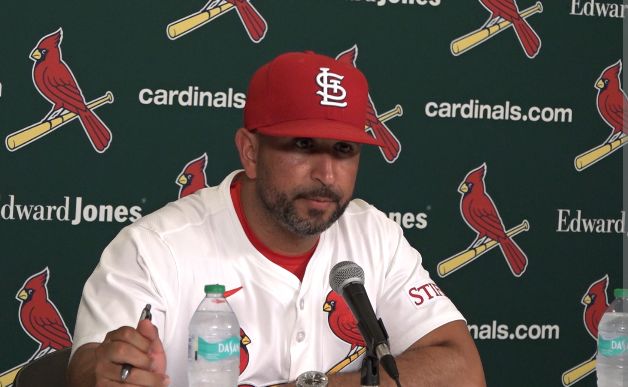
Chaim Bloom, the Cardinals’ new president of baseball operations, has been careful to avoid using the word “rebuilding.” In his introductory press conference, he danced around the term, preferring to talk about “long-term focus” and refusing “to concede anything.”
But here’s the problem: you can’t claim to be refusing to concede while simultaneously handing over $59 million to other teams to take your best players. That’s not strategic patience. That’s paying ransom to undo your own mistakes.
The official narrative is that this cash spending was necessary to improve the quality of prospect returns. By eating salary, the Cardinals could demand better young talent without forcing trade partners to absorb full contracts. And to be fair, they did add intriguing arms like Brandon Clarke, Richard Fitts, Blake Aita, and Jack Martinez.
But let’s be honest about what those returns actually look like. Brandon Clarke, acquired in the Gray deal, is a nice left-handed prospect, but he’s not a top-100 MLB prospect. Richard Fitts is a 25-year-old who posted a 5.00 ERA in 10 starts. Jack Martinez was an eighth-round pick. These are not franchise-altering talents. They’re lottery tickets.
And the Cardinals paid $59 million for the privilege of holding them.
Where Did This All Go Wrong?
The uncomfortable truth is that this fire sale wasn’t necessitated by some unavoidable force of nature. It was the predictable outcome of years of organizational neglect.
The Cardinals’ decline didn’t happen overnight. After the COVID-19 pandemic, ownership reportedly cut back on coaching, coordinator, and development roles that were never fully restored. Then-president John Mozeliak was given a single budget to cover both MLB payroll and player development—and he prioritized the big-league roster at the expense of the farm system.
The results were predictable. The Cardinals went 0-3 in playoff games from 2021-22. They’ve now missed the postseason for three straight years. Their player-development apparatus, once among baseball’s most innovative, fell behind as nearly every other organization caught and surpassed them.
The Arenado contract, in particular, tells a damning story. When the Cardinals acquired him from Colorado, they thought they were getting a franchise cornerstone. Instead, they got a declining 35-year-old who hit .237 with just 12 home runs in 2025. And when they tried to trade him, they discovered that the contract they inherited—the one with $42 million still owed—was so toxic they had to eat three-quarters of it just to find a taker.
This isn’t a rebuild. It’s a bankruptcy proceeding.
The DeWitt Family’s Complicity
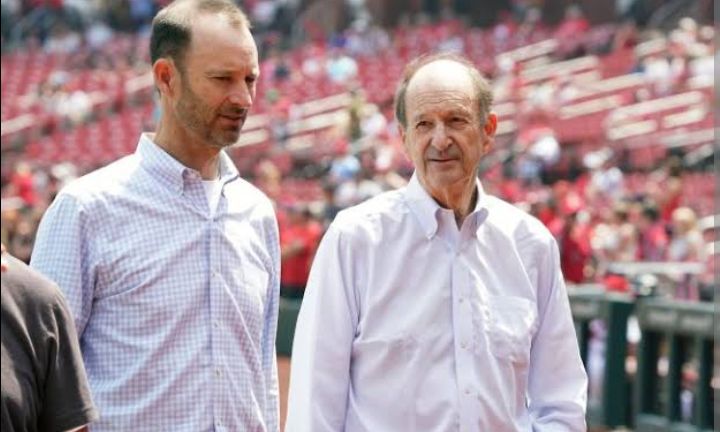
No discussion of this mess is complete without addressing ownership. The DeWitt family has owned the Cardinals since 1996 and built a reputation for stability and smart spending. But they’re not blameless here.
The Cardinals’ cash payroll has long been tied to game-day revenues. When attendance plummeted—to a dismal 2.25 million in 2025, the lowest in a standard season since 1984—the financial model collapsed. The regional sports network bubble popped. Local broadcast revenues took a 23% hit, then another when the team moved to MLB’s broadcast platform for 2026.
The DeWitts did commit more than $50 million to defray the contracts of Gray, Contreras, and Arenado. That’s not nothing. But it’s also not the same as investing in winning. Paying players to leave is the opposite of competing. It’s the move of an ownership group that’s more concerned with cleaning its books than with putting a winning product on the field.
And let’s not forget: the Cardinals are still paying Nolan Arenado’s contract. He’s just playing for Arizona now. The Colorado Rockies are also still paying part of that deal—the $50 million they attached to the original trade just to get rid of a player they never should have let go. So Arenado is currently being paid by three different organizations. That’s not baseball economics. That’s farce.
What Does This Actually Accomplish?
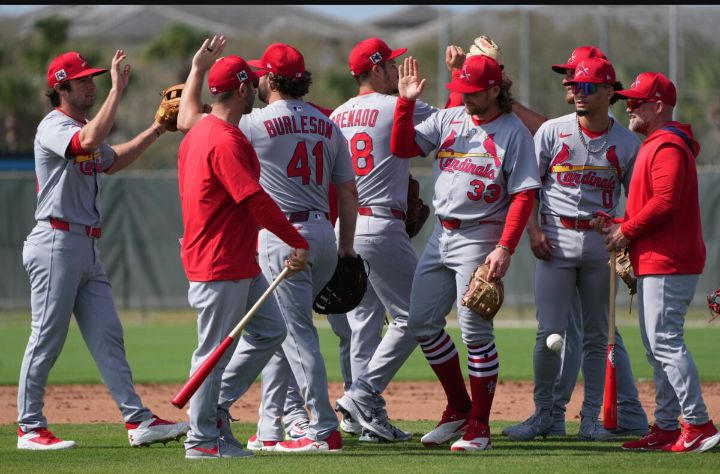
The defense of this strategy is that the Cardinals needed to clear space for young players. Nolan Gorman will finally get an uninterrupted season at third base. JJ Wetherholt, the organization’s top prospect, is poised to be the Opening Day second baseman. Alec Burleson will be installed at first base. The rotation will make room for Quinn Mathews.
That’s all true. But you didn’t need to spend $59 million to accomplish any of it.
The Cardinals could have simply played their young players while keeping veterans as mentors or trade chips. They could have eaten less salary and accepted slightly lower prospect returns. They could have structured contracts differently in the first place to avoid being in this position.
Instead, they chose the most expensive possible path to the same destination. And they did it while asking fans to call it a “strategic reset.”
The Long-Term Cost
The $59 million the Cardinals are paying to departed players isn’t just money down the drain—it’s money that can’t be spent elsewhere. In a mid-market organization like St. Louis, where every dollar matters, that financial drag will be felt for years.
Bloom has promised that when the Cardinals are ready to emerge from this rebuild, the DeWitts will commit to spending again. But that’s easy to say when you’re in the middle of a tear-down. The real test will come when the young players are ready and the organization needs to supplement them with free-agent talent. Will ownership open the checkbook then? Or will they point to the $59 million they already spent on “rebuilding” as evidence of their commitment?
For now, Cardinals fans are being asked to trust the process. To believe that eating $59 million in dead money is actually a savvy long-term play. To accept that a franchise built on the myth of “the Cardinal Way” needed to burn it all down and start over.
But here’s the thing about burning it all down: you don’t get to pretend you’re being strategic when you’re the one who left the gas can out.
The Cardinals didn’t rebuild this winter. They paid a $59 million admission fee to a rebuild that their own mismanagement made inevitable.