Forget everything you thought you knew about the St. Louis Cardinals’ 2026 season. The Birds on the Bat just pulled the trigger on a decision that signals a radical shift in identity, and it happened in the most unexpected way possible.
If you’ve been following the Cardinals this spring, you’ve probably heard the buzz about a certain 23-year-old outfielder who was tearing the cover off the ball in Jupiter. Nelson Velázquez arrived at Spring Training as an afterthought—a minor league deal, a non-roster invitee, just another name trying to claw his way onto a rebuilding roster. Then he started hitting. And hitting. And hitting some more.
By the time camp wrapped up, Velázquez had posted a ridiculous .357/.449/.667 slash line. He launched four home runs, drove in ten runs, and posted a 1.116 OPS that made him statistically one of the best hitters in Cardinals camp. He was exactly what the front office said they needed: right-handed pop in an outfield that desperately lacked it.
So when the Cardinals announced their Opening Day roster on Monday, everyone expected to see Velázquez’s name on the list. The analytics said yes. The spring numbers said yes. Even the fans demanded it.
But he’s not there.
The Decision That Left Everyone Stunned
In a move that has sent shockwaves through Cardinal Nation, the team sent Nelson Velázquez down to Triple-A Memphis—despite him being one of the most impressive offensive performers of the entire spring. The decision seems to defy logic. Why would a team that spent the entire offseason talking about needing outfield production send away a guy who was producing exactly what they needed?
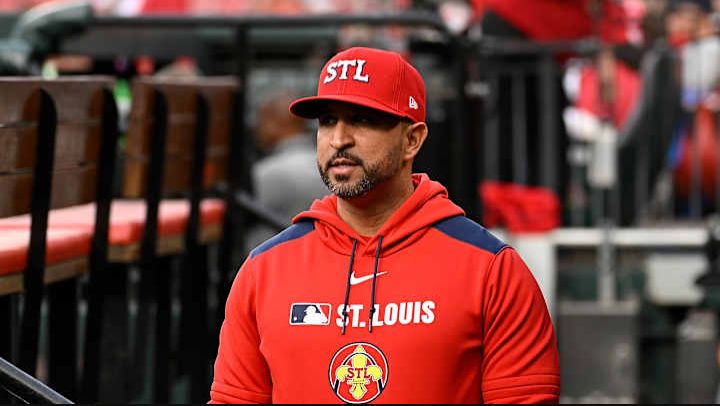
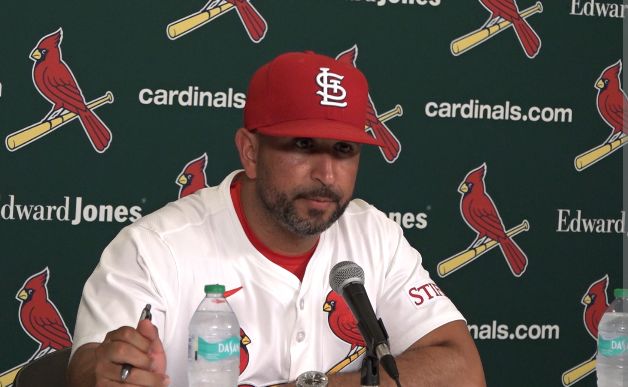
Manager Oliver Marmol tried to explain the unexplainable, and his answer reveals far more about the Cardinals’ true direction than any spring training stat line ever could.
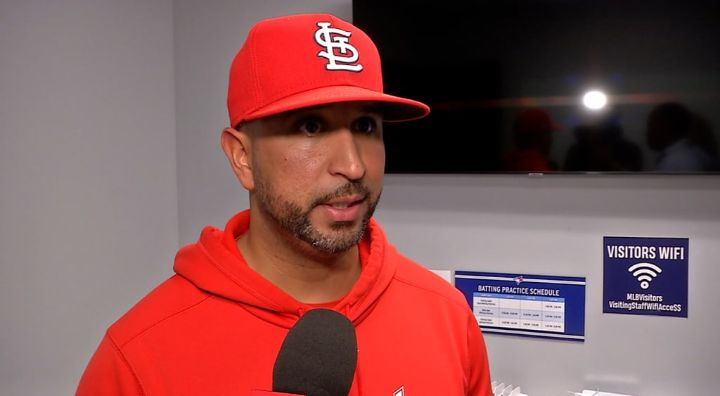
“There’s a lot of variables,” Marmol said when asked about the Velázquez decision. “A lot played into those decisions and they were tough decisions and we waited until the very end to make them because of that. But you’re looking at a combination of what you just described of the identity of the club. Also, some of these decisions allow us to keep all guys, right? And that was important to us, especially breaking camp, just having depth. So, although tough, I think it’s the smart move when you take a step back and just look at the big picture.”
Let’s decode that for a moment. Marmol is essentially admitting that performance on the field wasn’t the determining factor. Velázquez did everything he possibly could have done to earn a roster spot. But the Cardinals sent him down anyway.
Why This Move Changes Everything
To understand the magnitude of this decision, you have to understand the roster mechanics behind it. Velázquez wasn’t on the 40-man roster. Adding him would have required removing someone else—someone the organization clearly views as part of its long-term plans.
Instead, the Cardinals are rolling into the season with Thomas Saggese, José Fermín, and Nathan Church as their options in left field. All three are young. All three are on the 40-man roster. And all three represent something that Velázquez, despite his scorching spring, does not: organizational control and developmental priority.
This isn’t about winning in April. This is about the Cardinals finally, fully committing to what president of baseball operations Chaim Bloom has been quietly building since he took over.
The Rebuild Is Real—And It’s Happening Now
Let’s be clear about what the Cardinals have done this offseason. They traded Sonny Gray. They traded Willson Contreras. They traded Nolan Arenado. They traded Brendan Donovan. Four All-Stars, all sent packing in exchange for prospects, draft picks, and financial flexibility.
The Cardinals’ projected payroll for 2026 is expected to fall under $100 million for the first time since 2010. They will be a revenue-sharing recipient for the first time in at least 25 years. The broadcast revenue that once pumped $60 million into the organization has shrunk to roughly $20 million.
These aren’t the numbers of a team trying to contend. These are the numbers of a team that has looked in the mirror and accepted a hard truth: the old way isn’t working anymore.
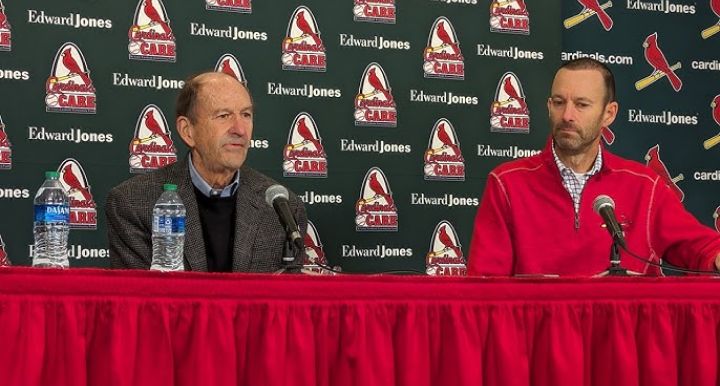
Bloom has been upfront about this from the beginning. At his introductory press conference, he said he’d prioritize the organization’s long-term sustainability over short-term success. The moves since then have backed up every word.
Meanwhile, The Future Is Already Here
While Velázquez was being sent down, another decision was being finalized that tells you exactly where the Cardinals are placing their bets.
JJ Wetherholt, the organization’s top prospect and the No. 7 overall pick in the 2024 draft, officially made the Opening Day roster. He’ll wear No. 26 and step in immediately as the starting second baseman.
This is the player the Cardinals are betting their future on. Across Double-A and Triple-A in 2025, Wetherholt hit .306 with 17 home runs, 59 RBIs, and 23 stolen bases while maintaining the kind of elite plate discipline that makes scouts drool. In spring training, he posted a .386 on-base percentage and drew nine walks in 15 games.
Wetherholt represents everything Velázquez does not: a top draft pedigree, years of team control, and a developmental timeline that aligns with where the Cardinals want to be in 2027 and 2028.
The rotation that will take the field this year tells the same story. Matthew Liberatore gets the Opening Day nod, followed by Michael McGreevy, Dustin May, Kyle Leahy, and Andre Pallante. It’s young. It’s unproven. And aside from May—a one-year stopgap signed specifically to be flipped at the deadline—it’s homegrown.
What This Means For Cardinal Nation
If you’re a Cardinals fan hoping for a surprise playoff push in 2026, this roster move should serve as your wake-up call. The front office is no longer pretending this is a team on the verge of contention. They are methodically, deliberately building toward something that won’t fully materialize for another two or three years.
Velázquez became a casualty of that timeline. His spring performance was real. His bat would have helped this team win games in April. But winning games in April is not the priority right now. Protecting the 40-man roster, maintaining flexibility, and ensuring that the players the organization has already invested in get their opportunities—that’s the priority.
The question now is whether the fan base has the patience for this approach. Cardinals fans have been spoiled by decades of consistent winning. The idea of a true, honest-to-goodness rebuild is foreign territory for a generation of supporters who grew up expecting 90 wins every year.
But the alternative—continuing to patch holes with aging veterans and middling free agents while the farm system languished—wasn’t working either. The Cardinals finished under .500 in back-to-back seasons for the first time in decades. Something had to change.
This is that change.
The Bottom Line
Nelson Velázquez will almost certainly get his opportunity at some point this season. Injuries happen. Trades happen. The Cardinals have intentionally built depth so they can withstand those inevitabilities. But for now, the message from the front office is clear: they are prioritizing the future over the present, even when the present is staring them right in the face with a .357 batting average.
The Cardinals just announced a shocking roster move. But the real shock isn’t that Velázquez got sent down. It’s that the organization is finally, unapologetically admitting what this season is really about.
He’s done. And by “he,” we mean the old way of doing things in St. Louis. Welcome to the new era. It might not be pretty at first. But the Cardinals are betting everything that it will be worth the wait.