The Buffalo Bills entered the 2026 offseason with a clear and pressing need: upgrade a defensive line that struggled to consistently generate pressure during the second half of last season. For weeks, the fanbase had been buzzing about the possibility of landing Trey Hendrickson, the prolific sack artist who had terrorized quarterbacks for the Cincinnati Bengals before an injury-shortened 2025 campaign. When news broke Wednesday morning that Hendrickson had instead agreed to a four-year deal worth up to $120 million with the Baltimore Ravens, the reaction in Western New York ranged from frustration to genuine concern about what comes next.
The development stings for multiple reasons, not least because the Bills were reportedly in the thick of negotiations right up until the end. According to ESPN NFL reporter Jeremy Fowler, Buffalo was one of several teams engaged in serious discussions with Hendrickson’s representatives, alongside the Indianapolis Colts, Tampa Bay Buccaneers, Washington Commanders, and Philadelphia Eagles. The Colts, in particular, believed they were close to finalizing a deal at one point. But when the Ravens unexpectedly re-entered the pass rusher market after abruptly pulling out of a trade for Las Vegas Raiders star Maxx Crosby—citing issues with his physical—they pivoted quickly to Hendrickson and made him an offer he couldn’t refuse.
The terms of the agreement illustrate exactly why Baltimore won the sweepstakes. A four-year contract worth up to $120 million averages $30 million per season, though the structure includes incentives that could push the total value to that ceiling. More realistically, the guarantee and annual average land somewhere in the $28 million range, a figure that would have tested the limits of Buffalo’s salary cap flexibility. The Bills, who have been carefully managing their cap situation while extending core players like Josh Allen and Stefon Diggs in recent years, were likely uncomfortable committing that kind of money to a 29-year-old defender coming off a season in which he played only seven games due to injuries.
Hendrickson’s recent health history adds another layer of complexity to the evaluation. After posting back-to-back seasons with 17.5 sacks in 2023 and 2024, establishing himself as one of the NFL’s most consistent and disruptive edge rushers, he managed just 4.5 sacks in limited action last year. Various ailments limited his explosiveness and ultimately cut his season short. The Bengals, facing their own cap constraints and a roster with multiple high-priced stars, were reportedly unwilling to meet his contract demands, which is why he became available in the first place. Teams like Buffalo saw the risk-reward calculation and decided the potential reward outweighed the injury concerns—just not at the price point Baltimore ultimately offered.
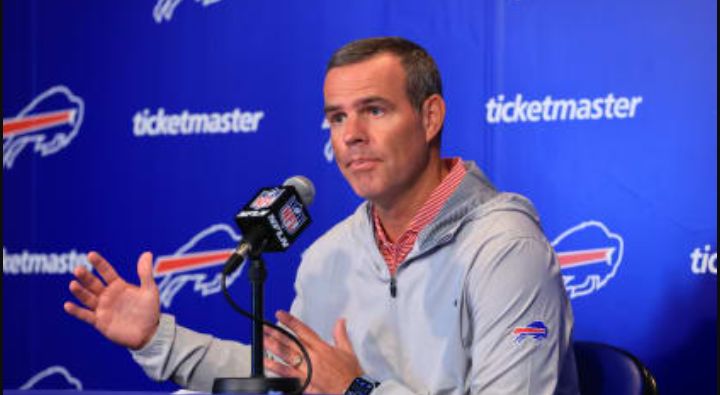
For Bills general manager Brandon Beane, the Hendrickson situation represents a familiar challenge. Throughout his tenure in Buffalo, Beane has demonstrated a willingness to pursue impact players aggressively while maintaining enough discipline to avoid contracts that could hamstring the franchise down the road. That approach has kept the Bills competitive year after year, but it has also resulted in missing out on certain high-profile targets. The difference this time is the urgency of the need and the scarcity of alternatives.
Buffalo’s defensive line ranked in the middle of the pack in sack percentage last season, and the numbers were even worse in crucial moments against elite quarterbacks. In the playoffs, the inability to affect opposing passers without sending extra blitzers left the secondary vulnerable and ultimately contributed to another early exit. The front office identified edge rusher as the top priority this offseason, and Hendrickson was widely viewed as the most attainable difference-maker available. Now that he’s off the board, the Bills must pivot to Plan B, though it’s increasingly unclear what that looks like.
The Maxx Crosby trade rumors that circulated earlier this week offered a tantalizing alternative, but that door appears to have closed, at least for now. When the Ravens backed out of their agreement with the Raiders, citing concerns from Crosby’s physical, it created a moment of uncertainty that briefly fueled speculation about other teams jumping back into the mix. However, Las Vegas has since indicated they are comfortable keeping Crosby in the fold, and his medical situation—whatever it may be—would presumably give any acquiring team pause. The Bills could certainly make another call to gauge the Raiders’ willingness to deal, but the asking price would likely remain prohibitive, and the medical questions wouldn’t disappear.
Beyond Crosby, the free agent market for edge rushers has thinned considerably. Veterans like Chandler Jones and Justin Houston remain available, but both are on the downside of their careers and would represent complementary pieces rather than transformative additions. The trade market could yield names like Brian Burns or Montez Sweat, though acquiring either would require significant draft capital and likely a lucrative extension. The Bills have demonstrated reluctance to part with premium picks, preferring to build through the draft and supplement with strategic veteran signings.
That philosophy has served them well in building a perennial contender, but it also explains why they find themselves in this position. Teams that consistently win during the regular season draft later in each round, making it harder to land immediate impact players without trading up. The Bills have compensated by developing mid-round picks and finding value in free agency, but the edge rusher position has proven particularly difficult to address through those methods. Gregory Rousseau showed flashes last season but hasn’t developed into the consistent pressure player the team hoped for when they drafted him in the first round. A.J. Epenesa is a solid rotational piece but not a primary option. The need for a true difference-maker off the edge remains acute.
The Ravens, meanwhile, have positioned themselves as even more formidable obstacles in the AFC. Adding Hendrickson to a defense that already features Roquan Smith, Kyle Hamilton, and Marlon Humphrey creates matchup nightmares for opposing offenses. Baltimore has consistently been one of the league’s best defensive teams under coordinator Mike Macdonald, and Hendrickson’s ability to generate pressure with just a four-man rush will only make their complex coverage schemes more effective. For the Bills, who already had to contend with Patrick Mahomes and the Kansas City Chiefs in their own conference, adding a powerhouse like Baltimore to the list of threats makes the path to a Super Bowl that much steeper.
What happens next for Buffalo depends largely on how aggressive Beane is willing to become. The draft offers some intriguing possibilities, with several edge rushers projected to be available when the Bills select late in the first round. Rookies, however, rarely provide immediate impact at the level Hendrickson would have, and relying on a first-year player to elevate a defense with Super Bowl aspirations carries significant risk. The veteran trade market may heat up as the draft approaches and teams with surplus pass rushers become more motivated to deal. Names like Za’Darius Smith or Danielle Hunter could become available depending on how their current teams’ offseason plans shake out.
For now, Bills fans are left to wonder what might have been and to hope that the front office has another move in mind. The Hendrickson news broke just as optimism was building following Connor McGovern’s extension and the team’s generally quiet but solid start to free agency. The reality of competing in the modern NFL is that not every target will sign, and the best organizations adapt quickly rather than dwelling on missed opportunities. Beane has earned the benefit of the doubt through years of successful roster construction, but the margin for error shrinks with each passing season of Josh Allen’s prime. The Hendrickson deal with Baltimore doesn’t end Buffalo’s hopes for 2026, but it certainly makes the road ahead more difficult.