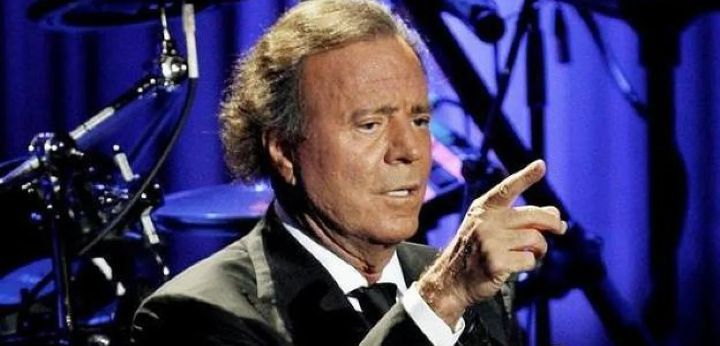
Few artists have defined romance in music the way Julio Iglesias has. For decades, his voice floated through candlelit restaurants, late-night radios, and slow dances around the world. He became the soundtrack of love for millions. Yet, behind the velvet voice and timeless ballads lies a contradiction that continues to fascinate fans: the man who built an empire on love songs has often hinted that he never truly believed in “forever.”
It’s a paradox that only adds to the mystery of one of the most successful singers in music history.
The Rise of a Romantic Icon
Long before streaming platforms and viral hits, Julio Iglesias was already a global phenomenon. His career began unexpectedly after a serious car accident ended his dream of becoming a professional footballer. During recovery, he discovered music—an accident of fate that would change the landscape of romantic pop forever.
By the 1970s and 80s, Iglesias had become a global superstar. Singing in multiple languages, he crossed borders effortlessly. His music blended Latin passion with international pop appeal, turning songs like “Hey,” “To All the Girls I’ve Loved Before,” and “Begin the Beguine” into timeless classics.
Fans didn’t just listen to his music—they felt it. His voice carried longing, heartbreak, and tenderness in ways that seemed deeply personal. For many listeners, Julio Iglesias was the very definition of romance.
The Love Song Empire
With over 300 million records sold worldwide, Iglesias built one of the most powerful musical legacies in history. His songs dominated charts across Europe, Latin America, Asia, and North America. At a time when language barriers limited many artists, he embraced them—recording music in Spanish, English, French, Italian, Portuguese, and more.
This global approach transformed him into a symbol of international romance. His concerts felt intimate, almost confessional, as if he were singing directly to each person in the audience.
In the world of love songs, Julio Iglesias wasn’t just successful. He was royalty.
The Contradiction That Surprises Fans
Despite this image, Iglesias has often spoken about love in surprisingly complex terms. In interviews over the years, he has suggested that relationships are fragile and that the idea of “forever” can sometimes be more dream than reality.
For fans who grew up believing in the romance of his music, this honesty can feel almost shocking.
How could the man who sang about eternal love seem skeptical about it?
Some believe the answer lies in experience. Iglesias lived a life surrounded by fame, travel, and constant attention—an environment where maintaining long-term relationships can be incredibly difficult. His life story, filled with passion and high-profile romances, reflects the same emotional intensity heard in his music.
The Truth Behind the Music
Perhaps the secret of Julio Iglesias’ success lies in that contradiction.
His songs feel real because they don’t come from a fantasy. They come from a place where love is powerful, beautiful, and sometimes fleeting. Instead of promising perfect endings, his music captures the emotional moments that happen along the way—falling in love, losing love, remembering love.
That honesty resonates with listeners across generations.
A Legacy That Still Echoes
Today, Julio Iglesias remains one of the most influential Latin artists of all time. His impact extends far beyond his own career, shaping the path for international stars and even influencing the global success of artists like his son, Enrique Iglesias.
But perhaps his greatest legacy is the emotional world he created through music—a world where romance is powerful, imperfect, and unforgettable.
Because in the end, even if Julio Iglesias never fully believed in “forever,” he gave the world songs that will live forever.