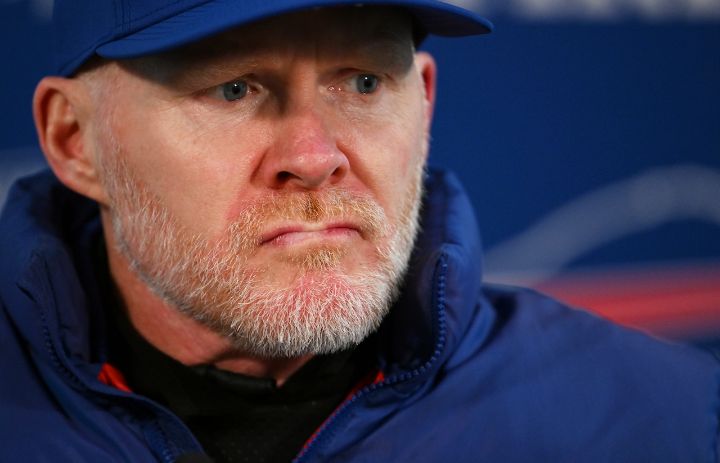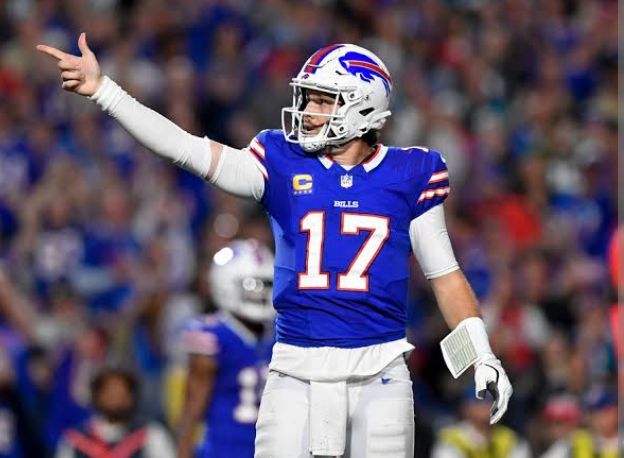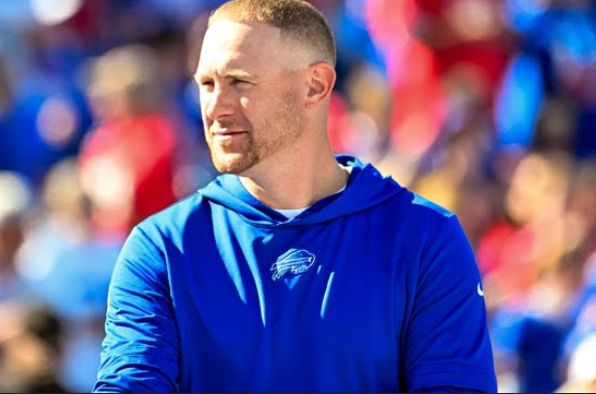
As the lights shine brightly on the Indiana Convention Center for the 2026 NFL Scouting Combine, the Buffalo Bills’ football operations are operating on two parallel tracks. In Indianapolis, General Manager Brandon Beane, Head Coach Joe Brady, and their staff are meticulously evaluating the next wave of collegiate talent. However, before the team’s decision-makers boarded their flights west, they ensured that crucial business was handled back home in Orchard Park. In a move that speaks volumes about their philosophy, the Bills have secured two of their own internal free agents, inking swing offensive lineman Alec Anderson and defensive tackle Phidarian Mathis to one-year contracts.
While the signings of Anderson and Mathis may not generate the same buzz as a blockbuster trade or a high-profile free agent acquisition, they represent the foundational work required to build a sustainable contender in the modern NFL. In a 17-game season where attrition is inevitable, depth is not just a luxury—it is a necessity. By retaining these two ascending players, the Bills are reinforcing their roster from the ground up, potentially setting the stage for them to assume significantly larger roles in 2026.
Alec Anderson: The Swiss Army Knife of the Offensive Line
The first piece of the puzzle is Alec Anderson, a versatile offensive lineman who has quietly become an indispensable part of the team’s big-man group. At 6’5″ and 305 pounds, Anderson possesses the ideal frame for the trenches, but it is his mentality and positional flexibility that make him such a valuable commodity. Anderson plays with a palpable mean streak and a physical edge that resonates throughout the entire offensive line room. His aggressive demeanor sets a tone that coaches covet, bringing an attitude that can galvanize his teammates.
What truly sets Anderson apart, however, is his remarkable versatility. In a league where gameday rosters are limited, having a player who can functionally play tackle, guard, and center is like finding gold. Anderson has proven he can line up at any of the five positions along the front, giving offensive line coaches and play-callers immense flexibility when constructing the protection schemes. If an injury occurs mid-game, Anderson is the type of player who can slide into multiple spots without the offense missing a beat.
His durability is equally impressive. Anderson has been an ironman for the Bills, dressing for all 17 games in each of the last two seasons. This reliability, combined with his toughness, has earned him the trust of the coaching staff. Looking ahead to the 2026 season, Anderson’s role could expand significantly depending on how free agency unfolds. Starting guards David Edwards and Connor McGovern are both facing uncertain futures, and if either—or both—depart for other opportunities, Anderson is the logical in-house candidate to step into the breach. Whether sliding into a guard spot or potentially snapping the ball at center, Anderson provides a safety net that allows the Bills to approach the offseason with leverage, rather than desperation.
Phidarian Mathis: A Developmental Prospect Ready to Break Out
On the defensive side of the ball, the re-signing of Phidarian Mathis tells a story of resilience and developmental patience. Mathis entered the league as a 2022 second-round draft pick by the Washington Commanders, carrying with him the expectations of a high selection. After his tenure in Washington, he joined the Bills’ practice squad last September—a move that at the time seemed like a low-risk flier on a player looking to reboot his career.
Since arriving in Buffalo, Mathis has quietly worked to rebuild his trajectory. He appeared in six games for the Bills last season, recording 13 tackles and demonstrating that he is steadily absorbing the defensive system. While those numbers are modest, they represent important steps in his ongoing development. For a player who has faced the adversity of changing teams and fighting for a roster spot, every snap is a building block.
The 2026 season presents a unique opportunity for Mathis, largely due to the arrival of new defensive coordinator Jim Leonhard. Known for his aggressive and multiple-front schemes, Leonhard requires a deep rotation along the defensive line to keep players fresh and create matchup problems. At his size, Mathis offers the kind of big-bodied presence that is essential in a 3-4 base defense. He is capable of occupying blockers and stuffing the run, which in turn frees up the linebackers to make plays.
With Leonhard at the helm, Mathis is poised to see his most extensive action as a Bill. The team is hopeful he can achieve the milestone of playing in all 17 games for the first time in Buffalo, providing a reliable rotational piece that allows the coaching staff to manage the snap counts of the starters. In a division and conference that demands physicality, having a fresh defensive tackle rotation late in games and late in the season is a critical advantage.
The Bigger Picture: Continuity and Cultural Cohesion
While the signings of Anderson and Mathis are practical moves to secure depth, they also reflect a deeper organizational commitment to cultural continuity. In an era where free agency often creates massive roster turnover, the Bills are making a concerted effort to retain players who already understand the program. Both Anderson and Mathis are well-versed in the team’s expectations, the practice habits required to succeed, and the nuances of the playbook. This institutional knowledge is invaluable; it allows the team to hit the ground running in OTAs and training camp rather than spending weeks acclimating new faces.
Furthermore, these signings send a message to the locker room that hard work and development are rewarded. Anderson, who grinded as a versatile backup, and Mathis, who worked his way up from the practice squad, are examples to undrafted rookies and young players that the path to a long-term role exists in Buffalo.
Of course, these moves alone do not guarantee a Super Bowl. The Bills still have significant roster decisions to make, and the work in Indianapolis will be critical to addressing any remaining holes. However, by taking care of their own before diving into the external market, Beane and Brady are demonstrating a disciplined approach to roster construction. They understand that doing something different to expect a different result means valuing the players who have already bought into the system.
As the Bills chase their elusive first Super Bowl title, the contributions of players like Anderson and Mathis may not make the highlight reels. But when the games are being decided in the frigid months of December and January, it is often the unsung heroes in the trenches who determine who advances and who goes home. By securing these two pieces now, Buffalo has fortified its foundation, ensuring that when the time comes, they will have the depth and toughness required to compete at the highest level.