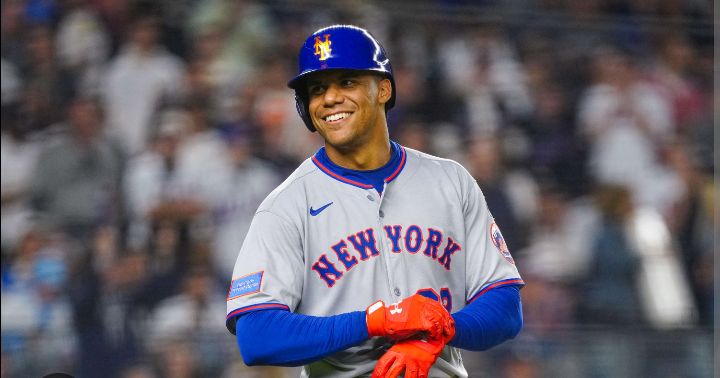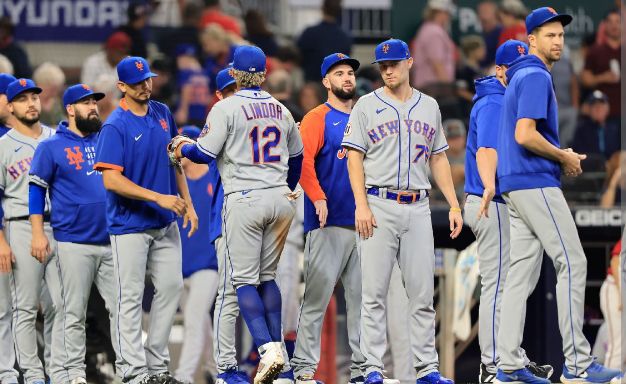
The New York Mets didn’t hand Juan Soto $765 million just to hit home runs. They invested in something inevitable—a player entering his prime with the talent and mentality to dominate baseball for years.
And Soto is making it clear: the National League MVP award isn’t just a dream anymore. It’s an expectation. Every single year.
“I’m going to be there every year, too,” Soto told MLB.com’s Anthony DiComo, delivering a direct message to Shohei Ohtani, the two-way phenomenon who has turned the MVP trophy into his personal collection.
The easy narrative frames this as a soundbite battle—Soto versus Ohtani, superstar versus unicorn. But the real story runs deeper. Soto isn’t chasing Ohtani’s historic 50-50 season. He’s building something that might be even harder to achieve: sustained excellence that forces voters to pay attention year after year.
The Consistency Path Versus The Spectacle Path
Ohtani wins MVPs with moments nobody has ever seen before. Fifty home runs and fifty stolen bases in a single season. Pitching and hitting at an elite level simultaneously. Unprecedented. Historic. The kind of season that makes highlight reels for decades.
Soto’s path looks different. It’s about showing up every single day and producing at a level that can’t be ignored.
In his first year in Queens, Soto launched a career-best 43 home runs and swiped 38 bases. That performance landed him third in NL MVP voting—a phenomenal season by any normal standard, yet somehow overlooked in an era where expectations have become ridiculous. He’s been here before, finishing runner-up in 2021 with the Nationals.
So what’s different now? Stability.
According to SNY’s Chelsea Janes, Soto admitted his first offseason with the Mets felt chaotic. The free agency whirlwind. The intense bidding war with the Yankees. Family conversations about his future. The nonstop travel and speculation. It threw off his normal routine and, as he acknowledged, impacted his training.
This winter felt completely different. No recruiting tours. No questions about where he’d play. Just work.
Elite hitters thrive on routine and consistency. Soto doesn’t need to learn new skills—he needs the stability to let his existing abilities shine. He showed up at camp visibly stronger, noticeably more relaxed, and fully integrated into the clubhouse dynamic. He’s no longer adjusting to the Mets. He’s helping shape them.
Cracking the MVP Code
To surpass Ohtani, Soto understands that excellence alone won’t cut it. He needs excellence that stands the test of time.
He mentioned names like Albert Pujols, Alex Rodriguez, and Barry Bonds—players who didn’t just have incredible seasons but maintained dominance over years and years. That’s the company he wants to keep.
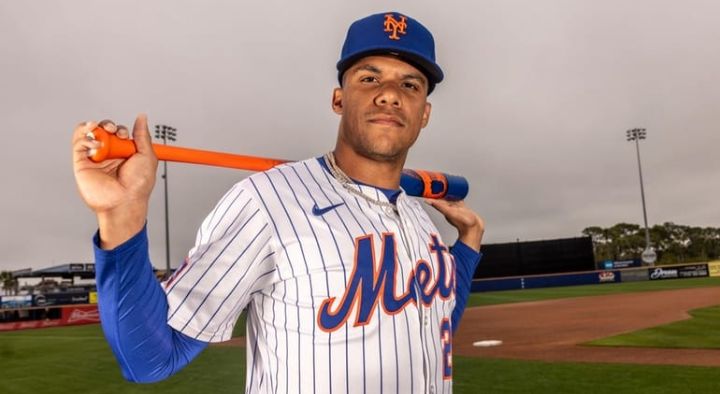
Here’s an angle that hasn’t been explored enough: Soto’s MVP case might depend more on his batting average than his home run totals.
Everyone knows about his plate discipline. The walks are automatic. Pitchers simply refuse to challenge him consistently.
But when he combines a .320-plus average with 40-plus homers and elite on-base numbers, the conversation shifts entirely. Voters start looking at him differently. He stops being “the guy who walks a lot” and becomes “the guy who does everything.”
There’s also a powerful narrative coming from the Dominican Republic. Soto has said winning MVP would mean something bigger than himself—he’d be the first Dominican-born player to take the award since Pujols in 2009. In today’s game, where global impact matters more than ever, that story resonates.
Let’s be honest: the narrative around a player’s season influences MVP voting just as much as their WAR numbers do.
Soto doesn’t have to outdo Ohtani’s most incredible feats. He needs to convince voters that leaving him off the ballot would be a mistake.
The Warning Shot
That’s the real danger in his statement.
“He better keep doing what he’s doing, because I’m coming,” Soto told MLB.com.
This isn’t empty bravado. It’s positioning. At 27 years old, Soto is entering what should be the absolute peak of his career—physically and mentally. He’s comfortable in Queens. He’s established within the Mets’ leadership circle. For the first time since signing that massive contract, the noise has faded.
The NL MVP race just got significantly more interesting, and it’s no longer Ohtani’s to lose.
If Soto turns consistency into dominance, if his numbers eventually overshadow the flash, the most expensive contract in sports history might start looking like a bargain.
And that would be the boldest statement of all.
What Makes This Different
Soto has always been confident. That’s never been the question. But there’s something different about how he’s carrying himself this spring.
Maybe it’s the security of the long-term deal. Maybe it’s settling into a organization that truly wants him. Maybe it’s simply age and experience coming together at the right moment.
Whatever it is, the results are visible. He’s moving differently in the clubhouse. He’s speaking with a certainty that wasn’t there before. The questions about his future are gone, replaced by questions about his legacy.
Teammates have noticed the change. The weight room work. The extra reps. The way he engages with younger players. Soto isn’t just collecting a paycheck—he’s building something.
The Reality of the Challenge
Let’s be clear about what Soto is up against. Ohtani isn’t just any competitor. He’s arguably the most unique talent baseball has ever seen. A player who can win games with his arm one day and his bat the next. A player who makes the impossible look routine.
Challenging that isn’t for everyone. Most players would quietly accept their place behind him.
But Soto has never been most players. From the moment he stepped into a big league batter’s box as a teenager, he’s carried himself like he belongs with the best. Because he does.
The beauty of this challenge is that it doesn’t require Soto to become something he’s not. He doesn’t need to pitch. He doesn’t need to steal 60 bases. He just needs to be Juan Soto—consistently, relentlessly, year after year.
What’s at Stake
For the Mets, this is exactly what they paid for. They didn’t invest three-quarters of a billion dollars in a player content to be great. They invested in someone hungry to be the greatest.
For Soto, the timing couldn’t be better. He’s entering his prime on a team built to win. The spotlight in New York is bright, but he’s proven he can handle it. The pressure is real, but he seems to thrive on it.
And for baseball fans, we get to watch something special unfold. Two of the game’s biggest stars, pushing each other to new heights. Ohtani trying to stay on top. Soto trying to take his spot.
That’s what sports should be about.
The 2026 season hasn’t even started, and already the stakes are clear. Soto has drawn his line in the dirt. He’s made his statement. Now the only question is whether he can back it up.
If history is any guide, betting against Juan Soto is a dangerous move. He’s been proving people wrong his entire career. From a teenage prospect in the Nationals system to the holder of the largest contract in sports history, he’s consistently exceeded expectati