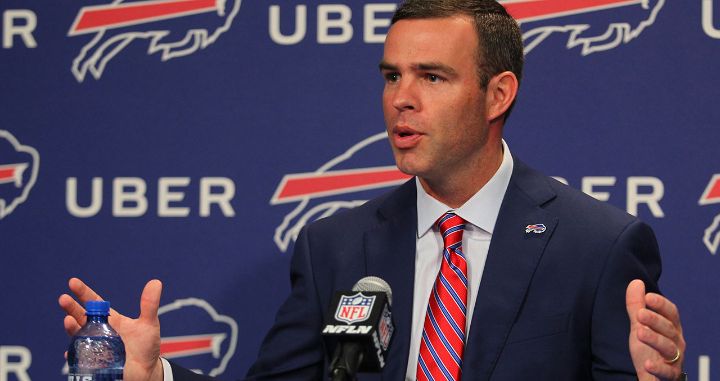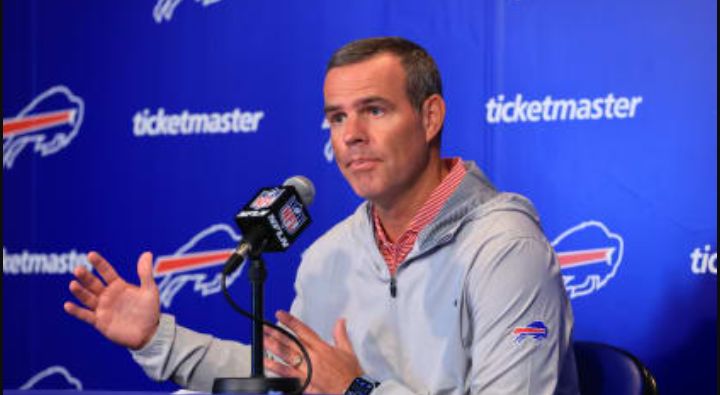
As the Buffalo Bills brace for the start of the new league year in March, the franchise is staring down a familiar offseason challenge: navigating a tight salary cap. With nearly $16 million in cap space needed to get under the threshold before free agency begins, general manager Brandon Beane and his staff are faced with difficult decisions regarding several high-priced veterans. While names like tight end Dawson Knox and wide receiver Curtis Samuel have been widely discussed as potential cap casualties, a new and more surprising candidate has entered the conversation: defensive tackle Ed Oliver.
According to Brad Gagnon of Bleacher Report, the former ninth overall pick—once viewed as a cornerstone of Buffalo’s defensive line—could be on the chopping block this spring. After a 2025 campaign derailed by injuries and a noticeable dip in production the year prior, Oliver’s future in Western New York is suddenly uncertain.
A Season Derailed by Injury
Ed Oliver’s 2025 season was, by all accounts, a lost year. The former Houston standout managed to appear in just four games—three during the regular season and one in the playoffs—before being sidelined by a cascade of injuries. Oliver suffered damage to his ankle, bicep, and meniscus over the course of the season, limiting him to just 12 total tackles and one sack. For a player making significant money against the cap, the lack of availability was a major blow to a defensive line that desperately needed his interior disruption.
Since being drafted in 2019, Oliver has shown flashes of dominance, particularly during the 2022 and 2023 seasons when he recorded a combined 9.5 sacks and established himself as one of the more explosive three-technique defensive tackles in the AFC. However, his 2024 campaign saw a dip in efficiency and impact, and 2025 offered little opportunity for a rebound.
The Cap Savings Equation
Financially, the case for moving on from Oliver is nuanced. A standard release would save the Bills less than $2.5 million in 2026, a relatively modest sum for a player of his caliber. However, if the team designates him as a post-June 1 cut, the savings become far more significant. By spreading the dead money across two seasons, Buffalo could free up approximately $14.7 million in cap space—enough to nearly erase their current deficit and create breathing room for free agency.
With Oliver carrying a $23.9 million cap hit in 2026, the move would provide immediate financial flexibility. That kind of savings could allow the Bills to retain a key contributor on offense or defense, or even dip into the veteran free agent market to address needs at cornerback, wide receiver, or along the offensive line.
A Changing of the Guard on Defense
The potential departure of Oliver also signals a philosophical shift within the organization. For the first time since 2017, the Bills will enter a season without Sean McDermott as head coach. McDermott’s departure has ushered in a new era, and with it, a new defensive coordinator: Jim Leonhard. The former Wisconsin defensive coordinator and NFL veteran is known for his aggressive, attacking style and his ability to develop young talent.
Gagnon suggests that Leonhard may want to put his stamp on the defense early in his tenure. That could mean moving on from a declining, high-cost veteran like Oliver in favor of younger, more cost-controlled options. Leonhard’s scheme often relies on quickness, versatility, and disciplined gap integrity—traits that Oliver possesses when healthy, but his recent injury history and inconsistent production raise questions about his long-term fit.
Youth Movement on the Interior
If Oliver is released, the Bills would not be left empty-handed along the defensive front. The team invested heavily in the position during the 2025 NFL Draft, selecting T.J. Sanders and Deone Walker, both of whom showed promise as rookies. Sanders, in particular, flashed the ability to generate interior pressure, while Walker’s size and strength made him a factor against the run. The duo is viewed internally as the future of the position, and both are expected to see expanded roles in 2026.
Behind them, the depth chart becomes thinner. The only other defensive tackle currently under contract is DeWayne Carter, a 2024 third-round pick who missed the entire 2025 season after suffering a torn Achilles. Carter’s recovery timeline and ability to return to form remain unknown, making the position group one of the more uncertain on the roster.
If Oliver is released, the Bills would likely need to add at least one veteran defensive tackle in free agency or use another mid-round pick on the position to ensure adequate depth. However, with Sanders and Walker entering their second seasons and Carter expected to return, the team may feel comfortable rolling with youth if the financial savings allow them to upgrade elsewhere.
The Risk of Moving On
Despite the logic behind a potential release, moving on from Ed Oliver is not without risk. When healthy and motivated, Oliver has proven capable of taking over games from the interior. His quick first step, leverage, and ability to penetrate backfields make him a rare commodity—one that is difficult to replace, especially on a rookie contract or a veteran minimum deal.
Moreover, the defensive tackle market is expensive. Replacing a player of Oliver’s caliber in free agency would likely cost more than the savings gained by releasing him. If the Bills believe he can return to his 2022–2023 form, a restructured contract that lowers his cap hit while keeping him in Buffalo may be the more prudent path.
However, with a new defensive staff in place and a mandate to get younger and more flexible financially, the organization may decide that now is the time to turn the page. As Gagnon notes, the combination of declining effectiveness, rising cost, and a new defensive philosophy makes Oliver a logical candidate for departure.
L
What’s Next
The Bills have just weeks to make a decision. If Oliver is released with a post-June 1 designation, the team would absorb a manageable dead cap hit in 2026 while freeing up significant resources for the upcoming league year. If they opt to keep him, a restructured deal would be necessary to avoid carrying such a large cap charge into the season.
Either way, the coming weeks will define the direction of Buffalo’s defensive line for the foreseeable future. With young talent waiting in the wings and a new coaching staff eager to make its mark, Ed Oliver’s seven-year tenure in Buffalo may be nearing its end.