The Buffalo Bills have spent the past two seasons searching for a reliable perimeter threat to complement their passing attack, and a recent mock draft suggests the solution could come in the form of a Washington Huskies receiver drawing comparisons to one of the NFL’s brightest young stars. With the 2026 NFL Draft still months away, speculation is already building around how the Bills might use their first-round selection, and analyst projections are pointing toward a potential game-changing addition to Josh Allen’s receiving corps.
Khalil Shakir has quietly developed into one of the league’s more dependable slot receivers, leading the Bills in receptions and receiving yards for the second straight year in 2025. His numbers 72 catches for 719 yards were solid but reflective of a player who works primarily underneath rather than pushing the defense downfield. Over the past two seasons, Shakir has averaged roughly 10 yards per reception, a figure that underscores Buffalo’s ongoing need for a receiver capable of stretching defenses and creating explosive plays on the outside.
The Bills front office thought they had addressed that need when they selected Keon Coleman in the second round of the 2024 draft. Coleman arrived with fanfare and physical tools that suggested he could develop into a true number one option. However, two seasons into his career, the Florida State product has yet to demonstrate the consistency or dominance required to alleviate concerns about the team’s receiver room. His uneven development has left Buffalo in a familiar position heading into another offseason searching for answers at a position that has proven difficult to solidify since Stefon Diggs departure.
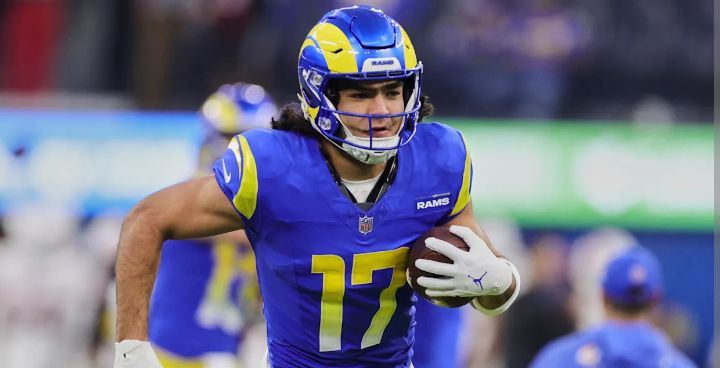
That search could lead them to Denzel Boston, a Washington wideout who has steadily climbed draft boards following a productive 2025 campaign. In the first mock draft of the offseason from NFL Media’s Charles Davis, the Bills land Boston with the 26th overall pick, a selection Davis describes as almost too obvious to ignore. It seems too easy, Davis wrote. A receiver to satisfy not just a team need and an elite quarterback, but a most invested fan base Sounds good to me.
Boston checks a lot of boxes for a Bills team that has prioritized size and physicality at the receiver position. Standing 6-foot-4 and weighing 210 pounds, he possesses the kind of frame that makes him a mismatch against smaller defensive backs and a trusted target in contested catch situations. His 2025 season at Washington featured 62 receptions for 881 yards and 11 touchdowns, numbers that reflect both his reliability and his ability to find the end zone. Boston also contributed as a returner, averaging 13 yards per punt return and taking one back for a touchdown, showcasing the kind of versatility that NFL teams covet.
What makes Boston particularly intriguing as a prospect, however, is not just his production or physical profile but the player to whom he is being compared. Draft analyst Lance Zierlein, a respected voice in draft circles, has drawn a parallel between Boston and Los Angeles Rams receiver Puka Nacua, who led the NFL in receptions during the 2025 season. The comparison might raise eyebrows given Nacua’s rapid ascent to stardom, but Zierlein explains the rationale in detail.
Two-year starter with elite ball skills that should supersede athletic and speed limitations, Zierlein wrote in his evaluation. A Puka Nacua comparison might feel strong, but like Nacua, Boston enters the draft with speed and separation concerns and outstanding competitive toughness. Boston gets off the line with good burst and maintains his top speed throughout the route.
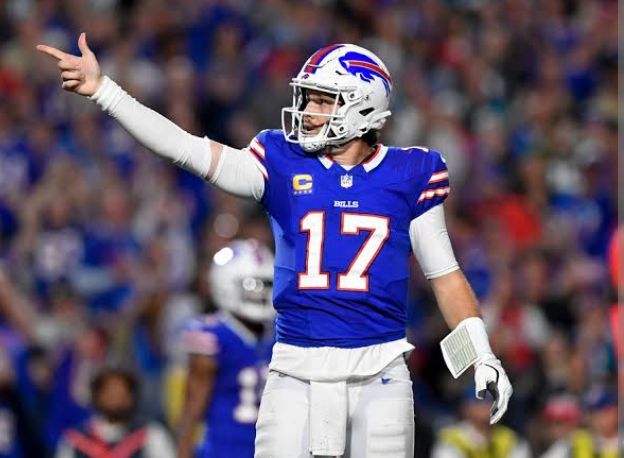
Zierlein acknowledges that Boston’s long speed could be a concern at the next level, and he may face challenges beating press coverage from physical NFL cornerbacks. However, he emphasizes that teams can scheme around those limitations while Boston adapts to the professional game. The comparison to Nacua hinges less on straight-line athleticism and more on the intangible qualities that have made the Rams receiver so effective: competitiveness, ball skills, and an ability to make plays in traffic.
He could have issues beating press, but releases can also be schemed, Zierlein continued. He’s very skilled when it comes to winning jump balls and contested throws. Boston also knows how to win in the red zone. Acclimating to NFL competition could take a year, but Boston has the makeup to become a productive possession target with above-average red-zone value.
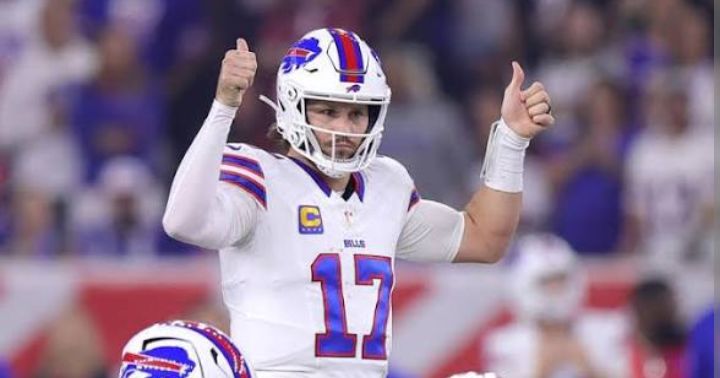
For a Bills team that has struggled to find consistency on the outside, the idea of landing a player with Boston’s skill set is appealing. Josh Allen has proven capable of elevating the talent around him, but even a quarterback of his caliber benefits from having receivers who can win one-on-one matchups and make plays in tight windows. Boston’s ability to high-point the football and come down with contested catches would give Allen a security blanket in situations where the play breaks down and improvisation becomes necessary.
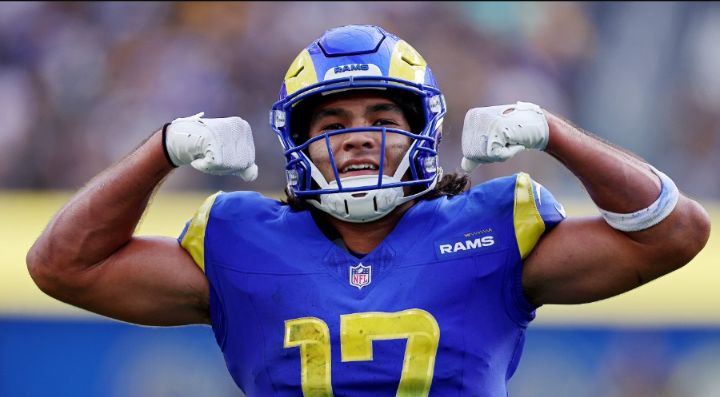
The Nacua comparison also carries weight because of what it represents for Boston’s potential trajectory. Nacua entered the league as a fifth-round pick with questions about his speed and separation ability, yet he quickly became one of the most productive receivers in football through sheer competitiveness and an uncanny feel for the game. If Boston can follow a similar path, the Bills would be getting tremendous value with a pick in the mid-20s.
Of course, projecting any rookie to replicate Nacua’s success is ambitious. The Rams receiver exceeded even the most optimistic expectations, and comparisons of this nature often place unfair burdens on young players. But the underlying point of Zierlein’s evaluation is not that Boston will necessarily become Nacua, but that his game shares similar foundational elements that could translate well to the NFL level.
The Bills have invested significant resources in their receiver room over the past several years, from drafting Coleman to signing veteran free agents and making trades. Yet the position remains one of the team’s most glaring needs heading into the 2026 offseason. Shakir is a reliable piece but not a true number one. Coleman’s development has stalled. Beyond those two, the depth chart features question marks rather than proven contributors.
Adding a player like Boston would not guarantee an immediate fix, especially if he requires a year to acclimate as Zierlein suggests. But the Bills have shown patience with young receivers in the past, and the presence of a franchise quarterback like Allen allows them to bring prospects along at a measured pace. If Boston can develop into even a solid possession receiver with red-zone value in his first year or two, the long-term upside makes him worth the investment.
Another Josh Allen in the Making?
Beyond the Nacua comparison, there is another layer to Boston’s potential fit in Buffalo that has begun generating quiet buzz among draft observers. While the receiver position demands a different skill set than quarterback, those who have studied Boston’s game closely see traces of Josh Allen’s developmental arc in his approach to the game. Like Allen, Boston arrived at Washington as a raw but physically gifted prospect who needed time to refine his craft. And like the Bills quarterback, Boston has demonstrated a relentless work ethic and competitive fire that suggests he will maximize whatever natural ability he possesses.
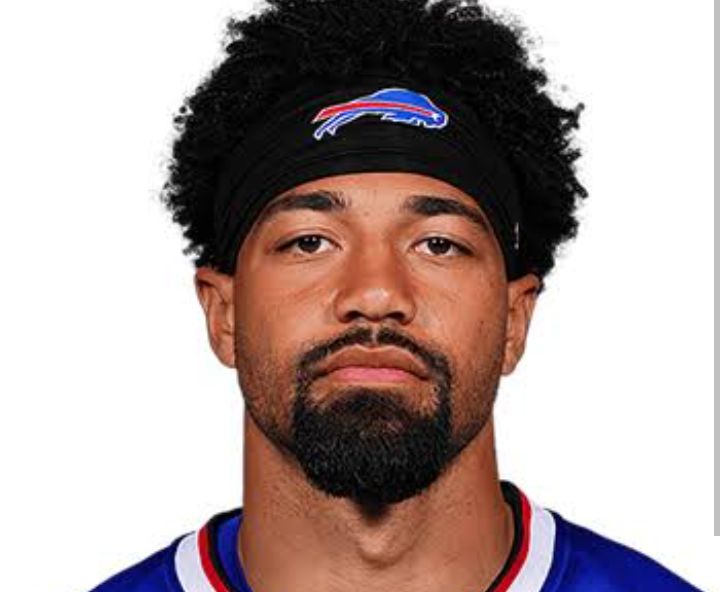
The parallels extend beyond work ethic. Both Allen and Boston faced questions about accuracy and precision early in their college careers. Allen’s completion percentage at Wyoming raised eyebrows, just as Boston’s route-running and separation ability have drawn scrutiny from scouts. But both players share an innate ability to make something out of nothing, to extend plays and find ways to move the chains even when the design breaks down. For a receiver, that manifests in contested catches and yards after contact. For a quarterback, it shows up in broken tackles and off-platform throws. The common thread is a refusal to accept defeat on any given play.
There is also the small world connection that adds a layer of serendipity to the prospect of Boston landing in Buffalo. Josh Allen has long been known for taking young receivers under his wing, working with them extensively in the offseason to build chemistry and accelerate their development. The Bills quarterback has spoken openly about the responsibility he feels to elevate the talent around him, and his track record with young pass-catchers speaks for itself. Pairing him with a receiver who shares his maniacal approach to improvement could accelerate Boston’s development in ways that traditional rookie timelines don’t account for.
If Boston can produce anything close to the level that Nacua has achieved in Los Angeles, the Bills will look back on the 2026 draft as a turning point for their receiving corps. That remains a significant if, but the potential reward is substantial enough to justify the risk. For a team with Super Bowl aspirations and a quarterback in his prime, taking a swing on a player with Boston’s upside is exactly the kind of move that can make the difference between falling short and hoisting the Lombardi Trophy. And if he brings even a fraction of the competitive intensity that has defined Josh Allen’s career, the Bills may have found more than just a receiver they may have found a kindred spirit.