The winter of 2026 will be remembered in baseball circles not for a singular, earth-shattering transaction, but for a pair of moves that beautifully encapsulated the sport’s dual nature: the cold, relentless calculus of roster construction and the warm, resonant pull of legacy. On February 10th, two stories unfolded in stark contrast, one a footnote of fungible assets, the other a headline of homecoming legend. In St. Louis, the Cardinals tweaked their bullpen margins. In Detroit, the Tigers welcomed back a ghost who had never truly left.
The Transaction: A Swap of Fringe Arms
The news from St. Louis was administrative, a classic late-offseason shuffle before pitchers and catchers reported. The Cardinals acquired right-handed reliever George Soriano from the Washington Nationals in exchange for right-hander Andre Granillo. The move was precipitated by Soriano’s designation for assignment by the Nationals just five days prior, marking the fourth organization to claim him that winter, following earlier DFAs by the Orioles and Braves.
Soriano’s resume was that of a pitcher clinging to a big-league dream by his fingertips. In 2025 with the Marlins, he had posted an unsightly 8.35 ERA over 36.2 innings, a line bloated by 10 home runs allowed. His career ERA sat at 5.95 across 118 innings. At 27 years old, he was less a project and more a lottery ticket—a arm with a intriguing four-pitch mix led by a mid-80s slider and changeup, playing off mid-90s fastballs, but with results that had yet to materialize. His most notable attribute, often cited in his bio, was being a cousin to former star Alfonso Soriano.
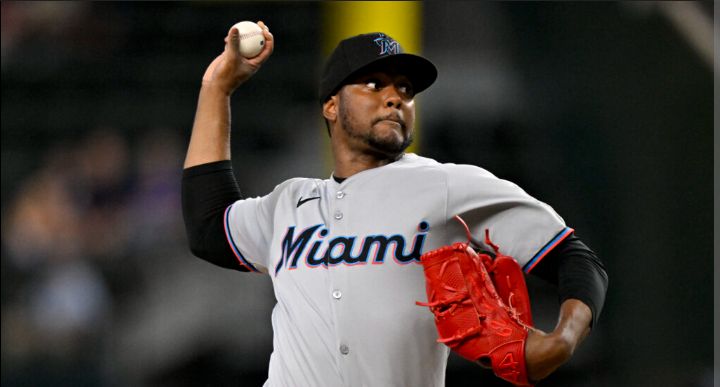
In return, the Nationals received Andre Granillo, a 25-year-old who made his debut with 14 appearances for the Cardinals in 2025, posting a 4.71 ERA. A 14th-round draft pick in 2021, Granillo represented organizational depth, a player whose future likely hinged on a minor adjustment or an opportunity born of injury. The trade was a quintessential “change of scenery” deal for both pitchers, a low-risk exchange of assets that barely registered outside the beat reporters’ notebooks and the deepest of fantasy baseball leagues. It was baseball as a business of perpetual motion, where roster spots are fluid and careers can turn on a single mechanical tweak or a favorable alignment of statistical variance.
The Homecoming: A Legend Completes the Circle
While the Cardinals and Nationals exchanged paperwork, a seismic wave of nostalgia and excitement rippled through Lakeland, Florida. The Detroit Tigers, in a move they announced themselves, had signed future Hall of Famer Justin Verlander to a one-year, $13 million contract. The news was stunning in its timing, just hours before the first official workout of spring, but profound in its symbolism. Nine years after his tearful trade to the Houston Astros signaled the start of a painful, protracted rebuild, Verlander was coming home.
This was not a mere veteran signing for depth. This was a full-circle moment that transcended the box score. Verlander, who would turn 43 just days after the announcement, was returning to the franchise he had defined for a generation. He was the second overall pick in 2004, the Rookie of the Year in 2006 who ended a 22-year World Series drought, and the MVP/Cy Young dual-winner in 2011 who anchored a dynasty of AL Central champions. His power fastball and devastating curve were the soundtrack to an era of Tigers dominance, alongside compatriots like Max Scherzer and Miguel Cabrera.
His return was layered with narrative symmetry. He was reuniting with manager A.J. Hinch, who had guided him to a World Series title in Houston in 2017. He was joining a rotation that now featured Tarik Skubal, the Tigers’ new ace who had eerily echoed Verlander’s own pitching Triple Crown achievements. He would share the clubhouse with Framber Valdez, a former teammate from his Astros days. And perhaps most poetically, he was stepping into a clubhouse that had finally, after years of struggle, regained its footing as a contender. Verlander wasn’t returning for a farewell tour in a losing cause; he was coming back to chase one more ring in the uniform where his legend was born.
The baseball logic underpinning the move was sound. Verlander’s 2025 season with the San Francisco Giants had been a tale of two halves. Hampered early by a pectoral injury, he sported a 4.99 ERA in mid-July. Then, the ace re-emerged. Over his final 13 starts, he compiled a 2.60 ERA, averaging nearly six innings per outing and looking every bit the bulldog competitor of old. The Tigers, who had watched Alex Cobb (signed to a similar deal the prior winter) succumb to injury, saw in Verlander not just a marketing boon, but a proven, playoff-hardened stabilizer for a young, talented rotation of Skubal, Valdez, Casey Mize, and Jack Flaherty.
Contrasting Realities, Unified by Hope
The Soriano-Granillo trade and the Verlander signing, occurring on the same day, presented a perfect diptych of Major League Baseball’s ecosystem.
One move was about the margins, the endless search for hidden value and incremental improvement. It was a transaction devoid of sentiment, focused purely on stuff, control, and roster flexibility. For every hundred moves like this, maybe one yields a key contributor; the rest are the essential churn that fills out Triple-A rosters and middle-inning relief corps. It is the lifeblood of front offices, the unglamorous work that shapes the edges of a championship puzzle.
The other move was about the heart, the soul, and the immeasurable weight of history. It was an acknowledgment that sometimes the most valuable addition isn’t just the sum of WAR projections, but the infusion of credibility, experience, and sheer star power. Verlander’s presence would sell tickets, yes, but more importantly, it would raise standards, mentor young pitchers like Skubal, and provide a tangible link between the Tigers’ glorious past and its promising present. His contract itself, with a low base salary and significant deferred money, was a structure that acknowledged both his desire to win and the team’s financial landscape, a deal built on mutual respect and shared ambition.
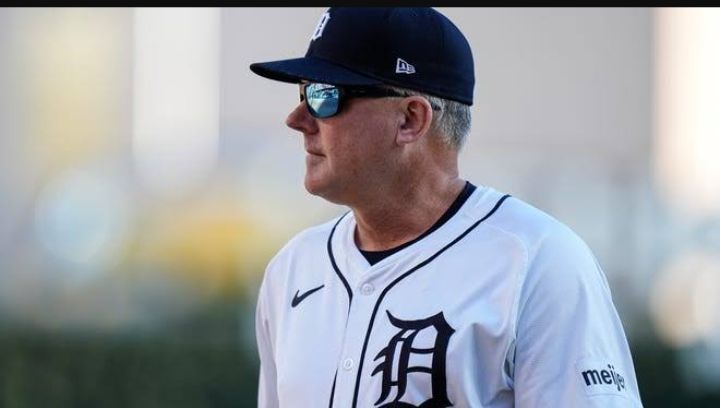
Both moves, however, were fundamentally about the same thing: hope. The Cardinals hoped that a new pitching coach or a new environment might unlock something in George Soriano that three other teams could not. The Tigers hoped that Justin Verlander had one more vintage season in his right arm, and that his leadership could be the final catalyst for a championship run. One hope was a flicker, a low-cost bet on potential. The other was a beacon, a high-profile gamble on legacy and durability.
As spring training commenced in 2026, George Soriano reported to Cardinals camp in Jupiter, Florida, just another face fighting for a job, his name a curious footnote in transaction logs. Nearly 1,200 miles north in Lakeland, Justin Verlander put on the Old English D once more, the cameras flashing, the stories flowing, a city’s baseball history feeling vividly, emotionally present. One player sought to establish a career; the other sought to crown one. On a single day in February, baseball demonstrated its full spectrum, proving that the game is both a ruthless business of anonymous moves and a timeless theater where legends, against all odds, can indeed come home.