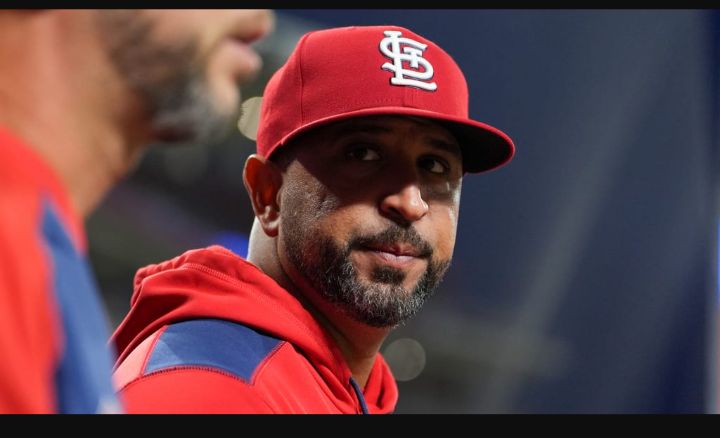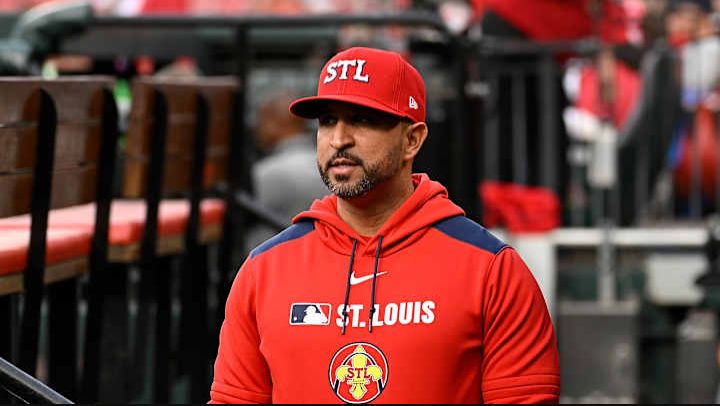
The position of manager for the St. Louis Cardinals is one steeped in a legacy of stability and success, a lineage that includes iconic figures like Whitey Herzog and Tony La Russa. In recent years, however, that role has become a focal point of intense debate within the fanbase, centering on the current occupant, Oli Marmol. Evaluating his tenure requires navigating a complex interplay of on-field results, roster construction, and the intangible elements of leadership. The central question has become stark: should the Cardinals commit to Marmol with a contract extension, or is it time to pursue a new direction?
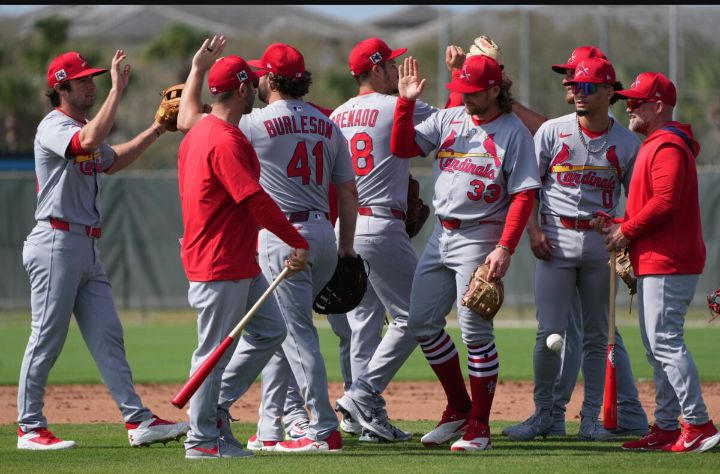
Oli Marmol’s journey as manager has been a tale of two distinct chapters, marked by a brilliant debut followed by a prolonged period of frustration. His inaugural season in 2022 was nothing short of a masterclass in managing narratives and expectations. Tasked with integrating the legendary Albert Pujols into his final season, alongside other veterans like Yadier Molina and Adam Wainwright, Marmol guided the team to a 93-win season and a National League Central division title. He demonstrated a modern, analytical approach, adept at bullpen management and lineup optimization, while also skillfully handling the emotional weight of a farewell tour. In that moment, he appeared to be the perfect bridge between the Cardinals’ storied past and its future, a young, forward-thinking leader who commanded the respect of clubhouse legends.
This promising beginning, however, has been overshadowed by the three consecutive seasons that followed, each ending without a postseason appearance. The team’s performance has plateaued around a .500 record, with Marmol’s overall ledger standing at 325-323. This mediocrity is particularly glaring when contrasted with the immediate success of his predecessor, Mike Shildt, who posted a .559 winning percentage and secured playoff berths in three of his four seasons. Even Mike Matheny, whose tenure ended amid criticism of his tactical rigidity, maintained a .555 winning percentage over seven seasons. By the cold, hard metric of wins and losses, Marmol’s record is the weakest among Cardinals managers in the post-La Russa era, a fact that fuels the argument for change.
Yet, a singular focus on win-loss record provides an incomplete picture. Any honest appraisal of the Cardinals’ recent struggles must account for significant shortcomings in roster construction. The pitching staff, particularly the starting rotation, has been in a state of flux and underperformance for several seasons. High-profile acquisitions have failed to meet expectations, and the development pipeline has not produced the steady stream of frontline starters characteristic of the organization’s heyday. Similarly, the offense has often been inconsistent, reliant on aging stars or players experiencing unexpected declines. A manager can optimize lineups and deploy relievers strategically, but he cannot hit home runs or throw strikes from the dugout. There is a compelling case to be made that Marmol has been tasked with steering a vessel that is, fundamentally, not built to compete for a championship, through no fault of his own. His supporters argue that he has extracted as much value as possible from a flawed roster, and that firing him would be scapegoating the captain for the shipwright’s failures.
Beyond the tangible statistics lies the more nebulous, yet crucial, area of clubhouse culture and leadership. Here, Marmol has faced his sharpest criticism. Incidents of public confrontation with players, most notably with former Cardinal Tyler O’Neill, raised questions about his man-management style and whether his direct approach fosters unity or breeds resentment. The Cardinals have long prided themselves on a culture of professional, selfless play—the “Cardinal Way.” Critics contend that Marmol’s occasional public sternness represents a departure from that tradition, potentially fracturing the clubhouse cohesion that is essential for weathering a long season. His advocates might counter that holding players accountable, even publicly, is necessary in a modern game, and that his firmness is a sign of leadership, not discord. Nevertheless, the perception of a sometimes-volatile clubhouse environment remains a significant mark against his tenure.
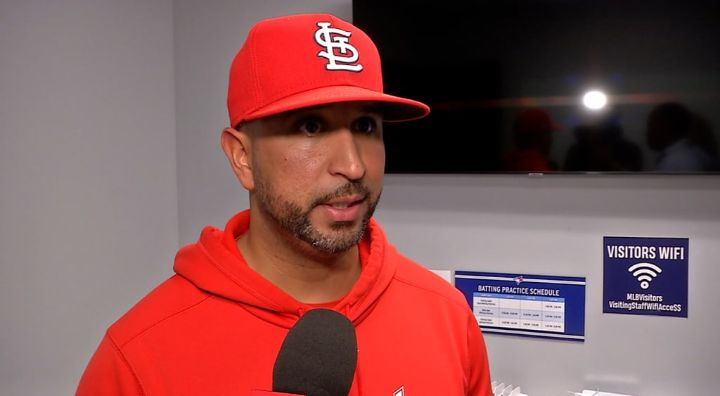
The financial and practical realities of baseball operations also weigh heavily on this decision. Managers’ contracts are relatively minor line items in a team’s budget, but stability has its own value. Terminating Marmol and his coaching staff would involve buyouts and the logistical challenge of conducting a new managerial search. Furthermore, the pool of available, proven, championship-caliber managers is never particularly deep. The alternative—hiring an untested coach or a retread from another organization—carries its own significant risk. It prompts the question: is the certainty of Marmol’s known, albeit middling, capabilities preferable to the uncertainty of a new voice who could either catalyze improvement or accelerate a decline?
This leads to the concept of a short-term extension, a compromise position that is gaining traction among some observers. The rationale is pragmatic. Given the current state of the roster, a dramatic turnaround in the next two seasons seems unlikely, regardless of who is managing. Committing to Marmol for, say, two additional years provides a measure of stability for the players and the front office during what appears to be a necessary retooling or rebuilding phase. It allows President of Baseball Operations John Mozeliak to execute a longer-term roster strategy without the immediate pressure of winning to save a manager’s job. Essentially, Marmol would be tasked with shepherding the team through a transition, developing young players like Masyn Winn and Jordan Walker, while the front office works to reconstruct a contender. An extension under these terms is not a reward for past success, but a practical tool for navigating anticipated future challenges.
Conversely, the argument for making a change is rooted in the belief that a new voice and a different philosophy are prerequisites for breaking the cycle of mediocrity. Sometimes, a team simply needs a reset. A new manager can bring fresh energy, different strategic priorities, and a clean slate for players who may have grown stagnant under the previous regime. If the front office believes the core roster is closer to contention than it appears, then hiring a manager with a proven track record of maximizing talent and winning in the playoffs—a Buck Showalter or a Bruce Bochy type, should one become available—could be the catalyst needed. Letting Marmol go sends a message that the organization’s standards remain high and that consecutive years without playoff baseball are unacceptable. It is a declaration that accountability starts at the top.
In conclusion, the decision on Oli Marmol’s future is a microcosm of the broader state of the St. Louis Cardinals franchise. It is not simply a referendum on one man’s tactical decisions, but a complex calculation involving roster evaluation, organizational direction, and cultural philosophy. The case for extension hinges on continuity, shared blame for roster failures, and the utility of stability during a transitional period. The case for dismissal is built upon declining results, concerns over leadership style, and the potential energizing effect of a new direction.
There is no universally correct answer, only a choice with calculated risks on either side. Perhaps the most revealing aspect of this dilemma is what it says about the team’s self-assessment. If the front office believes the roster is fundamentally sound and underperforming, then a managerial change is logical. If it acknowledges deep-seated roster flaws that will take years to fix, then retaining Marmol as a steady hand makes strategic sense. Ultimately, the Cardinals must decide not only who will write the lineup card for the next few seasons, but what story they believe those seasons will tell. The fate of Oli Marmol is the first, and most telling, chapter in that yet-unwritten story.