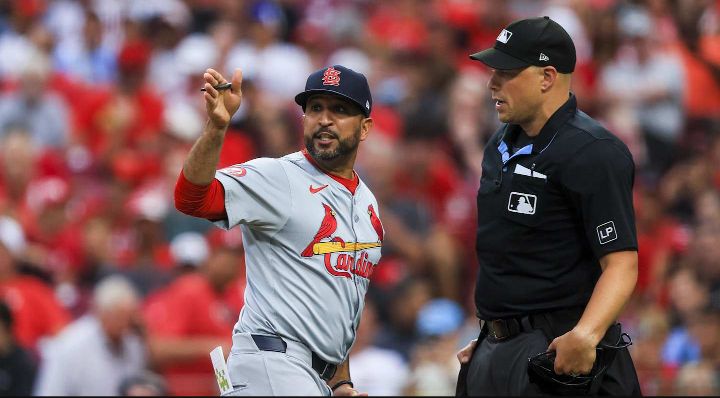
In the storied, century-long history of the St. Louis Cardinals, few managerial tenures have sparked as much persistent debate as that of Oli Marmol. The question posed is deceptively simple: extend or dismiss? Yet, the answer requires a nuanced examination that goes beyond the superficial win-loss record, delving into the complexities of modern baseball management, organizational context, and the elusive definition of success. After weighing the evidence, a compelling case emerges for a cautious, short-term extension, not as a ringing endorsement, but as a pragmatic acknowledgment of the team’s current trajectory and the multifaceted role a manager plays in today’s game.
First, it is essential to contextualize Marmol’s performance. His overall record of 325-323 (.502 winning percentage) is the definition of mediocrity. When stacked against his immediate predecessors, Mike Shildt (.559) and Mike Matheny (.555), it pales in comparison. This statistical deficit is the primary fuel for his detractors, and rightly so. Professional sports are results-oriented businesses, and a .500 record over four seasons for a franchise with the Cardinals’ expectations is inherently disappointing. The 2022 season, a 93-win playoff year marked by the magical farewell of Albert Pujols, stands as a bright outlier, followed by a stark descent into consecutive years of irrelevance. The visceral fan frustration is understandable; this is not the perennial contention Cardinal Nation has been conditioned to expect.
However, to place the blame solely at Marmol’s feet is to ignore the significant mitigating factor of roster construction. The author of the original piece astutely points out that grievances with the past three seasons are “more of a roster gripe than a reflection on Oli’s managerial skills.” This is a critical distinction. Since 2022, the Cardinals have navigated a painful transition period. The rotation has been a revolving door of aging veterans, reclamation projects, and underperforming talents, often leaving the team at a severe competitive disadvantage before the first pitch is even thrown. The offense, while occasionally potent, has been inconsistent and overly reliant on a core of veterans whose peaks may be behind them. A manager, no matter how tactically brilliant, cannot magically conjure a 95-win season from an 85-win roster. The front office’s decisions—or lack thereof—in bolstering the pitching staff have been the primary anchor on the team’s fortunes. Firing Marmol for the sins of the front office would be a classic case of rearranging deck chairs on the Titanic; it creates the illusion of change without addressing the fundamental structural flaw.
Furthermore, evaluating a modern manager requires looking beyond the binary of wins and losses. Today’s skipper is less an intuitive field general and more a mid-level executive, a conduit between an analytics department and the clubhouse, a communicator, and a culture-setter. In these areas, Marmol’s tenure is a mixed bag, but not without its merits. His initial success in 2022 demonstrated an ability to harness veteran leadership (Pujols, Yadier Molina, Adam Wainwright) while integrating younger players. He has generally been praised for his communication and willingness to embrace data-driven strategies, a necessity in the contemporary game. However, his tenure has also been marred by very public, very messy clubhouse conflicts, most notably with former outfielder Tyler O’Neill. These incidents painted a picture of a manager who could be rigid and confrontational, potentially damaging team chemistry. While some argue this shows a demand for accountability, the public nature of the disputes was undeniably a distraction. A manager must command respect without breeding resentment, a balance Marmol has struggled to find consistently.
When considering a potential extension, the alternative must be examined. Who would replace him, and would they be demonstrably better? The managerial carousel is a risky gamble. Hiring a veteran retread often brings diminishing returns, while a promising first-time manager is an unknown quantity who would require a grace period to implement their own systems and philosophies. Given that the Cardinals’ roster is not a finished, championship-ready product, installing a new manager now would likely mean asking that new hire to oversee the same difficult, transitional phase that has hampered Marmol. There is no guarantee a new voice would extract more wins from this specific collection of players, and the disruption of yet another philosophical shift could further delay progress.
This leads to the most persuasive argument for a limited extension: aligned timelines and realistic expectations. If the organizational assessment is that the Cardinals are still 2-3 years away from genuine World Series contention, as the farm system matures and financial flexibility improves, then it makes little sense to bring in a new manager now. A two-year extension would serve as a bridge, providing stability during this ongoing build. It would allow Marmol to continue developing relationships with the cornerstone young players like Masyn Winn, Jordan Walker, and the incoming wave of pitching prospects. More importantly, it would squarely place the onus on President of Baseball Operations John Mozeliak and the front office to deliver the upgraded talent necessary to compete. The expiration of a short-term extension would then coincide with the point at which the team’s competitive window is expected to truly reopen. At that juncture, with a strengthened roster, a much clearer evaluation can be made: can Oli Marmol take a talented team to the pinnacle? If not, the organization parts ways with him and seeks a skipper deemed capable of finishing the job, now armed with a championship-caliber tool kit.
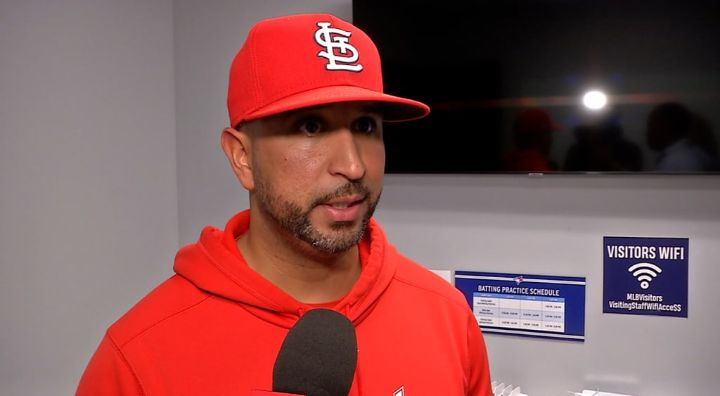
Conversely, the case for dismissal is rooted in the powerful currency of accountability and the need for a fresh start. A .500 record over four years is a tangible, valid reason for change. The clubhouse controversies, while perhaps overstated, suggest a potential leadership flaw. For a fanbase growing increasingly restless, retaining Marmol can be perceived as organizational complacency, a tolerance for mediocrity. A new manager could reinvigorate the fanbase, bring a different energy to the clubhouse, and potentially maximize the performance of underachieving players in a way Marmol has not. It is a clean break, a symbolic gesture that the status quo is unacceptable. In a pure vacuum of results, this path has undeniable logic.
After weighing these competing perspectives, the path of pragmatic stability emerges as the most sound. Firing Marmol now feels reactive rather than strategic. It addresses a symptom (managerial performance) while the disease (roster deficiencies) remains untreated. A short-term, two-year extension is not a victory parade for Marmol; it is a conditional vote of confidence, a statement that he is the right man for the current phase—the difficult grind of a retool—but not necessarily anointed for the next. It maintains continuity for a young core, keeps the pressure on the front office to build a winner, and establishes a clear, future decision point aligned with the team’s competitive cycle.
Ultimately, the question of Oli Marmol is a referendum on the state of the St. Louis Cardinals as a whole. The manager is the most visible face of the franchise’s struggles, but he is not the sole architect. Extending him now is an admission that the project is unfinished and that changing the foreman mid-construction is unlikely to speed its completion. It is a choice to see the process through with a known quantity, buying time for the organization to finally equip its field leader with the resources required to succeed. When those resources arrive, the judgment on Oli Marmol will be final, definitive, and based on the only criterion that ultimately matters: the ability to win when it counts. Until then, in a season that promises more transition than triumph, stability, however underwhelming, may be the most strategic play of all.