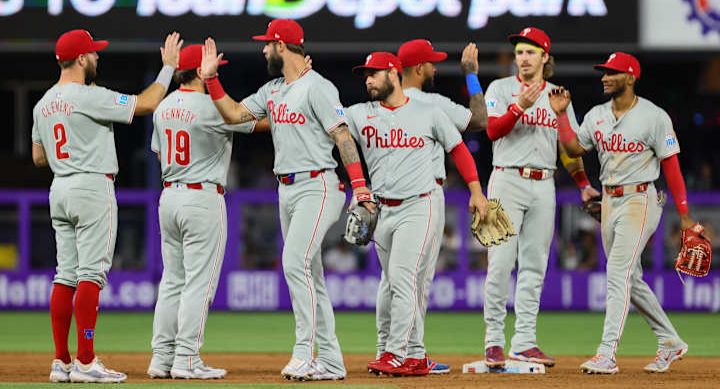
The Philadelphia Phillies stand at a familiar crossroads, one that every contender with an aging core must eventually face: the delicate calculus of sentiment versus strategy, of past investment against future flexibility. At the center of this particular dilemma is Nick Castellanos, the veteran outfielder whose $100 million, five-year contract signed prior to the 2022 season is entering its final chapter. With $20 million owed for the 2026 campaign and his performance metrics painting a picture of steep decline, the Phillies’ front office is confronted with a critical decision. One proposed path forward, gaining traction in speculative circles, involves a trade with the Pittsburgh Pirates—a deal that would offload Castellanos’ contract in exchange for a distant prospect, signaling a stark but perhaps necessary pivot for both franchises.
To understand the weight of this decision, one must first examine Castellanos’ trajectory in Philadelphia. His arrival was heralded as the final offensive piece for a burgeoning contender, a right-handed power bat to balance a lineup featuring Bryce Harper and Kyle Schwarber. The 2023 season delivered on that promise, as Castellanos earned an All-Star nod, smashing 29 home runs with an .788 OPS, embodying the middle-of-the-order presence he was paid to be. However, the subsequent seasons have told a different story. His defensive limitations in the outfield, never a strength, have become increasingly untenable. Offensively, the metrics indicate a player in descent. A batting average hovering around .250, a slugging percentage that has lost its punch, and most damningly, a negative Wins Above Replacement (bWAR) in 2025, quantify a simple truth: Castellanos’ on-field production no longer justifies his significant financial footprint or his guaranteed place in an everyday lineup.
This creates a multifaceted problem for the Phillies. First, there is the sheer financial deadweight. The $20 million owed to Castellanos represents a substantial portion of payroll that could be reallocated—to address a shaky bullpen, to shore up the bench, or to facilitate another impactful move. Second, there is a roster logjam. With younger, more versatile, and defensively capable players needing at-bats, carrying a declining, defensively-challenged veteran becomes a luxury a sharp-edged contender cannot afford. Finally, there is the intangible element of roster dynamics and evolution. Manager Rob Thomson’s reported friction with Castellanos, whether overstated or not, hints at a relationship that may have run its course, suggesting that a change of scenery could benefit all parties.
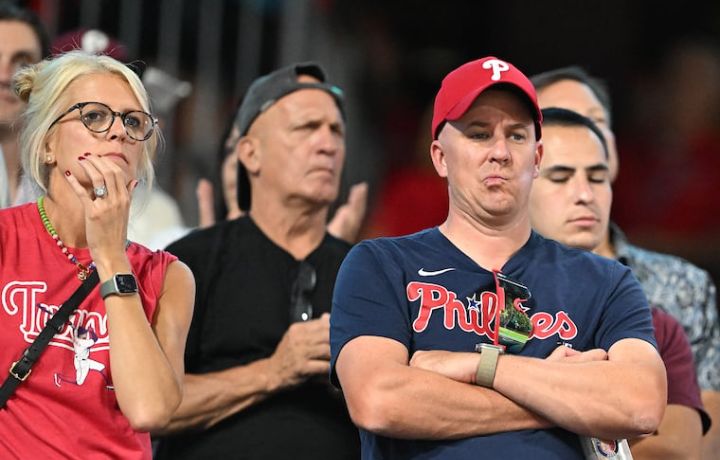
Enter the Pittsburgh Pirates. On the surface, they seem an unlikely trade partner for a high-priced, aging slugger. Yet, their recent trajectory and specific needs make the logic more coherent upon inspection. After years of rebuilding, the Pirates have assembled a promising core of young talent and appear poised to transition from sellers to pragmatic buyers, seeking short-term upgrades to fuel a push towards relevance. Their offense, however, remains light on proven right-handed power, a gap they have attempted to fill by targeting players like Marcell Ozuna this offseason. In this context, Castellanos fits a specific profile.
The proposed trade framework is straightforward: the Phillies send Nick Castellanos and a significant portion of his remaining $20 million salary—reports suggest up to half—to the Pirates. In return, Philadelphia receives a low-level prospect, with 19-year-old catcher Edgleen Perez cited as the example. Perez, playing in Single-A, is described as a lottery ticket—a player with youth and a defensive position of value, but whose bat has yet to show any promise in professional ball. The trade, therefore, is not a baseball exchange of equivalent value; it is a financial and strategic transaction.
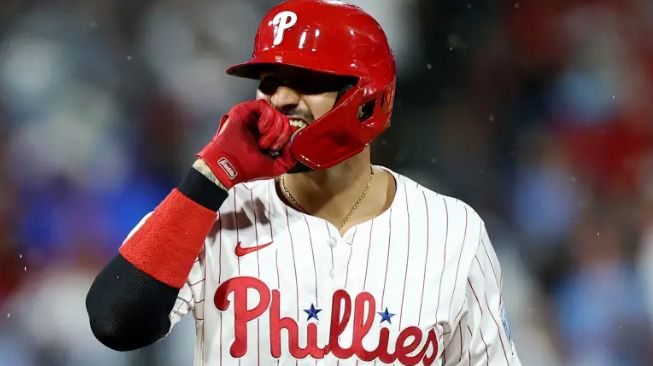
For the Pirates, the appeal is clear. They would acquire a known commodity with a track record of power, likely at a net cost of $10 million or less after the Phillies’ subsidy. Castellanos would slot perfectly into the role of full-time designated hitter, a move that immediately negates his defensive liabilities and allows him to focus solely on hitting. In the less pressurized environment of Pittsburgh, with the short porch in left field at PNC Park, there is a plausible scenario where Castellanos rediscovers some of his old form, providing the middle-of-the-order thump the Pirates crave. He becomes a low-risk, moderate-reward experiment for a team looking to add veteran presence without a long-term commitment.
For the Phillies, the benefits are more nuanced and forward-looking. Primarily, the trade is a salary dump, but one with a strategic purpose. Freeing up even $10 million in 2026 payroll creates immediate flexibility. More importantly, it opens a roster spot. This allows the Phillies to more freely evaluate and integrate younger outfield options like Johan Rojas or Simon Muzziotti, or to repurpose the DH spot as a rotational slot to keep veterans like Harper and Trea Turner fresher. The acquisition of a prospect like Perez, however remote his chances, is a symbolic gesture—a small asset for the future in exchange for a present-day contract they no longer wish to carry. The move would be a cold, clear declaration that the organization is prioritizing roster optimization and financial agility over sentiment.
The alternative paths for Philadelphia are less palatable. An outright release would save no money and would be a blunt admission of a failed investment, providing zero return. Holding onto Castellanos and hoping for a rebound carries the risk of continued diminishing returns, further draining resources and potentially stunting the growth of other players. The trade scenario, while underwhelming in terms of prospect capital, at least represents proactive asset management.
Critics of the deal would rightly point out its meager return. Edgleen Perez is not a headline prospect; he is a project whose future is a question mark. The Phillies, in essence, would be paying $10 million or more for the privilege of giving Castellanos to another team and receiving a long-shot in return. However, this critique misses the broader point. In the economics of modern baseball, financial flexibility is itself a premium asset. The value gained is not Perez’s potential, but the $10 million in saved salary and the liberated roster spot. In a sport where wins are often bought at the margins, that flexibility can be parlayed into a key mid-season acquisition or used to retain a more crucial piece of the core.
Furthermore, the trade would represent a philosophical step for the Phillies. It acknowledges that the window of contention, built around stars like Harper, Wheeler, and Realmuto, remains open, but requires constant recalibration. Letting go of a beloved but underperforming player is a difficult but essential skill for a front office dedicated to sustained success. It signals a ruthless, unsentimental focus on constructing the best possible 26-man roster for the grueling marathon of a championship season.
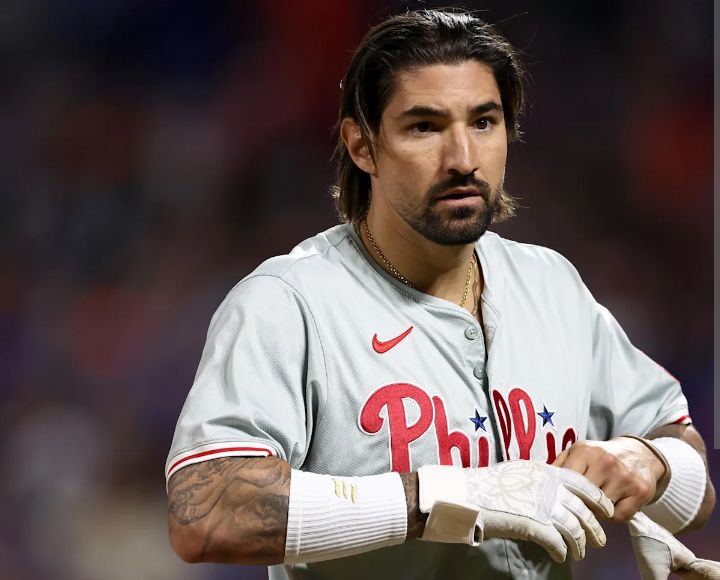
In conclusion, a trade sending Nick Castellanos to the Pittsburgh Pirates, subsidized by the Phillies and returning a minimal prospect, is far from a blockbuster. It will not grace the cover of sports magazines or be remembered as a heist. Yet, it exemplifies the type of pragmatic, forward-thinking transaction that often separates static teams from adaptive ones. For the Pirates, it is a calculated gamble on recycled power, a short-term boost with minimal long-term risk. For the Phillies, it is a strategic subtraction—a costly but necessary maneuver to shed a burdensome contract, regain precious financial and roster flexibility, and sharpen their focus on the ultimate prize. In the high-stakes game of championship baseball, sometimes the most impactful moves are not about what you acquire, but what you wisely choose to leave behind.