In the meticulously constructed empire of South Carolina women’s basketball, the foundation for future championships is never laid in the present alone. It is forged years in advance, through the identification and cultivation of transcendent talent, ensuring the pipeline of excellence remains perpetually full. The latest testament to this forward-thinking machinery arrived on February 2, 2026, when five-star guard Jerzy Robinson, a committed recruit for the Gamecocks, was officially named to the prestigious McDonald’s All-American roster. This announcement, far more than a mere personal accolade, serves as a powerful signal flare: the era of Dawn Staley’s dominance in Columbia is engineered to continue well into the future.
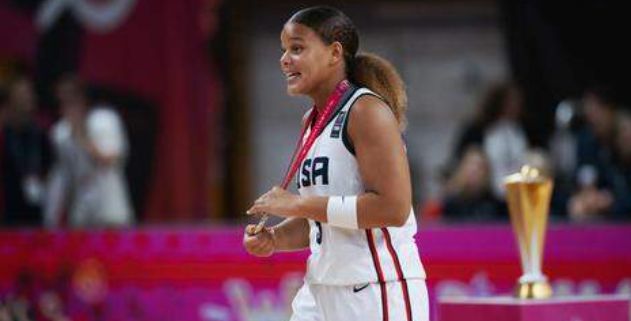
Robinson’s selection places her within one of the most hallowed traditions in amateur basketball. The McDonald’s All-American Game has served as the definitive showcase for preeminent high school talent for decades, a final amateur stage before the collegiate arena. For the South Carolina program, participation in this game has evolved from a hopeful milestone into a routine expectation, a standard operating procedure for the nation’s elite. Robinson will lead the Girls West roster, becoming the 30th McDonald’s All-American to be coached by Dawn Staley during her transformative 18-year tenure at the university. Of those, an astounding 22 initially signed with the Gamecocks out of high school, a statistic that underscores not just Staley’s ability to develop stars, but her unparalleled prowess in recruiting and identifying them.
The raw metrics of Robinson’s game explain why she fits so seamlessly into the South Carolina blueprint. A 5-star prospect playing her prep basketball at the national powerhouse Sierra Canyon School in California, Robinson is ranked as the No. 5 overall player in ESPN’s Top 100 for the class of 2026. She is a guard whose athleticism, court vision, and scoring prowess have drawn comparisons to some of the program’s recent greats. Yet, her selection is not an isolated event; it is a node within a broader network of talent converging on Columbia. Robinson headlines a 2026 South Carolina recruiting class that already exemplifies the program’s recruiting clout. She is joined by five-star forward Kaeli Wynn (ranked No. 17) and four-star forward Kelsi Andrews (ranked No. 18). This trio represents a holistic infusion of skill—a dynamic guard in Robinson, paired with versatile, high-IQ forwards—designed to address both immediate needs and long-term schematic flexibility.
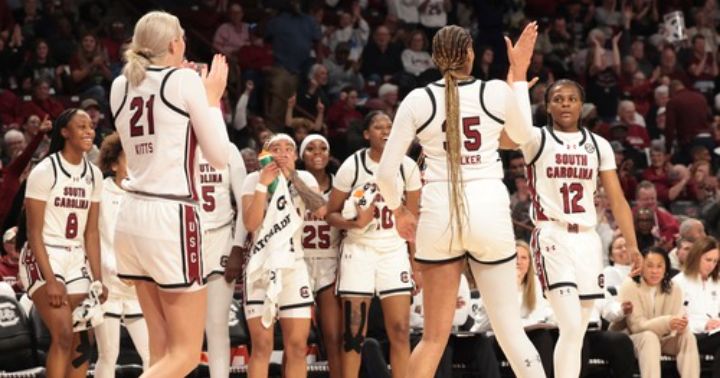
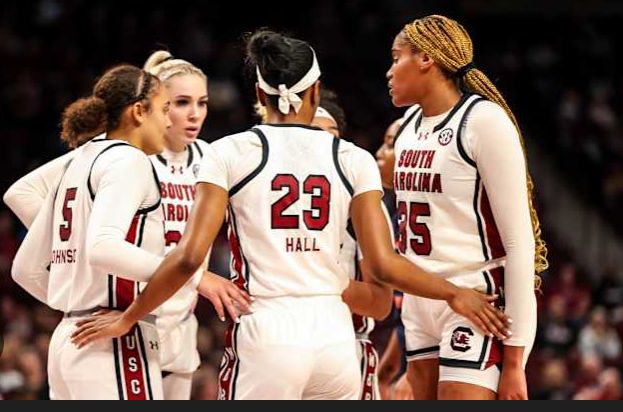
The significance of Robinson’s achievement is magnified when viewed through the prism of the program’s current roster, a testament to the self-sustaining cycle Staley has created. The Gamecocks presently boast eight former McDonald’s All-Americans: Maryam Dauda, Joyce Edwards, Raven Johnson, Tessa Johnson, Ta’Niya Latson, Agot Makeer, Maddy McDaniel, and Ayla McDowell. This list is a roll call of contemporary collegiate stars, each of whom walked the same path Robinson is now on. Most notably, Joyce Edwards, the 2024 co-MVP of the McDonald’s All-American game, provides the most immediate template. Edwards’ transition from high school phenom to key contributor on a national championship-contending team illustrates the program’s effective pathway from accolade to impact. For Robinson, watching Edwards excel offers a clear and proven roadmap, one where individual talent is honed within a system that prioritizes winning above all else.
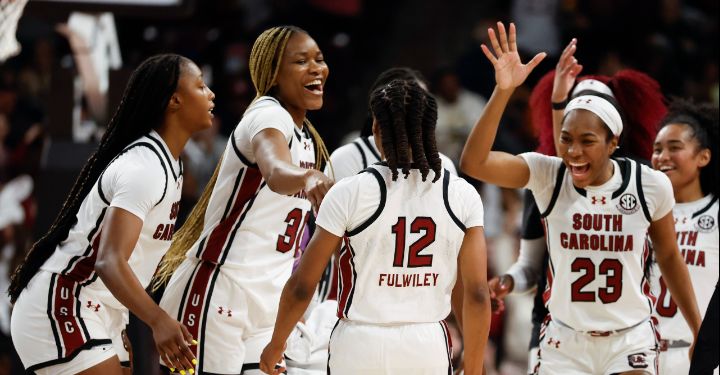
The philosophical engine behind this relentless talent acquisition is, of course, Dawn Staley. Her legacy is no longer simply one of victories, SEC championships, or national titles—though those are plentiful. It is a legacy of cultural construction. Staley has built a program where the highest level of individual recognition—the McDonald’s All-American jersey—is not an endpoint, but rather a prerequisite for entry into a collective pursuit of greatness. Under her guidance, the phrase “McDonald’s All-American” is stripped of any potential for complacency. It becomes a baseline, a shared language spoken by the players in the locker room, signifying that they have all been tested against the best and are now expected to elevate each other. This culture transforms potential individual accolades into communal fuel. The pressure of being a top-five recruit dissipates within the ecosystem of a team where every player was a top recruit; the expectation is no longer to stand out, but to fit in, work, and win.
Furthermore, Robinson’s commitment, even prior to her official signing, highlights another pillar of South Carolina’s success: the magnetic appeal of its developmental promise. Top-tier recruits are not merely sold on immediate playing time or flashy facilities; they are sold on a proven track record of evolution. They see guards like Raven Johnson and Tessa Johnson, who arrived with similar hype and were sculpted into defensive stalwarts and clutch performers. They see forwards like Aliyah Boston (a former McDonald’s All-American herself) who became National Players of the Year. For a player of Robinson’s caliber, the decision is a calculated investment in her own basketball future, with the evidence suggesting that South Carolina is the optimal incubator for transforming high school stardom into professional readiness.
The upcoming McDonald’s All-American Game in Glendale, Arizona, on March 31 will be more than just a showcase for Robinson. For the vigilant observer of college basketball, it will function as a early preview of South Carolina’s future backcourt dynamics and offensive schemes. How Robinson commands the floor with other elites, her decision-making under the bright lights, and her defensive tenacity will be scrutinized through the lens of how she might eventually operate within Staley’s system. The game, televised on ESPN2, offers a prologue to her collegiate narrative.
However, the broader narrative here transcends any single player. Jerzy Robinson’s inclusion on the McDonald’s All-American roster is a reaffirmation of a systemic truth in women’s college basketball. While other programs may experience cyclical rises based on a singular superstar class, South Carolina has engineered a perpetual motion machine. The departure of legendary players does not trigger a rebuild; it activates a reload, powered by a conveyor belt of pre-vetted, ultra-competitive talent that has been dreaming of wearing the garnet and black since middle school. The program’s identity is so potent that it actively attracts the very accolades it then uses to reinforce its identity.
In conclusion, the news of Jerzy Robinson’s honor is a headline about tomorrow, written today. It is a story about continuity. As the Gamecocks compete for championships in the present, the foundation for the 2026-27 season and beyond is being solidified with the formal recognition of its next cornerstone. In the relentless landscape of collegiate athletics, where dynasties are fragile and titles are fleeting, South Carolina under Dawn Staley has mastered the art of temporal dominance—excelling in the now while simultaneously securing the future. The announcement from ESPN was not just a roster reveal; it was the sound of the pipeline, that vital artery of the South Carolina dynasty, humming with assured strength, delivering its next precious cargo to Columbia. The message is clear: the Gamecocks aren’t just playing for this year. With talents like Jerzy Robinson waiting in the wings, they are playing for the next decade, and the standard, already astronomically high, shows no sign of dipping.