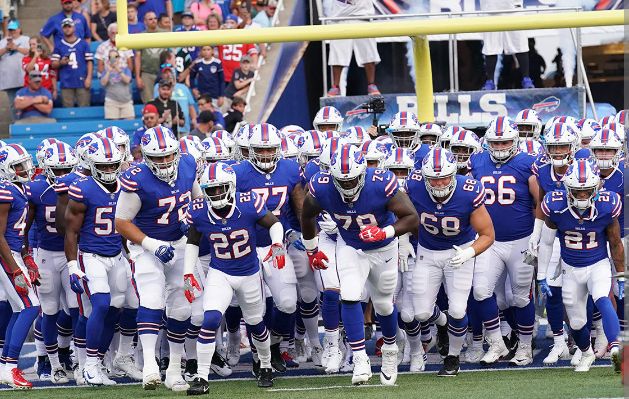
The year 2026 represents a defining frontier for the Buffalo Bills franchise. It is the season where the financial and strategic consequences of the early-2020s “all-in” window crystallize. The Bills’ state in 2026 will be a testament to General Manager Brandon Beane’s long-term roster architecture and drafting acumen, unfolding under the harsh realities of the NFL salary cap. This analysis projects the team’s roster composition, injury landscape, and precarious financial situation, painting a picture of a franchise in a necessary and challenging transition.
I. The 2026 Roster: A New Core Around Joshua Allen
By the 2026 season, the Buffalo Bills’ roster will have undergone its most significant transformation since the arrival of Sean McDermott and Brandon Beane. The veteran-laden squad that contended for championships from 2020-2024 will have largely dispersed, giving way to a younger, cheaper core built explicitly around the prime of quarterback Joshua Allen.
The Unshakeable Foundation: Quarterback
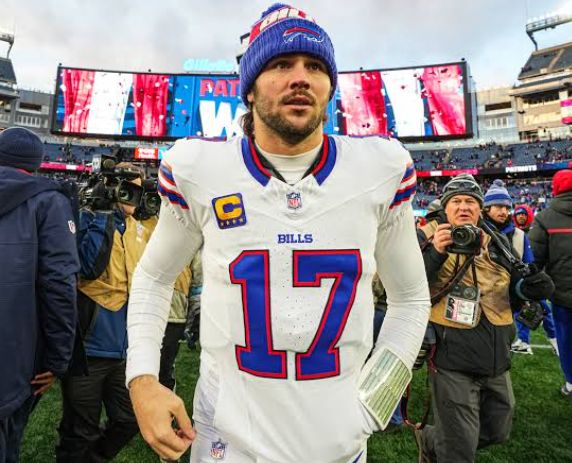
Allen, under contract through the 2028 season, remains the sun around which the entire Bills universe orbits. By 2026, he will be 30 years old, theoretically at the peak of his physical and mental powers. The entire organizational strategy for this season—and the several preceding it—is predicated on maximizing this window of his career with a cost-effective supporting cast. His durability and elite play will be the single greatest determinant of the team’s floor and ceiling.
Offense: A Youth Movement at Skill Positions
The offensive weaponry will look almost unrecognizable from the Diggs-Davis era. Keon Coleman, the 2024 first-round pick, will be entering his third season and expected to have matured into a true WR1. His performance on his rookie contract is a critical variable for offensive success. He will likely be supported by other receivers drafted in 2025 and possibly 2026, as neither Stefon Diggs (traded in 2024) nor Khalil Shakir are under contract for 2026. The tight end position offers more continuity, with Dalton Kincaid playing on his exercised fifth-year option, serving as Allen’s primary safety valve and red-zone threat. The running back room will be a committee, as lead back James Cook’s contract expires after 2025. Expect a collection of mid-to-late round draft picks and low-cost free agents carrying the load.
The most pressing concern lies in the offensive line. While guard O’Cyrus Torrence provides a stable, young interior presence, both starting tackles—fixture Dion Dawkins and Spencer Brown—are scheduled for free agency after 2025. It is improbable both will be retained given cap constraints. Therefore, the 2025 draft is almost certain to feature heavy investment at tackle, with the hope that a rookie or second-year player can protect Allen’s blind side. Center Mitch Morse will also likely be gone, meaning the line could feature three new starters. This unit’s rapid development will be paramount to the offense’s functionality.
Defense: A Near-Total Rebuild
The defense will experience an even more dramatic turnover, particularly in the secondary. Cornerback Tre’Davious White, a symbol of the “process” era, is not under contract for 2026. The entire cornerback room may be comprised of players not currently on the roster in 2024, with 2023 draft pick Christian Benford potentially re-signed to provide veteran leadership. At safety, the transition from the Poyer-Hyde era will be complete, with Taylor Rapp (under contract) possibly mentoring a new draft pick.
The defensive line offers slightly more stability. Ed Oliver, under contract through 2027, will be the veteran anchor and likely captain of the entire defense. Greg Rousseau, if extended before 2026, will be the leader of the pass rush. The rest of the edge and interior line will be filled by recent draftees and budget free agents, as the contracts of Von Miller, DaQuan Jones, and Tim Settle will have long since concluded.
At linebacker, the picture is clouded by health. Matt Milano, a All-Pro talent, will be 31 and in the final year of his contract. His recovery from the severe 2023 leg injury and his ability to maintain his elite play into his thirties is one of the team’s biggest defensive question marks. Terrel Bernard, if he continues his 2023 trajectory, will be the defensive play-caller and a cornerstone. Depth here will be essential and likely youthful.
Overall Roster Philosophy: The 2026 Bills will not be the deepest or most experienced team. They will be a “Stars and Scrubs” construction: a small group of highly-paid elite players (Allen, Oliver, possibly Rousseau and Kincaid) surrounded by a large cohort of players on rookie contracts. The success of the season hinges overwhelmingly on the performance of Beane’s 2024 and 2025 draft classes.
II. Injury Outlook: Managing Risk in a Leaner Era
Predicting specific injuries is impossible, but the roster construction inherently alters the injury risk profile.
The primary, all-consuming concern is the health of Joshua Allen. With a potentially reconfigured offensive line, his protection is a legitimate worry. Any significant time lost by Allen would instantly torpedo the season, as the backup quarterback will almost certainly be a low-cost veteran or a late-round draft pick, not a high-end insurance policy.
The other major risk cluster revolves around aging veterans on value contracts. A player like Matt Milano, with a significant injury history, carrying a high snap count, represents a pronounced risk. The same goes for any other veteran retained on a short-term “prove-it” deal to fill a leadership void. The lack of proven, high-quality depth across the roster means an injury to any of the remaining core stars (Oliver, Rousseau, Kincaid) would have catastrophic ripple effects, as the next-man-up would be a raw, unproven talent.
The team’s medical and sports performance staff will be more critical than ever. Managing practice loads, implementing advanced recovery protocols, and making prudent in-season roster decisions will be essential to keeping a thinner roster afloat. The margin for error will be razor-thin.
III. The Salary Cap: The Great Reckoning
The 2026 salary cap situation is the central drama of the Bills’ mid-decade narrative. Brandon Beane’s strategy of restructuring contracts to keep the contender window open has effectively “kicked the can” down the road. 2026 is where the road ends.
Based on current contract projections, the Bills are likely to be significantly over the projected 2026 salary cap (estimated to be in the $280-300 million range) when the 2025 league year concludes. The bill for the restructures of Allen, Oliver, and others will come due in the form of hefty “dead money” charges and bloated cap hits.
To become cap compliant by March 2026, the Bills will need to execute a series of painful maneuvers following the 2025 season:
1. The Final Purge of Legacy Contracts: The remaining vestiges of the all-in era will be cleared. This means the contract of Von Miller will have been resolved via post-June 1 designation or another mechanism well before this point.
2. Lettings Walk in Free Agency: The Bills will likely be unable to re-sign a large portion of their 2025 free agent class. This group could include cornerstone players like LT Dion Dawkins, CB Tre’Davious White, nickel CB Taron Johnson, and RB James Cook. Their replacements must already be in the pipeline via the draft.
3. The Nuclear Option: Restructuring Joshua Allen (Again): To create the tens of millions in space needed to even field a 53-man roster, Beane will almost certainly have to once again restructure Allen’s contract. This involves converting his large base salary into a prorated bonus, creating immediate space but pushing even more cap charges into 2027 and 2028. It is a necessary evil that further mortgages the future.
4. A Dependence on the Draft: With minimal cap space for meaningful free-agent acquisitions, the 2024 and 2025 draft classes must yield at least 5-6 quality starters and 10+ total contributors. The Bills cannot afford whiffs on early-round picks. These cost-controlled players are the only way to build a competent roster around Allen’s massive cap number.
The cap strategy for 2026 is not about creating space to sign big-name free agents; it is about financial survival and roster compliance. The goal is to navigate under the cap while retaining the absolute core (Allen, Oliver, Rousseau, Kincaid, Coleman) and hoping the young, cheap talent can overperform.
Conclusion: A Season of Transitional Promise
The 2026 Buffalo Bills will not be the pre-season Super Bowl favorites they were in the early 2020s. They will be a team in the midst of a calculated, turbulent, and necessary transition.
Their identity will shift from a complete, veteran powerhouse to a team reliant on its transcendent quarterback and the fruits of its drafting. Success will be defined by the development of players like Keon Coleman, the 2025 offensive tackles, and the 2024/2025 defensive backs. The season’s ceiling is a playoff berth, fueled by Josh Allen’s heroics and a defense that gels faster than anticipated. The floor, however, is a middling season that exposes the roster’s lack of depth and experience.
Ultimately, 2026 is a bridge year. It is the price paid for the sustained excellence of the Josh Allen era’s first act. How the franchise navigates this cap purgatory, protects its quarterback, and develops its young talent will set the stage for the second half of Allen’s career and determine whether the Bills can construct another genuine contender before his window closes. The process, in its most stark form, begins anew.