In a move signaling a commitment to stability and systematic coherence, the Buffalo Bills, under the guidance of new head coach Joe Brady, have reportedly secured Pat Meyer as their next offensive line coach. This decision, following the retirement of the respected Aaron Kromer, is not merely about filling a vacancy but about carefully selecting a successor who can preserve and build upon the foundation already in place. The hire reflects a deliberate strategy by Brady to prioritize familiarity and philosophical alignment during a pivotal offseason for the franchise.
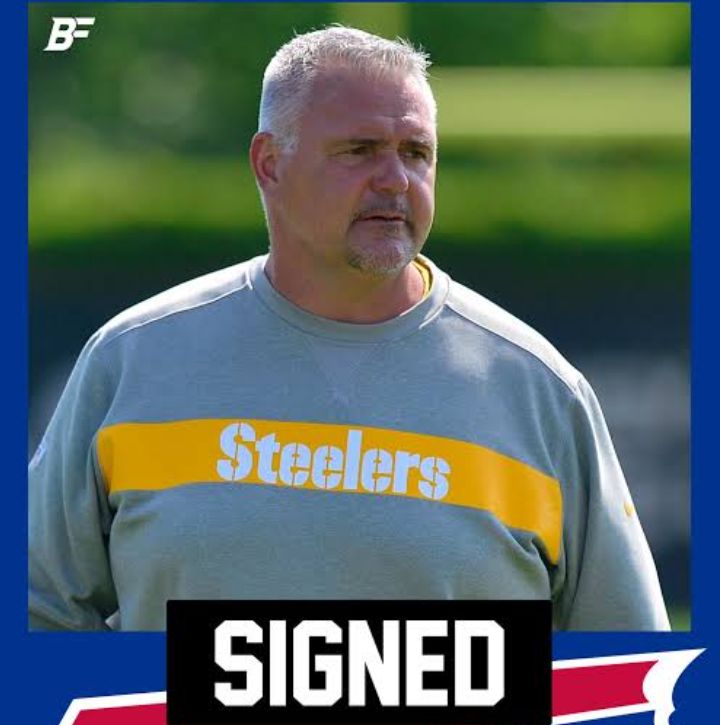
The departure of Aaron Kromer left a significant void. Kromer was widely regarded as one of the premier offensive line coaches in the NFL, responsible for developing a unit that became a cornerstone of the Bills’ offensive identity—a group known for its toughness, communication, and technical proficiency. Replacing such an influential figure presented a challenge: how to evolve without dismantling a successful system. The answer, as identified by Joe Brady and the Bills’ front office, lies in Pat Meyer, a coach whose professional roots are deeply entangled with Kromer’s own coaching tree.
Meyer’s connection to Buffalo is direct and pertinent. He served as an assistant offensive line coach under Kromer for the 2015 and 2016 NFL seasons. This apprenticeship was formative; as noted by observers close to the team, much of Meyer’s teaching methodology, stylistic preferences, and technical vocabulary were honed during this tenure. For the current cohort of Bills offensive linemen—players like Dion Dawkins and Ryan Bates who have thrived under Kromer’s guidance—this is a crucial detail. The transition to a new voice in the meeting room and on the practice field will be softened by a shared dialect. Concepts, calls, and techniques will likely retain a familiar structure, allowing players to focus on execution rather than relearning an entirely new lexicon. This continuity is invaluable for an offensive line, where split-second communication and trust are non-negotiable.
Furthermore, the hire strengthens the bond between the offensive philosophy of head coach Joe Brady and the men tasked with protecting the quarterback and establishing the run. Brady and Meyer share a professional history, having worked alongside each other on the Carolina Panthers’ offensive staff during the 2020 and 2021 seasons. While Brady was orchestrating the offense as coordinator, Meyer was managing the trenches as the offensive line coach. This shared experience means the two coaches have a pre-established working relationship, an understanding of each other’s expectations, and a common vision for how the offense should operate. In the high-stakes environment of the NFL, such synergy between the play-caller and the line coach is a significant asset, ensuring that scheme and protection are perfectly synchronized.
Pat Meyer arrives in Buffalo not as a novice, but as a seasoned veteran with a remarkably diverse and accomplished resume. His journey to this point underscores a lifelong dedication to the craft of coaching, with experience spanning multiple levels of football. His career began in the collegiate ranks at the University of Memphis in the late 1990s, first as a graduate assistant and then transitioning into strength and conditioning—a background that undoubtedly informs his emphasis on player development and physical preparedness. He continued in strength roles at NC State and Florida State before making the pivotal shift to offensive line coaching at Colorado State in 2008.
Seeking broader horizons, Meyer ventured to the Canadian Football League in 2012, serving as the offensive coordinator and offensive line coach for the Montreal Alouettes. This experience, dealing with different rules, wider fields, and a pass-heavy style, likely added a unique layer of strategic flexibility to his coaching approach. His performance in the CFL paved his way back to the NFL, where he began as an assistant offensive line coach for the Chicago Bears before his first stint in Buffalo.
After his time with the Bills, Meyer earned the role of offensive line coach and run game coordinator for the Los Angeles Chargers from 2017 to 2019, where he worked with established talents like center Mike Pouncey. His subsequent stop in Carolina bridged his path to Joe Brady. However, it is his most recent tenure with the Pittsburgh Steelers (2022-2025) that provides the most compelling and immediate evidence of his capabilities.
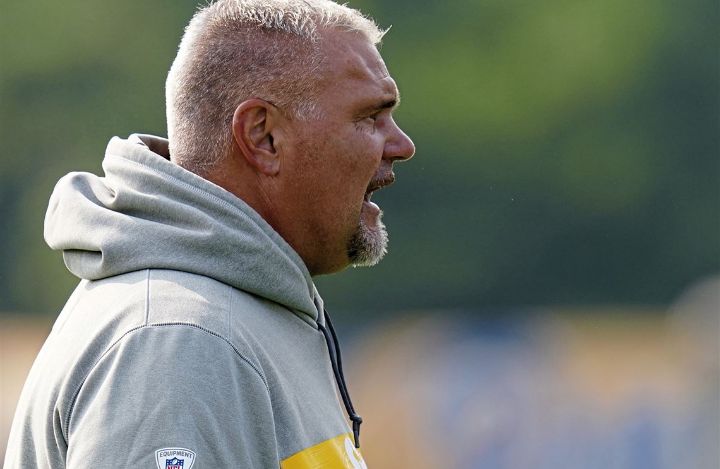
In Pittsburgh, Meyer oversaw a unit that showed dramatic improvement and became one of the league’s most efficient groups. The statistics from the 2025 season are particularly impressive and speak directly to the core responsibilities of an offensive line: protection and discipline. Under Meyer’s tutelage, the Steelers’ offensive line allowed the fewest quarterback pressures and the lowest pressure rate in the entire NFL—a paramount achievement in a league dominated by pass rushers. They also ranked third in pass-blocking win rate, a metric that measures how often linemen sustain their blocks for 2.5 seconds or longer. This data paints a picture of a cohesive, technically sound unit that provided a clean pocket with remarkable consistency.
But Meyer’s influence extended beyond pass protection. The line also excelled in the running game, finishing ninth in run-blocking win rate. Perhaps just as importantly, the group exhibited exceptional discipline. They were called for the second-fewest holding penalties and the second-fewest false-start penalties in the league. This combination of high-level efficiency and low penalty counts is the hallmark of a well-coached, focused unit. For a Bills team that has, at times, been hampered by untimely penalties and protection breakdowns in critical moments, Meyer’s proven ability to cultivate a clean, effective, and disciplined line is undoubtedly a major attraction.
The strategic implications of this hire for the Buffalo Bills are multifaceted. First and foremost, it provides immediate stability for quarterback Josh Allen. Allen’s dynamic playmaking ability is the engine of the Bills’ offense, but his longevity and consistency are tied to his protection. A seamless transition on the line, with familiar techniques and calls, minimizes risk during a period of offensive adjustment under a new head coach. Secondly, it supports the team’s offensive identity. Whether the Bills aim to establish a more potent rushing attack to complement Allen or continue to leverage a high-octane passing game, it all starts with the performance of the five men up front. Meyer’s track record in both facets suggests he can adapt the scheme to the players’ strengths and the overall offensive vision.
Finally, this hire is a testament to Joe Brady’s leadership approach in his first full offseason as head coach. Rather than making a splashy, outside-the-box selection, Brady has opted for a known quantity—a coach with ties to the organization’s recent past, a proven professional relationship with himself, and a portfolio of demonstrable success. It is a hire that values substance over spectacle, cohesion over revolution. In the complex, interconnected ecosystem of an NFL offense, the offensive line is the root system. By appointing Pat Meyer, Joe Brady has chosen a cultivator who understands the existing soil and is poised to help the entire organization grow. The 2026 season will be the ultimate test, but on paper, the Buffalo Bills have made a logical, forward-thinking, and stabilizing move to secure one of their most critical coaching positions.